More than 100 new-born deaths reported in Kiambu during doctors’ strike
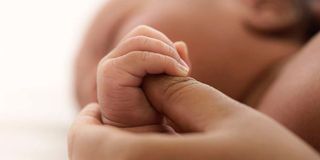
Between May and August 2025, 68 new-borns died at Kiambu Level 5 Hospital.

What you need to know:
- Documents seen by Nation show that between May and August this year, 68 new-borns died at Kiambu Level 5 Hospital.
- The county had earlier hired 78 doctors to ease the crisis, but Dr Githinji said they are not adequately trained to handle new-born cases.
At least 136 new-borns have died in Kiambu County hospitals since the start of the nationwide doctors’ strike, now in its 127th day, raising fresh concerns over the state of healthcare in one of the country’s busiest counties.
Documents seen by Nation show that between May and August this year, 68 new-borns died at Kiambu Level 5 Hospital. In September alone, Thika Level 5 Hospital recorded 34 new-born deaths. In addition, five maternal deaths were recorded during the same period — one each at Kihara Level 4, Ruiru Level 4 and Kiambu Level 5 hospitals, and two at Thika Level 5 Hospital.
Union officials warn that the crisis is worsening.
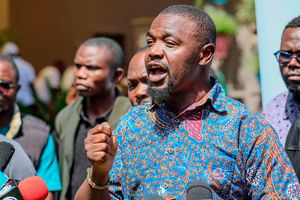
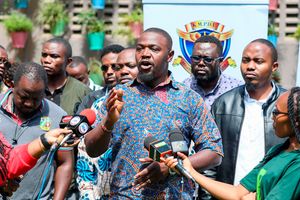
According to Dr James Githinji, Chairperson of the Kenya Medical Practitioners, Pharmacists and Dentists Union (KMPDU) Kiambu Central Branch, new-born units in Kiambu and Thika hospitals have, since the strike began, been run by clinical officer interns. He said these young professionals lack the skills to manage such highly specialised and delicate departments.
“The crisis is about to worsen following the withdrawal of 697 interns from Kiambu County by the Ministry of Health and their redeployment elsewhere,” Dr Githinji said.
He explained that while maternity services in both Kiambu and Thika hospitals remain functional, the new-born units are under immense strain.
“In September alone, over 50 babies died in the new-born units of just two hospitals. It is worrying. The situation is expected to deteriorate further now that interns have been withdrawn by the national government,” he said.
The county had earlier hired 78 doctors to ease the crisis, but Dr Githinji said they are not adequately trained to handle new-born cases.
“In managing new-born units, you require a paediatrician. The doctors being recruited without specialist supervision are struggling. In Gegania, for instance, we lost a child because there was no paediatrician,” he said.
Newly hired replacements
KMPDU Secretary-General Dr Davji Atellah linked the rising deaths to the absence of specialists, delays in treatment, unavailability of essential emergency drugs, and parents’ inability to afford care in private facilities.
“When children have pneumonia or respiratory infections, once they are not attended to on time, complications set in. By the time they are referred, their condition is already severe. Essential emergency medications were also unavailable,” Dr Atellah said.
He noted that most of the new-borns admitted presented with neonatal sepsis linked to poor hospital hygiene, hospital-acquired pneumonia, asphyxiation among pre-term babies with underdeveloped lungs, and severe jaundice.
Dr Githinji accused county officials of misleading residents into believing doctors had resumed duty.
“It is wrong to cheat a patient. Kiambu residents should know they can access services in Murang’a, Nairobi, Machakos or Nakuru. We are losing close to 300 patients every month,” he said.
He added that striking doctors have not been paid since June, while newly hired replacements have gone unpaid since August.
The situation could deteriorate further after the Health Union Caucus — an umbrella body representing eight health unions — announced plans for a joint strike next week.
The caucus brings together the Kenya National Union of Medical Laboratory Officers (KNUMLO), Kenya Union of Clinical Officers (Kuco), KMPDU, Kenya Environment, Health and Public Health Practitioners Union (Kehphu), Kenya Union of Nutritionists and Dieticians (Kunad), Kenya National Union of Pharmaceutical Technologists (KNUPT) and the Kenya Health Professional Society (KHPS).
Union leaders accused Kiambu Governor Kimani Wamatangi of failing to address doctors’ grievances and attempting to stifle unions. Dr Atellah said the county had also failed to remit union dues for nine months, leaving an estimated Sh10 million unpaid.
“All these teams will issue notices to join the strike next week. They are not just joining in solidarity but because their own salaries are not being paid and deductions are disappearing,” he said.
Doctors in Kiambu say they have faced persistent violations by the county government, including delayed salaries, unpaid medical cover premiums to the Social Health Authority, stalled promotions, excessive working hours, and irregular transfers without due process or allowances.
“The fatigue and lack of proper standards pose a significant risk to patient care and endanger both staff and the public,” said Dr Githinji.
Kiambu Chief Officer for Health Services Dr Patrick Nyagah neither confirmed nor denied the deaths but rejected claims of a health crisis.
He insisted that of the county’s 123 health facilities, 109 health centres and dispensaries had continued operating normally.
“These centres were never part of the strike or the internship programme, and patient flow has been consistent,” he said.
Return-to-work deal
On Level 4 and 5 hospitals, Dr Nyagah maintained that all 14 remained open 24/7.
“The strike mostly affected consultant doctors, some medical officers, selected pharmacists and a few dentists. A total of 145 new doctors were hired, and another 52 never went on strike,” he said.
He accused KMPDU of escalating the dispute despite progress.
“They came with 10 grievances, we sat through nine meetings and agreed on the way forward. We were ready to sign a return-to-work deal, but they refused. This crisis is manufactured to attract attention,” said Dr Nyagah.
He also said Kiambu’s heavy patient load from neighbouring counties such as Nairobi, Murang’a, Machakos and Nakuru had put pressure on local services.
“We see about 5.6 million outpatients a year, yet Kiambu residents are only 2.5 million. That additional burden is a key factor,” he said.
He further claimed that close to 90 doctors had since abandoned the strike and returned to duty, bringing the total number of doctors currently serving in the county to nearly 300.