Poisonous pesticides: Pesticide use is turning farms into death zones
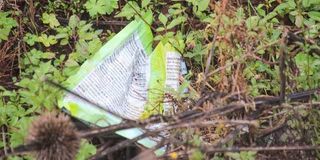
pesticide package by the roadside at Githithina village in Meru county on June 1, 2025. JOSEPH KANYI | NATION

What you need to know:
- Healthy Nation’s investigative report reveals how the use of toxic chemicals is endangering the lives of farmers and consumers alike
- The statistics are stark: more than 10 people have succumbed to cancer, and a heartbreaking five more are currently locked in a desperate battle against the disease.
- Studies show that there is a direct link between pesticides and the development of Parkinson’s disease.
Chapter 1
For a lover of nature, the journey to Timau town is a slice of heaven. On both sides of the road are green farmlands, mainly potatoes, wheat or barley, interspersed with yellow canola oil plants. Situated on the northern side of Mount Kenya, it offers breathtaking views of the mountain on clear mornings.
However, in one of its villages, Mbaria, a silent health crisis is unfolding. Their fertile agricultural lands and prolonged pesticide use have become their undoing, fuelling a disturbing rise in chronic diseases.
Here, the statistics are stark: more than 10 people have succumbed to cancer, and a heartbreaking five more are currently locked in a desperate battle against the disease.

Lucy Makena during an interview at her home at Mbaria in Meru on May 31, 2025. She lost her father-in-law to cancer. JOSEPH KANYI | NATION
We meet Lucy Makena, whose family has been devastated by the illness. She lost her father-in-law to cancer, and now her mother and uncle are bravely fighting their diagnoses. Her father, 60, succumbed to diabetes a year before his wife fell ill. He was a long-time farmer of onions, tomatoes, potatoes, beans and maize.
“There is no other person in our family history who has ever struggled with diabetes, apart from my father. By the time of his death in July 2023, he had lost his eyesight,” says Makena.
In April 2024, her 60-year-old mother, Rosalia Kinoti, fell ill, and shortly after, her father-in-law also became sick.
“She underwent many tests and scans. She was eventually diagnosed with breast cancer and began chemotherapy treatment at a facility closer to home before being transferred to another hospital for a mastectomy, a surgical procedure to remove the affected part of the breast,” says Makena.
“After that, she underwent 15 radiotherapy sessions and was later discharged to continue with her treatment from home.
“We used many different pesticide products for at least 25 years,” she offers.
However, Makena’s father-in-law, Peter Gitonga, a tomato and potato farmer, was not lucky.
“The symptoms started gradually: loss of appetite, itchy skin, nausea, vomiting, upper abdominal pain, trouble sitting upright. He was eventually diagnosed with advanced liver cancer and succumbed in February this year, aged 85,” recalls Makena.
Her 77-year-old maternal uncle, Francis Marete, who was recently widowed, is also battling a cancerous growth in his throat that has formed a wound and occasionally bleeds.
Before his wife’s death, they were farmers and used pesticides to control pests.
“Shortly after her passing, I also fell ill. My stomach could not retain anything. I also developed a persistent cough and loss of appetite. Further tests led to the conclusive diagnosis of cancer,” says Marete.
“I underwent chemotherapy for six months. My body has become weak, and my legs are frail. The doctors said that the pesticides are what have harmed us, and suspected that I may have inhaled them. They came to my home, collected soil from my vegetable garden, collected water and food samples for testing. I am still waiting for the results,” he explains.
His medical documents show he has a tumour that has grown to the point of breaking through the skin and creating open wounds.
As the cancer grows, it blocks and damages small blood vessels. This reduces the oxygen supply to the area. So the skin and tissue underneath dies (necrosis). The wound can become ulcerated and infected.
“I’m now entirely dependent on my children for almost everything,” offers Marete.
Chapter 2

Prisca Munyua, a nurse at M baria trading centre in Meru during an interview on May 31, 2025. JOSEPH KANYI | NATION
In the same village is Phidis Kairuthi, an agrovet owner and shopkeeper, who explains that farmers in the area have poor practices when it comes to the purchase, usage of pesticides, and personal hygiene.
“I have observed that farmers do not care to read the instructions in the leaflets; they only care about obtaining the product. Some cannot read them, or struggle to read because of the small fonts on the instruction manual. Most have no protective gear and do not know or ignore the need to bathe after using the chemicals. I have seen women get off the farm and go straight to the kitchen to cook,” says Kairuthi.
And even though her contact with the products is mainly at the point of sale, her health has also been affected.
“My skin itches occasionally, and I get frequent headaches. When I was pregnant with my one-year-old child, the work environment became toxic to my health. I would experience shortness of breath and chest tightness,” she says, adding that most farmers in the area who are affected by cancer and other chronic diseases are potato farmers.
The struggles of this village caught the eye of Prisca Munyua, a nurse, who, since February this year, has operated Divine Wellness and Resource Centre at the village shopping centre.
Here, she creates awareness on the dangers of exposure to pesticides, the advantages of organic farming and detoxification for people who have already been affected by the exposure. She also offers counselling to those in need.
“I set up this place because I realised people were having very serious issues. I would interact with a person whose health seemed fairly good, but by the time I made another visit, they had passed on,” recalls Munyua.
She decided to dig deeper to find out the source of the problem by analysing the lifestyle of the villagers, their farming practices and their food.
“I found out that in my home area, people are using a lot of chemicals on their farms. Most of the patients that come around here, and even the nearby hospitals and the clinics, complain of joint pains, numbness, nerve issues, gastritis (inflammation of the stomach lining), stomach ulcers, low libido for men, secondary infertility and early menopause for women and young girls, respectively,” explains Munyua.
“More than 10 patients have passed on within two years, and all those are confirmed cancer cases,” adds Munyua.
Her research also found that farmers in the village have been using organophosphates, a type of pesticide that can harm the nervous system with prolonged exposure, to spray their crops.
To create awareness, the wellness centre was born, which opens twice a month for a couple of days.
“They come, ask questions, and share about the things that they do. There are some that I put under detoxification therapies. Those who are already being seen for cancer come here for counselling services. I am also encouraging them to create a support group. For those battling diabetes and hypertension, I also counsel them on nutrition and available therapies,” says Munyua.
Those who require detoxification use a Pulsed Electromagnetic Field Therapy (PEMF) machine, which gently sends short, pulsing magnetic waves into the body. These waves create tiny electrical nudges inside the tissues.
Munyua also uses this on people with rheumatoid arthritis to reduce pain and spark cell regeneration in damaged areas of affected bones. Bones that are already becoming thin can rebuild themselves.
“There is also a lot of brain fog, which is also associated with the use of the chemicals. The next step I intend to take is to find people who can help me to assess school-going children who we suspect have been affected by the same exposure, to know if they are affected, to what level, and how they will be assisted,” says Munyua.
“If we could get assistance from the government, through agricultural extension officers, we would improve the food quality, productivity and the general health of our population,” she says.
Chapter 3
In the neighbouring Laikipia County, at Ndaiga village, the same health crisis exists, slowly chipping away dreams, like those of John Kiunjuri, who has battled Parkinson’s disease since 1994.

Francis Marete from Mbaria village in Meru speaking during an interview on May 31, 2025. He has throat cancer. JOSEPH KANYI | NATION
According to the National Institute on Ageing, Parkinson’s disease is a brain disorder that causes unintended or uncontrollable movements, such as shaking, stiffness, and difficulty with balance and coordination.
A carpenter and plumber by profession, Kiunjuri’s first contact with pesticides was at a farm that produced vegetables and legumes on a large scale.
He worked there for four years as a plumber. In his telling, he would mix pesticides and water in a large container, then introduce the solution into a large pipe for distribution through the drip irrigation system’s smaller lines. Kiunjuri would prepare the mixture, using his bare hands to stir. Once done, his hands would feel hot to the touch.
“My hands started shaking in 1994. I went to seek medical care at the company’s health centre, and the doctor said he didn’t know what was going on, but he gave me some medications. As you can see, my hands have never stopped shaking involuntarily to this day,” says Kiunjuri.
“People look at me at first glance and conclude that I am an alcoholic, yet I have never tasted alcohol in my life. Some of my colleagues have died or are living with similar medical complications.”
When he left that job, he found another one as a plumber, but it lasted only a year before he decided to return home and try his luck at farming and carpentry. Carpentry, he says, had been his first love, and he was the village’s go-to person for furniture and household items.
“Farming was impossible. I couldn’t hold a jembe (hoe). With carpentry, achieving precision became difficult, and using tools accurately became dangerous. I often made crooked cuts and ruined wood, which was a waste. Besides, I was worried that if I took on a job and delivered shoddy results, I would be arrested. So I stopped, and focused on livestock keeping,” says Kiunjuri, adding that his final diagnosis happened mid-last year at Nanyuki Teaching and Referral Hospital.
Chapter 4
Studies show that there is a direct link between pesticides and the development of Parkinson’s disease.
A study published in the journal Nature Communications on May 16, 2023, conducted by researchers from UCLA Health and Harvard shows that 10 pesticides damaged neurons in the body, leading to the disease. They include four insecticides (dicofol, endosulfan, naled, propargite), three herbicides (diquat, endothall, trifluralin), and three fungicides (copper sulphate (basic and pentahydrate) and folpet).
Another study published in Science Direct last year reveals the link between pesticides and breast cancer, with occupational exposure being listed as the most severe way of pesticide contamination.
“Most breast cancer cases are attributable to non-genetic risk factors, with a history of adverse environmental exposures playing a significant role. Pesticide exposure can occur at higher levels in female populations participating in rural activities such as spraying of pesticides in the field, unprotected handling of pesticides at home and washing of contaminated clothes. Exposure can also be significant in the drinking water of certain populations,” says the study.
“International Agency for Cancer Research (IARC) categorises some of the substances used for crop pulverisation, such as atrazine and glyphosate, as possibly and/or probably carcinogens. However, these substances are not classified as proven carcinogens due to the lack of enough evidence in humans. Nevertheless, their safety has been questioned, and expert consensus has requested a revision of its classification,” the study notes.
The study explains that pesticides might increase the risk of breast cancer by affecting the cells of the breast and inducing breast tumours.
The main way these pesticides are thought to cause problems is by messing with the body’s hormones, by pretending to be natural hormones in the body, thus leading to abnormal responses and potentially triggering diseases like cancer.
These hormone-disrupting pesticides can have effects even at very low concentrations, much lower than what’s usually tested.
Besides, their effects don’t always follow a simple straight line (more pesticide doesn’t always mean a proportionally bigger effect).
The weed killer glyphosate (found in products like RoundUp) is specifically highlighted to disrupt oestrogen, a key hormone.
It might act like oestrogen, promoting the growth and multiplication of breast cells, even healthy ones. It can also damage DNA and harm cells, even at very low levels, and change the activity of genes related to hormones and cell growth, including those that can make cancer cells more aggressive and spread.
Atrazine, another pesticide, also disrupts hormones by affecting breast development in animals, increasing the production of hormones, and causing changes in breast cancer cells that might make them more prone to damage.
Mixtures of different pesticides and other chemicals in the environment, like in drinking water or food, can have even more complex and harmful effects on hormones and genes linked to breast cancer.
The study notes that the effects of pesticides might not show up immediately but could have long-term consequences.
There’s also a possibility that pesticide exposure could affect future generations, either through “transgenerational inheritance” or through contaminated breast milk. Pesticides like glyphosate have been found in breast milk.
The study also notes that some people might be more susceptible to the harmful effects of pesticides because of variations in genes that help process and eliminate these chemicals.
Next week, we will tell you how flower farm workers are harmed by the toxic chemicals, and the policymakers taking the pesticide giants to court.
[email protected]