Samburu's carbon credit project stalls amid legal battle

The grants are part of the 10-year Financing Locally Led Climate Action program, a partnership between Kenya, the World Bank, and other international donors
What you need to know:
- In May, global carbon credit certifier Verra suspended the Northern Kenya Rangelands Carbon Project following a Kenyan court ruling
- The story of Sera's transformation began in 2015 with the establishment of the Sera Rhino Sanctuary under the Sera Community Conservancy
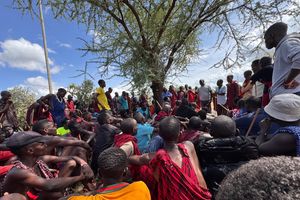
George Lemerketo watched his community transform before his eyes. Children who might never have seen a classroom were earning university scholarships. Snake bite victims no longer faced death because they couldn't afford antivenom. Solar panels powered computers in schools that once had dirt floors.
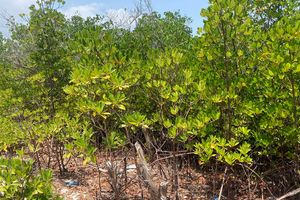
All of this came from an unlikely source: the carbon stored in Samburu County's arid grasslands.
But in May, that transformation ground to a halt when global carbon credit certifier Verra suspended the Northern Kenya Rangelands Carbon Projectfollowing a Kenyan court ruling. For months now, communities like Lemerketo's have been cut off from the millions of shillings that funded their development dreams.
“The future of our community now depends on whether the suspension will be lifted,” says Lemerketo, chairman of the SereOlipi Community Land, his voice heavy with concern.
The story of Sera's transformation began in 2015 with the establishment of the Sera Rhino Sanctuary under the Sera Community Conservancy. What started as wildlife conservation evolved into something more when the community tapped into Kenya's emerging voluntary carbon market.
“Our people are no longer being hired as watchmen in Nairobi. They are working right here in the conservancy and on our farms,” Lemerketo told journalists in Nairobi this July, pride evident in his voice.
The legal foundation for this transformation was Kenya's Community Land Act of 2016, which allows communities to register and manage communal lands through democratically elected Community Land Management Committees (CLMCs). With these legal rights came the power to enter contracts — including lucrative carbon trading agreements.
The first carbon credit sale brought in Sh36 million, with 60 per cent flowing directly to community development. A second round yielded Sh42 million. By April 2025, earnings had climbed to Sh50 million.
The community's spending priorities, decided through what they say is a democratic process, reflected immediate needs: Every secondary school and university student receives at least Sh10,000 per term in bursaries. SereOlipi health centre was equipped with antivenom and anti-rabies vaccines. Schools received computers, projectors, and solar power.
During droughts, carbon revenues bought food, cushioning families from hunger.
But the success story hit a wall when 165 community members filed a lawsuit alleging that conservancies were established without proper public participation, violating constitutional rights to Free, Prior and Informed Consent (FPIC).
On August 5, Chief Justice Martha Koome said that courts must protect both ecosystems and indigenous identities: “The courts must remain vigilant to ensure that consideration is given to key areas such as provision of clarity on land rights and carbon ownership rights, transparent and fair benefits-sharing framework.”
Frank Setek, founder of Nkishon CBO in Laikipia, felt the weight of those words. “Indigenous and local communities are not observers in carbon narratives; we are the guardians of land and culture. We may not have all media platforms to amplify our voices, but we hold lived truths.”
The Sera case represents more than one community's struggle. As Kenya's national climate action plan targets millions of dollars in climate finance through voluntary carbon markets, the legal precedent here will shape how similar projects unfold across the country's arid and semi-arid regions.
David Arach, a senior programme manager at Namati — a global non-profit supporting communities in asserting land rights — believes the court should have allowed time for corrections rather than an outright suspension. "Every community has the right to benefit from its land," he says.
The Africa Carbon Markets Initiative, launched at COP27, sees carbon projects as crucial climate finance for countries like Kenya grappling with escalating droughts and floods. But the promise can only be fulfilled if contracts are fair, transparent, and legally sound.
For Lemerketo, the stakes couldn't be higher. Before carbon credits, he co-founded the SereOlipi Nomadic Education Trust, growing enrolment from 96 primary school learners to over 600 pupils today. SereOlipi Secondary School expanded from 34 students to a boarding institution offering scholarships through university.
“We're at a turning point in history,” Lemerketo reflects. "If the carbon offset project survives, we will continue investing in education and encourage every household to enrol their children in school.”
Now, communities across northern Kenya await to hear the Court of Appeal’s ruling. Will carbon credit remain a pathway to prosperity, or will it return them to poverty?