Stranded abroad: Rude shock for Kenyan patients after SHA directive
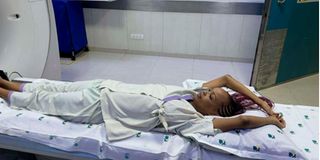
Ms Anne Nyambura who has been living with liver disease for the past 18 years, says she is due for a Sh4 million life-saving transplant surgery in India but SHA has refused to process her for travel to the Asian country.

A government decision to suspend approvals for overseas medical treatment has thrown hundreds of patients into crisis, leaving many in limbo and some stranded abroad with their health on the line.
The directive, issued by Health Cabinet Secretary Aden Duale, freezes all overseas medical travel approvals for 30 days. The suspension effectively blocks access to the Sh500,000 treatment package promised by the Social Health Authority (SHA), a programme designed to assist patients requiring specialist procedures unavailable locally.
Imperils lives
The announcement has blind-sided many, including patients already overseas awaiting treatment. It has also provoked concern from doctors, advocacy groups, and families who argue the policy shift imperils lives.
The group most affected is Kenya’s most vulnerable: patients with conditions that cannot yet be treated locally. These include complex organ transplants, advanced cancer therapies, and rare surgical interventions. For decades, such treatments have been sought in foreign hospitals, particularly in India, where medical costs are comparatively affordable and expertise is well established. Explaining the decision, Mr Duale acknowledged that, while certain procedures remain unavailable locally, Kenya has made significant strides.
“Services such as PET scans, advanced imaging, kidney transplants, open-heart surgeries, and joint and spinal surgeries are now available in our hospitals,” he said in a statement. “Members are encouraged to use contracted local hospitals with the capacity to provide these services.”
The ministry insists the suspension is temporary, pending the finalisation of a framework to regulate and streamline overseas treatment. The Benefits Package and Tariffs Advisory Panel has been tasked with identifying procedures that legitimately qualify for overseas referral. The SHA says the system will be fully operational within 30 days, when an official list will be published.
“SHA is aligning with the provisions of the law and has commenced the contracting process,” Mr Duale noted. “The new system will connect all stakeholders, including members, referring specialists, local hospitals, the Kenya Medical Practitioners and Dentists Council, the Ministry of Health, overseas facilities, and SHA, ensuring seamless coordination.”
Under the new regulations, foreign hospitals must be formally contracted by SHA, accredited in their home country, recognised in Kenya, and linked to local hospitals through Memorandums of Understanding. Overseas facilities will also be required to request pre-authorisation before patients travel, notify SHA on admission and discharge, and submit claims online for adjudication and payment. Upon return, patients will be required to access follow-up care in Kenya.
Order and accountability
While the ministry argues the new system will bring order and accountability, it has failed to explain how patients in urgent need of life-saving interventions are expected to survive the 30-day gap. The silence has left many in despair. Among them is 42-year-old Mareerah Nyambura, who has battled liver disease for 18 years.
Her story illustrates the profound human toll of bureaucratic indecision.
“It’s been an unpredictable journey—marked by moments of hope and despair, strength and vulnerability, and more hospital visits than I can count,” she said.
She described the physical struggle of her illness, but insisted the financial burden is even harder to bear.
“Hospital visits, medications, tests, consultations—the costs accumulate relentlessly. And when your only viable option is a liver transplant, a procedure both complex and expensive, the weight of that decision becomes almost unbearable.”
In 2019, her doctors recommended a transplant. She resisted at first, fearing the risks, costs, and implications for her family.
For five years she wrestled with the decision, but at the start of 2025, she finally told her family she was ready. After consultations and prayers, they chose a hospital and surgeon in India. But travelling for surgery, she discovered, is far more complicated than booking a ticket. A mountain of paperwork awaited her, especially for those seeking SHA financial support. “I was given a list of 26 documents to compile. It was daunting, but I was determined. I submitted everything, and they confirmed all was in order. They assured me communication via email would suffice from then on.”
Travelled to India
Armed with that assurance, she travelled to India, believing SHA would honour its promise of a guarantee of payment letter—vital for the hospital to proceed with her surgery. Soon after her arrival, however, SHA requested one more document from her donor. She submitted it promptly, then waited.
But no further word came.
“Since then, I’ve had no communication. No updates, no confirmation, nothing. I’ve done everything asked of me, but I am in a foreign country facing the very real possibility that my surgery could be delayed indefinitely—or that I may be forced to settle the bill myself. That would devastate my family financially.”
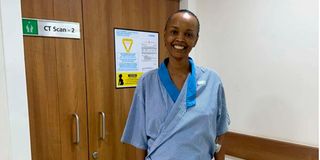
Anne Nyambura (42) who has been living with liver disease for the past 18 years says she is due for an over Sh 4 million life saving transplant surgery in India but SHA has refused to process her for travel to the Asian country.
Her frustration echoes that of many. “Even whilst sharing my story, which I know reflects the struggles of countless Kenyans, I ask again: is SHA working or not? ”
When Nation contacted SHA Head of Design and Benefits Package, Dr Tracey John, who is responsible for approving overseas guarantees of payment, she revealed she had been directed to stop handling such cases. “For overseas cases, kindly contact the CEO’s office. That’s the advice we received,” she said.
On August 7, 2025, Mr Duale attempted to clarify matters in a post on X. “Unlike the defunct NHIF, SHA’s process for overseas treatment is guided by several legal frameworks—the SHI Act and Regulations, the Public Procurement Act, and the Office of the Attorney-General circulars on foreign contracts.”
He stressed that, under the Social Health Insurance Act, SHA can only make payments to empanelled and contracted healthcare providers. To qualify for overseas treatment, he added, three conditions must be met: the treatment must be unavailable locally, the patient’s contributions must be compliant with the SHI Act, and the procedure must be undertaken at an SHA-contracted foreign facility.
Insensitive and impractical
The effect is clear: patients in urgent need of specialist care unavailable locally must wait for SHA to finalise partnerships with approved foreign hospitals.
Critics say the approach is insensitive and impractical. Patients do not choose when a tumour grows, when an organ fails, or when disease accelerates beyond local capacity. For those already abroad, the decision has introduced new uncertainties, leaving many stranded in hospital wards or guesthouses in India, Turkey, and South Africa with no clarity on whether treatment will proceed.
Families have raised the alarm, accusing the government of shifting blame to legal frameworks rather than acknowledging the human cost. Advocacy groups argue that, while reforms are necessary to eliminate corruption and streamline overseas treatment, an immediate halt without contingency plans is reckless.
Medical professionals are also concerned. Some specialists argue that, while Kenya has indeed advanced, it is misleading to suggest that all complex care is now locally available. A Nairobi-based oncologist, speaking anonymously, noted: “We’ve improved, but we’re not there yet. Certain advanced cancer treatments, rare transplants, and genetic therapies are still out of reach here. Suspending overseas referrals without a safety net will cost lives.”