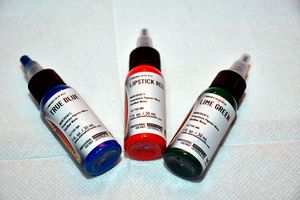
Tattoo time bomb: The Sh2,500 River Road ink job that turned toxic after five years

Tattoos, while popular, carry potential health risks.

What you need to know:
- Kenya’s growing tattoo culture demands stronger safety awareness.
- Doctors advise tattoo lovers to minimise the risk of infection by choosing a reputable, licensed tattoo artist and a shop with a clean, sterile environment.
Two weeks ago, Gaelle Wanjiru, 28, woke up to a rude and unpleasant shock. Her back was experiencing a burning sensation that made her feel as if her entire body was on fire.
Her five-year-old butterfly tattoo—once a symbol of beauty—suddenly became a source of agony. Without warning, her back erupted in an itchy, burning rash that spread rapidly.
Panicked, Gaelle rushed to a clinic in Roysambu for help. “A man in a white lab coat glanced at my inflamed tattoo and declared it a fungal infection; after which he sold me some cream to apply while assuring that the rash would disappear in about three hours,” she narrates. But instead of improving, 48 hours later, the rash spread further and became even more painful and itchy. Unknown to Gaelle, the clinic had misdiagnosed her condition.
Gaelle’s nightmare began in 2020 with what should have been a beautiful birthday gift to herself.
She wanted a butterfly tattoo as a symbol of beauty and nature. After consulting her close friends, one recommended a shady, backstreet parlor on River Road in Nairobi that charged only Sh2,500.
The tattoo artist sprinkled diluted methylated spirit on his machine before asking Gaelle to lay on the same couch where the last client had been attended to. “He rinsed a dirty towel from the previous client in a bucket and wiped my back with it before moving a large flood light closer and getting started.”
For three hours, the artist skillfully drew the tattoo on Gaelle’s back while she stayed put, absorbing the pain and discomfort while humming away to the song that was playing on his sound system - a welcome distraction.
After the procedure, the tattoo was covered with a bandage. Gaelle was given painkillers for fresh soreness and told to open up the tattoo after a few days.
All was well until two weeks when Gaelle developed a severe rash and burning sensation on her back. After being misdiagnosed at the Roysambu clinic, she finally decided to visit a dermatologist who did a culture test that confirmed bacterial cellulitis—a serious skin infection affecting deeper layers of tissue.
Bacterial cellulitis is a skin infection where bacteria invade the skin through a break, leading to inflammation and infection of deeper skin layers and surrounding tissues
It typically presents as a red, swollen, warm, and painful area of skin that can spread rapidly.
The dermatologist explained that the bacteria they found in the ink used to draw the tattoo on Gaelle’s body had been present but dormant for five years.
According to Nation Media Group in-house physician Diana Wangari, a tattoo can potentially cause a skin infection even years after it was initially inked.
While most infections occur shortly after the tattooing process, some can manifest months or even years later.
Initial healing
This, she says, is because tattoos create an opening in the skin, and even if the initial healing is successful, the potential for infection remains.
“Yes, bacterial infections related to contaminated tattoo ink can remain dormant and present later—sometimes even years later—due to the formation of biofilms or the bacteria being introduced deep within the skin where immune responses are less active,” said Dr Wangari.
She said the fact that the rash started at the butterfly (tattoo site) shows that it may have been the nidus of a low-grade, sub-clinical infection that got reactivated or suddenly overwhelmed local defences.
She added that the spreading nature of the rash, the failure of the antifungal medication, and the origin of the rash at a skin puncture site all point to a fungal infection that may have been exacerbated by a break in skin integrity.
Dr Wangari further explained why antibiotics are needed in this case and not the antifungal medication Gaelle had been given when she was misdiagnosed.
“The antifungal cream she was given to use works by inhibiting ergosterol synthesis in fungi yet bacteria do not have ergosterol. Therefore, antifungal agents have no effect on bacterial infections,”Dr Wangari explained.
She added that if indeed this was a fungal rash, even superficial improvement would likely be expected within 48 hours of antifungal use, especially if it were something like tinea corporis (common with second hand clothes).
“The fact that the rash is worsening despite antifungal treatment strongly suggests a bacterial process.”
Dr Wangari cautioned that when antifungal medication ‘seems to work’ for a bacterial infection, it’s usually coincidence, a misdiagnosis, a self-limiting bacterial infection or the antibacterial component in a mixed-ingredient cream is the actual agent working.
The doctor noted that Kenya’s growing tattoo culture demands stronger safety awareness.
She advised tattoo lovers to minimise the risk of infection by choosing a reputable, licensed tattoo artist and a shop with a clean, sterile environment.
“Ensure they use sterile, single-use needles and fresh ink for each client. Proper aftercare is also crucial, which involves keeping the tattooed area clean, moisturised, and protected from sun and water until healed,” she said.
As for Gaelle, she is actively working towards improving her health and well-being. “Doctors have since changed my medication and put me on the correct antibiotics. I know I will be well soon,” said Gaelle.