Teachers forced to pay cash as SHA crisis deepens
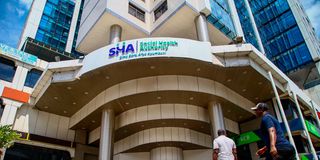
The Social Health Authority building in Nairobi.

Teachers across the country are grappling with a fresh healthcare crisis, with hospitals now demanding cash payments for services, citing massive unpaid claims and delayed reimbursements under the government-backed Social Health Authority (SHA) scheme.
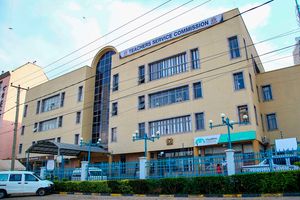
The development comes just two weeks after teachers’ unions held meetings with Health Cabinet Secretary Aden Duale, the Teachers Service Commission (TSC) and SHA to address persistent challenges in the medical cover.
Among the concerns raised were delays in pre-authorisation, difficulties during hospital discharge, limited access to accredited facilities and uncertainty over the promised 9,000 hospitals under the SHA scheme.
Unions noted that some hospitals that previously served teachers have been removed, forcing educators to travel long distances or struggle to access treatment.
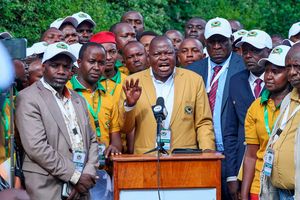
KUPPET Deputy Secretary General Moses Nthurima added that despite repeated engagements with stakeholders, key issues remain unresolved.
“Calls go unanswered, promises have not been implemented and teachers are still waiting for real improvements,” he said.
The union said delays in remitting monthly payments to healthcare providers have made hospitals hesitant to offer services on credit, forcing many teachers to make cash deposits before treatment.
“Nothing has changed since the meeting. Teachers are still being asked to pay out of pocket. I have a case where a teacher was forced to pay over Sh100,000 for maternity services after SHA refused to settle the bill. Hospitals cannot continue providing services on credit indefinitely; they have employees and suppliers to pay,” said Sabala Inyeni, Organising Secretary of KUPPET Vihiga branch.
“Facilities keep claiming the system is down, but the underlying issue is non-payment by SHA. They are simply unable to continue financing the services,” Mr Inyeni added.
The Kenya National Union of Teachers asked its members to report cases where they are asked to pay cash under the scheme so that unions can intervene.
“Whenever teachers face these challenges, we want them to report to us so that we can step in,” said Collins Oyuu, KNUT Secretary General.
On Wednesday, healthcare providers under the Rural and Urban Private Hospitals Association (RUPHA) said the situation has reached a breaking point.
“We are not turning away patients, but most facilities can no longer operate under the current arrangement. Only a few with financial capacity can continue. As a result, many teachers are forced to pay cash or seek alternatives,” said Rupha chairperson Dr Brian Lishenga.
As of March 2026, Health Cabinet Secretary Aden Duale has stated that the government has paid for teacher medical services under the Social Health Authority (SHA), dismissing claims that teachers are being denied care. Duale stated that over 249,000 teachers and their dependents have received treatment under the SHA, with claims exceeding Sh3.5 billion.
But Dr Lishenga warned that the scheme is now unsustainable.
“There are currently no disbursements under Mwalimu Cover, creating a major funding gap. Hospitals are struggling as they shoulder government obligations, forcing many to scale down services or shift to cash-only systems. This places additional strain on teachers,” he said.
Also Read: Teachers’ SHA deal hangs in balance
Private hospitals have also blamed technical and administrative challenges, including issues with SHA’s digital systems, which have complicated claims processing and reimbursement.
“Technical issues, including problems with the database, are further worsening the situation. Some teachers are not in the database, which also becomes a problem. Hospitals can no longer shoulder the burden of financing government obligations. That is effectively what is happening now. Making hospitals act as financiers of the health sector is not just wrong — it is outright exploitation,” Dr Lishenga added.
Follow our WhatsApp channel for breaking news updates and more stories like this.