The Kenyan man’s long search for sexual vitality

What you need to know:
- Ayurvedic aphrodisiacs like Ashwagandha have gained popularity for their reported benefits to libido, stamina, and sexual function. Traditional Kenyan spices are also used for similar effects.
For James*, the silence in his Syokimau bedroom had become louder than any argument he and his wife had ever had.
It started subtly. At first, he blamed the long commutes on Mombasa Road or the high-pressure targets at the bank. He would tell himself he was just tired.
But then came the night it didn’t happen. In the dim glow of the bedside lamp, he saw the flicker of confusion on his wife’s face, then a quiet, devastating disappointment she tried to mask by turning away.
She never said a word. She didn't complain or nag. But to James, her silence felt like a judgment. Every time she touched his shoulder or suggested they go to bed early, he felt a cold spike of anxiety. He felt like a failure, a ‘half-man’ who could provide a paycheck and a house, but couldn't fulfill the most basic expectation of a husband.
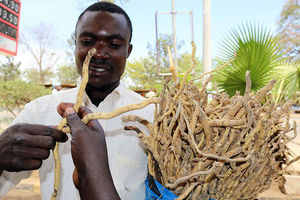
Desperation drove him to the streets. Stuck in traffic near Museum Hill, he watched a hawker weaving through cars with bundles of mukombero (white ginger). Heart hammering, he rolled down his window and bought several roots.

Mukombero (white ginger) being sold in Nakuru.
He kept the mukombero hidden in the glove compartment of his car, chewing it feverishly on his way home. The bitter, earthy taste brought a placebo rush of hope, but when he arrived, the anxiety remained. It helped his general stamina but couldn’t break down the psychological wall he had built.
Known botanically as Mondia whitei, mukombero is a perennial woody climber deeply rooted in Kenyan traditional medicine, particularly among the Luhya community in Kakamega.
For generations, its root has been chewed raw, powdered into tea, or mixed with food. It is cherished not just as an aphrodisiac to enhance libido and address male sexual dysfunction, but also as a general tonic, an appetite stimulant, a remedy for abdominal pains, and even a symbol of peace and power. The Luhya people traditionally chewed it for good luck before undertaking a difficult task.
Modern studies on mukombero, while preliminary, suggest it may work by increasing blood flow and supporting healthy testosterone levels. However, as with many herbal remedies, the full, scientifically verified mechanism of action is still being investigated, and some research suggests that high doses or long-term use might even have adverse effects on fertility, highlighting the need for caution.
Next came the Uji Power. James started frequenting a small kiosk in Upper Hill known for its ‘special’ porridge blended with ground nuts, pumpkin seeds, and various tubers. He’d sit there among other men, all of them drinking the thick liquid with the same unspoken hope. It made him feel physically stronger, but the underlying issue - erectile dysfunction - remained a stubborn shadow.
“When I finally broke down and confided in my best friend over a drink, he was blunt and told me I needed to see a doctor. This thought made me nervous, and even though I promised to do so, I never went to see him,” he says.
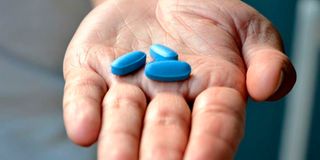
He was paralysed by two other fears: the fear of death from the blue pill, and the accompanying fear of exposing myself to the chemist.
“I have seen sensationalist news reports of men collapsing after taking Viagra, and I was not ready to die and leave my family in agony. I also dreaded the idea of walking into a chemist. I imagined the judgmental look of the staff. Most terrifying of all was the thought of facing a female pharmacist. How could I look a woman in the eye and admit that my body was failing me? I found myself scouting different chemists from a distance, looking for one staffed only by men, but I could never bring myself to actually walk through the door,” he says.
James’s life has now morphed into a series of escape tactics. He has become a ‘workaholic’, not out of ambition, but out of fear. He leaves the house at 5.30am, before his wife is even fully awake, and gets home late, long after she has slept, all to avoid intimacy. Despite his avoidance, he is haunted by the fear that his wife Sarah will eventually seek fulfillment elsewhere. Every time she laughs at a text message or stays late at her own job, his mind spirals into dark corners.
“I am a man living in a self-imposed exile, trapped between the man I used to be and the help I am too afraid to seek.
Globally, other people have used different ways to enhance their sexual perofrmance. Across Africa, various cultures used plants like Yohimbe (from West/Central Africa) for its aphrodisiac properties, while others in Mali and Niger used Cassia sieberiana for impotence. Researchers found diverse species in DR Congo and South Africa for sexual vitality, highlighting widespread traditional use of natural remedies for libido and function.
In medieval Europe, oysters and truffles were considered aphrodisiacs due to their suggestive shapes (oysters resembling female anatomy), perceived potency (oysters' milky texture linked to semen), musky scents (truffles mimicking male pheromones), and ancient medical beliefs (Galen recommending truffles for excitement).
The year 1998 marked a shift in the global conversation around male sexual vitality with the approval of Sildenafil Citrate, marketed under the brand name Viagra. The drug’s erectogenic effect was famously discovered by accident. Researchers were originally developing Sildenafil to treat angina (chest pain) due to heart disease. Trial participants reported an unexpected side effect: significantly improved erections.
Though a prescription drug, it flooded markets worldwide—including Kenya’s—as a potent, often illicit, shortcut.
For many, it represented the ultimate, and potentially risky shortcut to guaranteed performance. Other drugs soon entered the market, promisisng longer duration of action, faster onset, fewer side effects and quicker action.
The Kenyan man today stands at the intersection of these paths. The choice is a reflection of a deeper dilemma: nature versus chemistry, and wellness versus quick fix. Beneath this, however, is a deep seated psychological toll.
Arthur Gichuru, psychologist and director at SereniMinds Wellness, Nairobi, notes that for many men experiencing erectile dysfunction, the predominant emotions that arise are feelings of inadequacy, shame and guilt. Inadequacy here is a feeling of not being ‘man enough’ , thus hurting the man's ego and making him feel frustrated. These emotions, he says, often fuel anxiety, which in turn intensifies the dysfunction, creating a distressing cycle.
“This is particularly significant because sexual functioning is largely influenced by one’s psychological state. When performance anxiety sets in, the gentleman’s treatment journey becomes even more complicated.
Openly discuss
“Traditionally, matters of the bedroom are topics most men do not openly discuss. As a result, erectile dysfunction (ED) often becomes a silent battle, one filled with confusion, secrecy, and isolation. Even open conversations with intimate partners can feel overwhelming. In response, many men resort to maladaptive coping mechanisms or desperate measures in an attempt to ‘perform’, yet these actions often complicate rather than support the healing process,” explains the psychologist.
He adds that most men often go to psychologists before seeing a medical doctor. It is then up to the psychologists, after establishing the need for a medical doctor, to refer. However, he emphasises that treating erectile dysfunction needs both professionals.
“Most men have already tried the blue pill before coming to us. Therapy is often a last resort, sought only after other options have failed. This makes treating ED complicated by a lack of acceptance. Men rarely discuss it openly, and even when they confide in their partners, only a few receive supportive responses. This isolation heightens the client's anxiety, fuelling fears that their partner might seek satisfaction elsewhere or be unfaithful,” he adds.
Ayurvedic aphrodisiacs like Ashwagandha have gained popularity for their reported benefits to libido, stamina, and sexual function. Traditional Kenyan spices are also used for similar effects. Research suggests these herbs work by nourishing reproductive tissues, improving blood flow, and balancing hormones. Common examples include garlic, fenugreek, and ginseng, which are often blended for enhanced results. They are now widely available online in forms such as capsules, powders, gummies, and tinctures, though careful sourcing and professional guidance are recommended.
Those considering these remedies should first consult a qualified Ayurvedic practitioner or healthcare provider. Dosage and suitability vary per individual, and herbs can interact with medications. Furthermore, the scientific evidence supporting Ayurvedic aphrodisiacs remains limited and inconclusive. While some small-scale animal and human studies show promise, the current research is insufficient to recommend them over conventional medical treatments.
Some herbs used in Ayurvedic practices such as Ashwagandha, Shilajit, and Tribulus terrestris (Gokshura) have shown positive effects on libido, erectile function, and testosterone levels in small studies. For example, studies on Ashwagandha showed significant increases in testosterone levels and self-reported sex drive in men and improved arousal and lubrication in women compared to a placebo.
Experts note that the perceived 'effectiveness' of many aphrodisiacs is often attributable to the powerful placebo effect—the power of suggestion. The belief that a substance will improve performance can yield results, independent of any direct physiological cause. However, their actual mechanisms of action, safe dosages, and potential drug interactions remain largely unstudied. Furthermore, commercially available herbal products carry a significant risk of contamination or adulteration.