Silent chemical storm: New report warns of toxic pesticides found in honey, water and soil
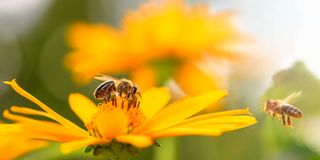
With over 40 per cent of bees vanishing in just 14 years and economic losses now hitting Sh14.34 billion yearly, this isn't just about missing honey. It's about missing meals.

A landmark report released by Greenpeace Africa has sent shockwaves through Kenya’s agricultural and health sectors, revealing that toxic pesticide residues have infiltrated the nation’s bee products, water systems and soil.
The study, titled “Food or Poison? The Cost of Highly Hazardous Pesticides to Africa’s Food Security,” warns of a "silent chemical storm" in which the very substances meant to protect food are instead poisoning the foundations of the environment.
Researchers have confirmed the presence of Highly Hazardous Pesticides (HHPs) in honeybee products across Murang’a, Kiambu and Nairobi counties. The data from Murang’a is particularly staggering. Eleven different pesticides were detected in bee products, with 70 per cent classified as highly hazardous and 80 per cent already banned in the European Union.
Chlorpyrifos—a neurotoxin that the Pest Control Products Board (PCPB) only recently moved to phase out for agricultural use by late 2024—was the most frequently detected chemical, often exceeding safe limits. While it is now restricted to termite control in construction, its persistence in the environment remains a threat. In Kiambu and Nairobi, contamination of pollen was even more acute; levels of Thiamethoxam were found to be more than four times higher than the EU safety standard of 10 ppb.
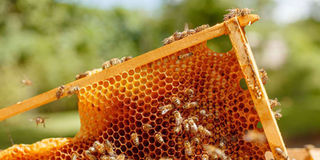
Bees. An apiarist who has mastered the art of raising and maintaining bee colonies and their hives.
In Kiambu and Nairobi counties, pollen from beehives also showed high pesticide contamination. Levels of Thiamethoxam, a chemical now restricted but previously used to control sucking pests, were more than four times higher than the EU standard of 10 ppb for bee products.
“These chemicals can kill pollinators outright or weaken them by damaging their immune systems, navigation or ability to reproduce. Even at low concentrations, they can reduce bees’ ability to find flowers, care for their larvae or survive the winter. Herbicides (such as glyphosate) add to the problem by destroying wildflowers and nesting habitats, leaving pollinators with less food and shelter.”
“Different crops rely on many different pollinators, not just one type of bee. This includes honeybees, stingless bees, carpenter bees and other insects, all of which are essential for producing fruits, vegetables and oilseeds. Some African species are even more sensitive to pesticides than European bees. Yet pesticide safety tests only use European bees, and no local tests are done before a pesticide is approved in Africa.”
While the use of the pesticides has been sold as the solution to boost crop yields, Greenpeace Africa study insists it has come with devastating costs.
“These chemicals contaminate our food, harm our health, and destroy the ecosystem by killing pollinators (e.g. bees) and soil life, undermining the very foundation of our food security. As extreme weather events intensify from prolonged droughts to erratic rains, farmers face new pests outbreaks and crop diseases, driving even greater dependence on chemical pesticides. In countries like Ghana, Kenya, and South Africa, nearly half of all registered pesticides are classified as HHPs and are already banned in Europe for their proven dangers to people and the planet,” the study says.
The study also took a deep look at farmer behaviour in Kiambu and Nairobi. It found that a staggering 86 per cent of farmers apply pesticides at least once a week, often using a mixture of carbamates, pyrethroids and neonicotinoids. Popular brands and chemicals like Dichlorvos and Thiamethoxam are staples in the fields. This high frequency of application explains why hive products in cultivated landscapes show significantly higher concentrations of toxins compared to those in forested areas.
Kenya’s waterways are perhaps the most visible victims of this chemical runoff. In western Kenya, a study of five rivers around Kisumu found pesticide contamination in every single sample. Chemicals like Diazinon, Imidacloprid and Atrazine were detected in 80 per cent of snail samples, showing how these toxins accumulate in the food chain.
More alarmingly, the report links this pollution to a rise in malaria and bilharzia. Atrazine acts as a fertiliser for the algae that bilharzia-carrying snails feed on, while insecticides like Chlorpyrifos kill off the fish and insects that naturally prey on those snails. This creates a "perfect storm" for disease transmission. Simultaneously, mosquito larvae are essentially being "trained" in these toxic waters, developing genetic resistance to the insecticides used in medical bed nets and indoor spraying.
The contamination stretches across the Rift Valley. In Narok, 70 per cent of water samples tested positive for Carbendazim, a known endocrine disruptor that makes the water unsafe for infants to drink. In Lake Naivasha, concentrations of Chlorpyrifos have surpassed safety thresholds for drinking water, threatening both the ecosystem and the livelihoods of those who depend on the lake.
The soil itself is struggling to filter this chemical load. Across 47 samples analysed nationwide, 60 per cent contained residues, and many showed a "cocktail" of more than 10 different pesticides. The most prevalent were Glyphosate and its breakdown product, AMPA, which remain in the soil long after application. These chemicals destroy the microbial life essential for fertile soil, turning a carbon-storing resource into a degraded, chemical-heavy landscape.
The report identifies a massive "double standard" in global trade. Nearly half (47 per cent) of the pesticides registered in Kenya are banned in Europe, yet they continue to be exported to and used on Kenyan soil.
The danger is compounded by what the report calls the "cocktail effect":
“In reality, neither nature nor people are exposed to a single pesticide at a time. Farmers often use pesticide mixtures (tank mixes), and residues from different products accumulate in soils, rivers, food and even the air. This creates a cocktail effect where multiple pesticides interact, amplifying risks to biodiversity, ecosystems and human health.”
“Current regulations only assess pesticides one by one. Each substance has its own threshold value for water, food or soil, but the combined effects of multiple pesticides are not considered. This means that even if individual residues stay below their limits, the overall mixture can still harm pollinators, soil organisms, fish or human health. This regulatory blind spot means that the true risks of pesticides are underestimated, especially of HHPs that are particularly toxic. Addressing mixture toxicity requires stricter regulation, integrated monitoring and a precautionary approach, especially in Africa, where environmental monitoring is limited and smallholder farmers often use multiple products without guidance.”
Greenpeace Africa is calling for urgent intervention. The recommendations include creating a priority list of pesticides for immediate action and ending the "double standard" by banning the export of chemicals from the EU that are prohibited for use in their own countries.
The report concludes that a phase-out of HHPs will only work if it is strict, time-bound and supported by a roadmap to scale up agroecology. By empowering farmers with training and access to biopesticides, Kenya can begin to move away from this toxic cycle and protect the health of its people, its pollinators and its land.
Follow our WhatsApp channel for breaking news updates and more stories like this.