Waste pickers turn Makueni’s dumpsite into a goldmine
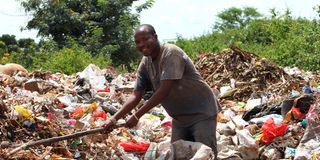
Oscar Mwanzia rummages through a heap of garbage at Timboni dumpsite in Wote Town, Makueni County on May 26, 2025.

What you need to know:
- Timboni dumpsite has become a battleground where plastic bags wage a silent war—killing livestock that mistake them for food, choking river tributaries, and testing the resolve of a county determined to clean up.
For years, Eunice Nthoki toiled in Makueni’s sun-scorched fields, making bricks and gravel to sell to construction sites—a job that paid less than Sh300 per day.
Despite the exhausting work, the peasant farmer from Kaseve village struggled to educate her six children, trapped in a cycle of poverty with no safety net. Things changed drastically last year after she was introduced to scavenging at Timboni, a sprawling dumpsite in Wote town.

Today, she strides through the town with a new title: ‘Mama’ Chupa—the bottle lady—after discovering a lucrative trade in scavenging glass bottles from the dumpsite. Last month, she earned Sh60,000 in a single sale.
“Everyone calls me Mama Chupa,” says an exuberant Eunice, who is the only woman in a six-person team that scours the dumpsite daily.
The double shift: A waste picker's grueling daily grind
Before the first rooster crows, Eunice is already tending to the fire. She moves quietly in the pre-dawn darkness, preparing breakfast for her husband— a menial labourer. By 6.30am, with her husband fed and the youngest child roused for school, Eunice ties a leso around her waist and begins her 40-minute boda boda journey to Timboni dumpsite. The motorbike ride costs Sh100—a daily expense that cuts deep into profits, but walking isn’t an option when every minute at the dumpsite translates to money.
At Timboni, the air hangs thick with the sour stench of rotting food and chemical waste.
The stench is overwhelming, the flies relentless—but for Eunice, this is where opportunity lies. She joins five other pickers, scanning fresh garbage trucks for treasure. Her specialty? Glass bottles—the "blue gold" of Wote’s waste economy. Middlemen offer between Sh3 and Sh5 for a kilo of crushed glass bottles.
But she also collects cartons and plastic bottles, which fetch less money.
After hours of sifting through rotting waste with bare hands, she finally gathers a pile of glass fragments. Eunice sits under a shade to crush them into small pieces using a mallet as required by a client in Mombasa, who buys them regularly for recycling into glass bottles.
“The last time the client came for crushed glass bottles, I pocketed Sh60,000. The bulk of this windfall went into clearing fees for my last-born daughter, who is in secondary school. I am looking forward to making more money in the coming months.”
Eunice and the rest of the team were introduced to the waste collection business by Oscar Mwanzia, who has lived off dumpsites his entire adult life.
Over the years, Oscar, 30, has established a strong network of brokers who keep cartons, glass and plastic recycling plants in Nairobi, Mombasa and Kiambu counties running.
Oscar says he has witnessed Timboni dumpsite grow into a defiant hill following the advent of devolution and, lately, after the town was elevated to the level of a municipality through the support of a World Bank-funded programme.
“Initially, the county government’s environment officials delivered one to three tractor loads of garbage to Timboni daily. Today, the landfill receives more than 10 skip bins of solid waste daily. This has translated to increased cartons, glass and plastic bottles business,” he said.
The thin veneer of entrepreneurship masks a growing solid waste crisis in the county. Wote residents generate 20 tonnes of waste solid daily, overwhelming the dumpsite “Wote is home to about 100,000 residents. We collect around 20 tonnes of solid waste daily,” Wote Municipality manager Everlyn Mutua told Healthy Nation.
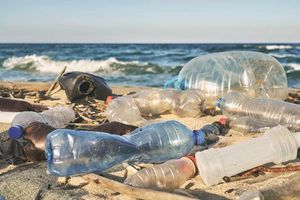
According to Ms Mutua, managing non-biodegradable components of the solid waste generated by the municipality has been the biggest source of headache. Timboni dumpsite has become a battleground where plastic bags wage a silent war—killing livestock that mistake them for food, choking river tributaries, and testing the resolve of a county determined to clean up.
“We have witnessed increased volumes of second-generation liquor bottles, plastic water bottles, plastic bags and sanitary towels littering at the dumping site,” she said while acknowledging the critical role played by the team of waste entrepreneurs led by Eunice and Oscar in reducing the burden of non-biodegradable waste.
A recent move by the National Environmental Management Authority to condemn Timboni owing to its proximity to River Kaiti's tributary—a critical water source - has left Wote municipality scrambling for alternatives as the site previously handled the bulk of the town’s solid waste.
In response, Governor Mutula Kilonzo Jnr’s administration has rolled out plans to relocate the dumpsite and mitigate the growing waste management crisis.
Makueni County is pinning its hopes on a Sh180 million decentralised solid waste treatment facility nearing completion in Kwakathoka, on the outskirts of Wote Town, to finally address the region’s persistent waste management challenges.
“We are turning a new leaf in solid waste management with a state-of-the-art treatment facility, which is more than 90 per cent complete,” Mr Kilonzo Jnr said when he led government officials and environmental enthusiasts in celebrating this year’s World Environment Day. The governor used the platform to challenge the national government to enlist county governments in the campaign to end plastic pollution.
The county is also banking on two legislations designed to force polluters to pay as well as encourage segregation of solid waste at source for better management.
Makueni County Sustainable Solid Waste Management Bill, 2024, and Makueni County Environmental Management Bill,2024 are at an advanced stage of the legislative process.
“Manufacturers of plastic water bottles, sanitary towels and second-generation liquor, which is sold in glass bottles, should emulate Coca-cola Company, which collects its bottles to avoid littering the environment. Otherwise they should prepare to pay a hefty fee to support environmental restoration,” said Makueni Environment Chief Officer Ngovi Muthoka.
While officials debate policies, Eunice’s team does the dirty work—diverting tonnes of recyclables from the dump.