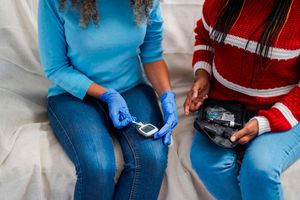
'Niko sawa': How feeling healthy is slowly killing Kenyans

Men are more likely to request over-the-counter prescriptions; have less patience waiting in the hospital or clinic queues to be seen; are less likely to adhere to the instructions given with regard to medications; and are less likely to return for follow-up clinic visits.

For months, Peter* brushed off the dull headaches and occasional dizziness that crept in after long days at his Nairobi office. He told himself it was stress, lack of sleep, or too much screen time. A colleague once suggested he get his blood pressure checked and go for an annual check-up. Peter laughed it off.
"I am fit. I am not ill; I do not feel ill. Why would I go for a check-up? Hizi vitu ukitafuta utapata." It's a joke many Kenyans make about routine check-ups: go looking for what ails you, and you're bound to find it.
Then one Tuesday morning, Peter collapsed at his desk. He was rushed to hospital, where doctors found his blood pressure dangerously elevated, a condition they said had likely been building silently for years.
Peter's story is not unusual. According to a new national survey, seven in ten Kenyans who skip routine health checks say they do so simply because they "feel healthy", exposing a wide gap between what people know about their health and what they actually do about it.
The 'Know Your Numbers' (KYN) survey, conducted by Ipsos Kenya and commissioned by Doctors for Healthy Living (D4HL), found that 72 per cent of Kenyans who had not undergone recent screening cited perceived wellness as their reason, far ahead of those who blamed lack of time (18 per cent), inconvenient timing (12 per cent) or cost (10 per cent).
The findings were drawn from a sample of 1,100 connected, economically active adults in urban and peri-urban Kenya, and point to a widening gap between health awareness and preventive action even as the burden of non-communicable diseases (NCDs) continues to climb in the country.
NCDs are long-lasting medical conditions that cannot be spread from person to person. According to the World Health Organisation, the four main types include conditions affecting the heart and blood vessels, such as heart attacks, strokes and coronary artery disease; cancers; chronic respiratory diseases such as asthma and chronic obstructive pulmonary disease (COPD); and diabetes, a condition where the body cannot properly process blood sugar, including Type 1 and Type 2.
Awareness high, testing low
The survey found awareness of key health indicators is generally strong. Nine in ten respondents said they were familiar with blood pressure as a health marker, and 78 per cent knew of blood sugar. Awareness fell to 66 per cent for Body Mass Index (BMI) and 63 per cent for cholesterol and dropped sharply to just 25 per cent for waist circumference, a critical marker for diabetes and cardiovascular disease risk.
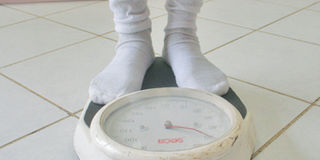
Awareness fell to 66 per cent for Body Mass Index.
That awareness rarely translates into testing, though. While 79 per cent of respondents said they had checked their blood pressure at least once in their lives, lifetime screening rates fell to 47 per cent for blood sugar, 15 per cent for cholesterol and just 9 per cent for waist circumference.
The picture worsens when narrowed to recent behaviour. Within the past 12 months, only 38 per cent had tested their blood sugar, 10 per cent their cholesterol, and a mere 6 per cent their waist circumference. Respondents said convenience (66 per cent) and having a trusted provider (47 per cent) were the biggest factors shaping where they chose to get tested, ahead of faster service, better quality and lower cost.
Women consistently reported higher awareness and screening rates than men across nearly all indicators, a pattern the survey's authors say points to the need for interventions specifically targeting men's engagement with preventive healthcare.
"The biggest barrier to preventive health behaviour is perceived wellness. The dominant reason for not testing recently is 'I feel healthy', mentioned by 72 per cent of the respondents. This shows that many still treat screening as a response to illness rather than a preventive habit. This reflects a deeply ingrained reactive healthcare orientation, in which health-seeking behaviour is triggered primarily by symptoms rather than by preventive intent," noted the report.
"Many connected Kenyan adults still see health testing as something to do when they feel unwell, not as a routine action to stay well. While perceived understanding is broad, it may still not be sufficiently deep to trigger sustained preventive behaviour, especially for asymptomatic risk conditions. This creates a behavioural gap between knowing the indicators and taking preventive action. The belief 'I feel healthy' is the dominant barrier for both men and women, suggesting a reactive health mindset rather than a gender-specific issue," the report adds.
"Feeling healthy" a dangerous assumption
Dr Robert Mathenge, co-founder of D4HL, said the findings reflect a common but dangerous assumption among Kenyans.
"One of the biggest challenges in preventive healthcare is that many people equate feeling healthy with being healthy. While feeling well is important, conditions such as hypertension, Type 2 diabetes, high cholesterol, and even cancer can develop without obvious symptoms," he said.
He added that detecting health risks early improves the odds of timely treatment and better outcomes, describing regular monitoring as "one of the simplest and most effective ways of taking charge of your health".
Mathenge cautioned that because the survey focused on urban and economically active Kenyans, the true picture in rural areas, where health literacy and access to screening are typically weaker, could be worse.

Pharmacies, workplaces flagged as missed opportunities
The survey identified missed chances to convert everyday health contact into preventive screening. Despite being among the most frequently visited health touchpoints, with 59 per cent of respondents saying they had visited a pharmacy or chemist in the past three months, only 17 per cent named pharmacies as their preferred location for screening. By contrast, 80 per cent preferred private hospitals and clinics, and 71 per cent preferred public health facilities.
The study also flagged workplaces as a promising but underused platform, noting that integrating routine screening into workplace wellness programmes could improve employee wellbeing, cut absenteeism and support long-term productivity.
"There is a need to shift the healthcare paradigm from reactive treatment to preventive care by embedding routine screening into everyday life and institutional systems. This strategic shift is increasingly important as Kenya faces a growing burden of non-communicable diseases while routine preventive health behaviours remain inconsistent," said the report.
"Employers have a critical role to play in normalising preventive healthcare. By integrating regular health screening into workplace wellness programmes, organisations can transform the workplace from simply a place of employment into a catalyst for preventive health. Making screening convenient, trusted and routine can help convert awareness into sustained preventive behaviour," the report notes.
"Knowing your numbers should become as routine as servicing your car or renewing your insurance. Preventive healthcare must become part of where people live, work and access everyday services. The easier and more routine we make screening, the greater our chances of detecting disease early and safeguarding our health," said Anthony Mugo, D4HL's Head of Partnerships.
The researchers say the belief that feeling healthy means being healthy is one of the greatest barriers to preventive healthcare. Behaviour change efforts, they say, should focus on showing that many NCDs remain symptomless for years, making routine screening the only reliable way to detect risk early. Early diagnosis creates opportunities for prevention and lifestyle change; late diagnosis often means the disease has already progressed, requiring more intensive treatment and management.
Kenya's rising NCD burden
The findings land against the backdrop of Kenya's rising NCD burden, which includes hypertension, diabetes, cardiovascular disease, cancer and obesity. Globally, the World Health Organization attributes 74 per cent of deaths to non-communicable diseases, with low- and middle-income countries bearing the heaviest toll.
The Kenya Medical Research Institute (Kemri) notes that 39 per cent of all deaths in Kenya are caused by NCDs. It also projects a 55 per cent increase in NCD-related deaths by 2030, and notes that the heaviest burden, 53 per cent, occurs among the young, aged below 40.
The KYN campaign, endorsed by the Ministry of Health since it began in 2018, targets Kenya's working-age population, a demographic officials say is central to the country's economic productivity and therefore especially vulnerable to the disruptive effects of chronic disease.
The initiative aims to have at least half of Kenyans actively monitoring blood pressure, blood sugar, cholesterol, waist circumference and BMI, as part of a broader push to shift the country's healthcare culture from reactive treatment to prevention.
Follow our WhatsApp channel for breaking news updates and more stories like this.