Multimillion-shilling drive to end elephantiasis moves to the coast
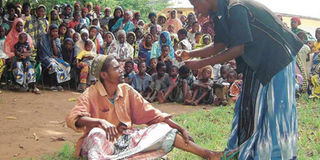
Mwatunza Maamun (seated) and Mohamed Hassan, members of a peer educators group perform a play to sensitise the community about the importance of seeking treatment when infected with elephantiasis during the launch of fourth round of Mass Administration of Drugs to combat the disease at Muhaka health centre in Msambweni, 2008. PHOTO| FILE| NATION MEDIA GROUP
Statistics from the Ministry of Health show that elephantiasis affects nearly 80,000 men who suffer from genital disease complications, particularly swelling of the scrotum and testicles due to lymph fluid build-up, also called hydrocele.
Lymph is a thin, clear fluid that circulates throughout the body to remove waste, bacteria, and other substances from tissues.
The Government has set aside nearly Sh1 billion to treat elephantiasis, a disease characterised by disfigured gigantic legs, breasts and genitals, in five counties of the coastal region.
Elephantiasis, also called lymphatic filariasis, does not have symptoms but leads to permanent physical disability. It also causes the thickening and hardening of skin. It is caused by a thread-like microscopic worm, which is spread through a mosquito bite.