The first time I saw him, I almost mistook him for a hip-hop artiste. With a durag tightly wrapped around his head, big headphones covering his ears, and a pair of baggy trousers sagging below his waist, he strutted confidently into the church compound.
For a moment, I wondered—was he actually listening to music, or were the oversized headphones just part of the look?
This is the new face of the modern teenager in church. Now dubbed the “generation crocs and socks,” these young Christians are digital-first, self-expressive, and unapologetically unique, forcing churches to shift their approach to faith, worship, and engagement to reach them.
Lifestyle spoke to young and older pastors, Gen Zs, and their parents, who are keen to make Christianity relevant in this new era of liberalised dressing and speech.
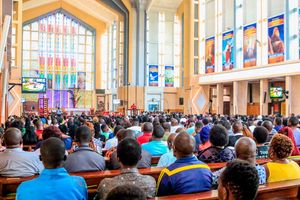
At Life Church International Kasarani, Nairobi where a “Crocs & Socks: Teens Rendezvous” event was happening, Evans Fwaya, a youth pastor, says reaching Gen Z requires the church to step out of its comfort zone.
“This generation is different from the ones before. They don’t just listen because you’re a pastor. They question everything, and they want real, raw, and relatable answers. That’s why we package the gospel differently. It’s not about a pulpit and a suit anymore—it’s about connection,” he says, “a good example is the church using skits, movies, bonfire events, questions and answers and so on. This allows them to see the Gospel as it is but using a relatable medium.”
For Mr Fwaya, his Sunday services often include spoken-word poetry, live hip-hop performances, and interactive discussions rather than traditional sermons.
“We don’t just preach at them—we talk with them. We ask them about their struggles, their mental health, their doubts, and even their fashion choices. If they feel heard, they stay,” Mr Fwaya adds.
His approach is resonating. The event was packed with hundreds of teens (ages 12 to 20) in oversized hoodies, crocs with colourful charms, and phone screens constantly lighting up with notifications.
“Recognising the burden to fill a gap, we understand that every generation has unique dynamics. To effectively engage Gen Zs and Gen Alpha, we bring them on board in ways they resonate with—teaching, training, and impacting them while fostering a sense of belonging. Through such annual conferences with diverse speakers and platforms to discuss their challenges, we nurture leaders who stem from the church. Many teenagers feel ignored, and some parents struggle to understand their issues, including personality struggles. A suicidal Form 3 student’s transformation affirmed our mission, inspiring us to hold more camps and build a stronger, connected youth community,” he says.
Youth pastors seeking to court younger believers have come to understand that the biggest competitor for the church today is not another religion—it’s the algorithm. TikTok, Instagram Reels, and YouTube Shorts have become the go-to platforms for young people.
“A pastor’s sermon competes with a 15-second viral video of someone dancing in Dubai,” says Nickson Michael, a senior pastor at Assembly of Faith Church in Nairobi’s Utawala who has been in ministry for over two decades.
Reverend Nickson Michael from Assembly of Faith Church in Utawala poses for a picture in Nairobi on February 11, 2025.
Photo credit: Bonface Bogita| Nation
“When I started preaching, the biggest concern was how to keep young people from secular music. Now, we’re dealing with an entire generation that gets their theology from Instagram (a platform that has little holy content),” he says, shaking his head.
To adapt, churches are investing in content creation—from producing short-form videos with gospel messages to hosting live question-and-answer sessions on social platforms where teens can ask real, unfiltered questions.
“There’s lots of work to be done in church, and instead of losing the Gen Zs to the world or having them work without pay in church, once they graduate, we hire our own professionals in different areas like IT, sound engineering, music and so on. That way, they’ll stay in church and earn a living as well,” says Tony Mwangi of Life Church International in Limuru, known as Pastor Tee in the youth circles.
“We have to meet them where they are. If they won’t come to church, we’ll take the church to where they are and in sheng’; the language they understand. Even if it’s rapping, we will rap until the message gets home,” adds Pastor Tee.
Isaiah Mamayu, a 30-year-old social media-savvy minister serves at City Lighters Church in Nairobi Cinema. His services are usually packed with youngsters mostly in sunglasses, neck chains, ear studs, jeans and trendy sneakers to complete his look. He says Gen Zs easily resonate with him. He dresses like them and they call him Pastor Mash Mwana. But being a pastor has not shielded them from the stereotypes.
Isaiah Mamayu, popularly known as pastor Mash Mwana. He is a youth pastor and a gospel singer.
Photo credit: Pool
“One day, a certain preacher felt I wasn’t supposed to be preaching just because of my look, my tattoos and not being in a suit. He was tongue-tied when I asked him how many Gen Zs he has reached and if Jesus would overlook a Gen Z’s genuine heart just because of rugged jeans. He saw how much he had belittled the gospel to dressing over the main aspect; souls,” says Mr Mamayu.
Shanice Wanjiru, 17, who attended the event in a pink oversized hoodie and matching crocs says her generation is “spiritual, but not religious.”
“Church used to feel like a place where you’re judged for how you dress or how you think. But now, some churches are actually cool. They let us be ourselves and talk about real stuff—mental health, relationships, anxiety, even social justice,” she says.
For Kevin Otieno, 19, faith needs to be authentic, not forced.
“We don’t like being told ‘just believe’ without explanation. We want to know why we should believe. We respect transparency. If a pastor acts like they’re perfect, we zone out. But if they admit their struggles, we listen,” he says.
Kevin also points out that many Gen Zs prefer community over ceremony. “I don’t have to be in a church building to feel close to God. Sometimes, worshipping with friends at home, listening to Maverick City Music, and talking about life is more meaningful than sitting through a long service,” he adds.
Many parents struggle to understand this shift. Lucy Mwangi, 44, a mother of two teenagers, confesses that she initially resisted the idea of a casual, non-traditional church for her children.
“I grew up in a strict church setting where girls wore long skirts and boys had to cut their hair short. Seeing my son go to church in ripped jeans and crocs felt so wrong,” she laughs.
But after attending a few youth services, she saw the impact.
“I realised it’s not about what they wear—it’s about their hearts. My children now talk to me about faith in a way I never did with my parents. They ask deep questions and even challenge me spiritually,” she says.
For many parents, the key is trust—trusting that their children can encounter God in a different way than they did. The church’s adaptation to Gen Z is still a work in progress. Some leaders worry that too much cultural flexibility could dilute the gospel message, while others see it as a necessary evolution.
“Jesus met people where they were—at wells, at tax booths, on boats. We have to do the same,” Mr Fwaya says.
Bishop Moses Masinde, 60, who has led his church for over 30 years, admits that while he was initially sceptical about the new youth culture, he has seen its impact.
Bishop Dr Moses Masinde poses for a photo on February 10, 2025 at Reinsurance Plaza in Nairobi.
Photo credit: Billy Ogada | Nation
“I used to think that if we allowed these young people to come as they are, we would lose the sacredness of worship. But I was wrong. We are not losing them—we are finally reaching them,” he says.
Mr Masinde has made significant changes in his church to woo young believers. Church services are shorter, praise and worship include more contemporary music, and youth participation in decision-making has increased.
“We used to plan youth services without them. Now, they lead. They tell us what topics matter to them. We listen. And because of that, we see them taking ownership of their faith,” he adds.
The change is also affecting how churches train their leaders. Seminaries and theological schools are incorporating digital evangelism, psychology, and social media engagement into their curriculums. The traditional image of a pastor is evolving from an older, suit-wearing figure to someone who understands mental health, online culture, and the struggles of modern youth.
One of the most unexpected outcomes of this movement is church growth. Many churches that were struggling with declining youth attendance are now seeing a revival.
“There was a time we feared young people were leaving the church completely. Now, we see them returning—not in the way we expected, but they are here,” says Alice Wanjiru, a 35-year-old pastor, who leads a fast-growing youth ministry.
Her church has doubled its youth attendance in the last three years, mainly because it introduced discussion-based services, social impact projects, and digital outreach.
“When you empower them, they invite their friends. They create their own content about the church. Suddenly, the gospel spreads in ways we never imagined,” she says.
The new approach has also changed financial giving. Instead of traditional offerings, many youths prefer to give offerings and tithe digitally via mobile money or online platforms. Churches that embrace technology are seeing increased engagement because the process feels more aligned with their lifestyle.
“Young people won’t carry cash, but they will send money via their phones if they believe in the cause,” Ms Wanjiru says.
“However, God is not an author of confusion and there has to be an area where the scriptures draw the line. Romans 12:2 says, do not conform to the pattern of this world, but be transformed by the renewing of your mind,” she says, and adds,
“Then you will be able to test and approve what God’s will is—His good, pleasing and perfect will. Once you have the Holy Spirit, He will lead you to decency, not the other way round, therefore, exposing and too-tight attires will not interest you. The factor of culture also comes into play. There is a way you'll dress in Africa and become a stumbling block to other believers in the church. We therefore should be careful not to allow the World to dictate the church,” she says.
One of the biggest societal benefits of engaging Gen Z in church is its impact on crime and social vices.
For years, many young people felt disconnected from religious institutions, leaving them vulnerable to influences like drug abuse, crime, and depression. But as churches open up to their realities, more young people are finding purpose and community.
Daniel Omondi, 22, was once involved in petty crime. He grew up in a tough neighbourhood in Nairobi’s Dandora where gang life was the norm.
“I didn’t care about church. To me, it was a place for older people who judged us, but when a youth pastor came to our area wearing sneakers and talking to us like friends, I listened,” he says.
That pastor invited Daniel to a church football tournament. It was a simple activity, but it changed his life.
“I met people who cared about me. I saw guys my age who were doing something positive. I stayed. And that’s how I left that life,” he says.
Churches are now using sports, music, and technology as tools for crime prevention and mentorship. Programs that once focused only on prayer and fasting now include life skills training, business mentorship, and mental health support.
According to community leader and former police officer James Karanja, this approach is reducing crime in many urban areas.
“Young people need direction. If they don’t find it in church or positive environments, they will find it in the streets. The churches embracing them as they are—without forcing change immediately—are making a huge impact,” he says.
Faith beyond church walls
The young people are also redefining what it means to be Christian. They believe faith should extend beyond the church walls into social justice, mental health awareness, and community impact.
“For us, Christianity is not just about attending Sunday service. It’s about standing for something," says Linda Njeri, 20, a university student who leads online Bible discussions.
She and her friends run a WhatsApp group where they discuss faith, relationships, and current events. They don’t always agree on everything, but they believe faith should be a conversation, not a dictatorship.
“We don’t just want to be told what to believe. We want to engage, challenge and understand why faith matters,” she says.
So, what does the future hold for the church and "Generation Crocs and Socks"? More inclusivity, more dialogue and more innovation.
“The gospel doesn’t change, but the way we present it must,” says Mr Fwaya.
He says that the journey is not without its challenges. Some youth still resist change, while others worry about maintaining spiritual depth, but one thing is certain: this generation is not leaving faith behind, rather, they are reshaping it. For now, whether it is TikTok sermons, or Bible studies in WhatsApp groups, the church is learning to speak the language of a generation that refuses to be boxed in.