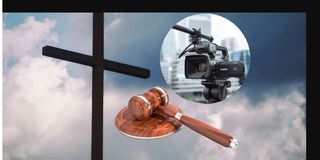
Churches’ filming disclaimers have ignited a debate over consent on social media, with some Kenyans arguing that congregants who do not wish to appear in photos or videos should have designated seating areas or remain home and worship remotely.
This follows a warning by Immaculate Kassait, the outgoing Data Protection Commissioner, who said that placing signs informing congregants about filming does not amount to consent to process (broadcast) their personal information.
On November 18, Ms Kassait was asked whether churches could livestream services after displaying notices informing people that cameras were recording. Her response was that organisations capturing identifiable individuals were processing personal data and needed to obtain appropriate consent, warning that breaches under Section 63 of the Data Protection Act carry administrative penalties of up to Sh5 million.
Data Commissioner Immaculate Kassait. The Office of the Data Protection Commissioner (ODPC) found Platinum Credit liable of breaching Samwel Waweru's privacy.
Photo credit: File | Nation Media Group
“You’re processing data, so it’s important to just get consent,” she said.
Several churches across Kenya have begun issuing public notices informing congregants that they could be photographed, filmed, or recorded during services, following renewed scrutiny over the broadcasting of worshippers without their consent.
The notices outline how images, voices, and appearances captured during church services may be used on television and digital platforms.
Christian Foundation Fellowship (CFF), led by Archbishop Harrison Ng'ang'a, published a notice on November 20 informing congregants that photography, video recording, and livestreaming could take place during services and ministry events. The church listed the channels through which the footage could be shared, for instance, Faith TV Kenya, CFF ChemiChemi, HK Ministries, and Harrison K. Ng'ang'a's official platforms.
A day later, Jesus Christ Compassion Ministries (JCM), led by Bishop Ben Kiengei, issued a similar communication, notifying worshippers that services and other activities could be broadcast on JCM TV, Facebook, YouTube, and occasionally TikTok. The church also asked those who did not wish to appear in recordings to notify its administration or media team before entering filming areas so that alternative arrangements could be discussed.
JCC Thika, led by Reverend Kelvin Ephraim, also published a notice on November 21. Other prominent churches whose notices have been reported include Jubilee Christian Church and AIC Milimani, which have also communicated their filming and photography arrangements to worshippers.
Voice of Salvation and Healing (VOSH) Church International in Nairobi’s Kayole cited recent developments in Kenya's data protection law in its notice, stating that attendance at any service would be interpreted as consent to appear on its social media pages. Similarly, CFF Church Kiambu Town, also led by Bishop Michael Wanderi, referenced the Data Protection Act, 2019, noting that entering the premises constitutes agreement to be recorded without compensation. In Ngong, Highway of Christ Assembly under Stephen Macharia, a bishop, also issued a streaming disclaimer noting that services are broadcast live for encouragement and edification.
Elsewhere, AIC Kapchepsir Church informed members that services are livestreamed on Facebook and advised anyone who does not wish to be recorded to alert the administration or social media team beforehand. In Mtito Andei, King’s Love Ministry City Kathekani, led by Shadrach Mutuku, a pastor, urged attendees to be mindful of cameras and communicate any privacy concerns before the service begins, while Joysprings International Ministries in Kitengela issued an opt-out reminder for those who prefer not to appear on its television or social media broadcasts.
In Tongaren, Pefa Ambich Cathedral advised worshippers that its services are continuously recorded and streamed live, while SIFA Ministries Kenya (Kakoneni SIFA Church) published bilingual notices in English and Kiswahili instructing congregants to notify ushers or the media team before a service begins if they do not want to be filmed. GVC-Truth Centre also rolled out a disclaimer notifying visitors that recordings are kept for documentation and ministry records.
Online evangelism has expanded in recent years, with churches increasingly livestreaming services or paying media houses millions of shillings annually to broadcast their sermons and reach wider audiences.
While no church has been sued in court over service livestreams, Kenyan courts have previously ruled against institutions that published identifiable photographs without consent.
The notices have sparked mixed reactions on Facebook, dividing social media users and church leaders over whether walking into a church strips worshippers of their legal right to privacy.
Frank Abura told Nation Lifestyle livestreaming allows Christians who cannot physically attend services to follow proceedings from wherever they are, but argued that churches should obtain permission from congregants before recording them.
“Churches should inform all congregants and provide a consent form of some sort where one can approve if they are comfortable with being filmed or photographed,” he said.
Mr Abura added that he would have no problem approaching his church to request that he not be filmed.
Joshua Mwangi, 31, an Seventh Day Adventist (SDA) congregant, also supported livestreaming, saying it allows churches to reach Christians beyond their physical congregations. However, he cautioned against capturing worshippers without their consent, noting that some people have privacy and safety concerns about having their lives documented online.
Written consent per worshipper
However, securing a written consent from every congregant could prove difficult, particularly for churches that draw large crowds and use cameras mounted around the sanctuary, including roving cameras that capture worshippers from different angles.
Mr Mwangi suggests churches designate seating areas outside camera view for those who do not wish to appear in recordings.
“Church is not all about being captured but listening to the Word, thus salvation is individual, as people say," he said.
Others criticised those against filming in church, calling media an evangelism tool and telling anyone who does not want to be seen to "go to the forest." Another social media user urged churches to challenge the law in court, describing it as an attempt to regulate religious institutions.