When a house is worn out, it pleads for renovation and sometimes a total overhaul. And when these pleas fall on deaf ears, it retaliates and stops serving you the way it did in the beginning.
But at what time should you exactly start panicking when it comes to failing functionalities? Two years into home-ownership? Five or a decade later?
There are many unspoken rules in home maintenance, and this week, Moses Mwaura, a construction manager and a director at Design Key Builders (DKB), breaks it all down: The five-year rule, how choice of materials and design affect maintenance and renovations, the tell-tale signs that a house is pleading for renovation and why a structural engineer is one of the most important professionals in such works.
When Mwaura established Design Key Builders, the company focused on new building works but along the way, he realised that a lot of construction firms were avoiding renovation. Here he saw a gap.
“I saw people struggling to access renovation services. Most homeowners end up working with skilled workers or fundis. In some cases, the fundis compromise the structural integrity of buildings. Renovation involves demolishing and sometimes introducing new features. These processes need to be approached delicately,” he says.
Mwaura started developing a format on how to go about renovations. He researched renovation planning to come up with a standardised approach. Renovation planning, he says, is a very important step akin to a programme of works.
“In some cases, renovation requires more technical skills than new builds. A building plan is very helpful in understanding the structure you are about to repair. Unfortunately, some buildings have no plans, either because the initial consultants did not hand them over to the building owners, or the buildings did not have plans to begin with.”
Although many people assume renovations are purely cosmetic, Mwaura says there are technical bits to analyse first, to avoid costly errors. This is often conducted by the same construction professionals you would engage when building.
Renovations are about functionality, and Mwaura explains that before demolition starts, a team of at least four construction professionals come together to conduct an intensive building analysis. These professionals include a structural engineer, an architect, a quantity surveyor and a project manager. At some point, they might involve a mechanical, electrical and plumbing engineer, depending on the scale of work.
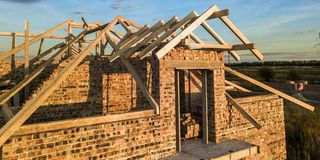
Although many people assume renovations are purely cosmetic, there are technical bits to analyse first, to avoid costly errors.
Photo credit: Pool
“To kick off a renovation, we first bring in a structural engineer who conducts an integrity analysis of the building. One mistake during the renovation can easily collapse a building,” explains Mwaura.
The structural engineer is one of the most crucial experts because they determine whether it is safe to make certain changes in a building.
“Maybe you want to improve functionality. If we are moving walls to expand the building’s functionality, we have to make sure the building’s structural integrity is not compromised. The engineer analyses the structural integrity of the building, and before we move any walls, the engineer has to approve first, in writing.”
The architect looks into the building’s functionality and whether it is addressing current needs. For instance, a home built to accommodate five people initially may not be functional if the family has grown to 10. The architect may also look into the interior finishing if the homeowner wants an updated, modern design.
A quantity surveyor (QS) does the cost analysis. Unlike new builds, where cost is almost straightforward, renovations tend to present complicated costs.
“In renovation, we have different types of cost. First, if you bring down a wall, you incur “demolition cost”. If you build a new wall, that is a “new cost”. If the building owner suggests moving the new wall to a different point in the building, that is “aborted cost”. If you demolish a wall and it has some wiring, you will not use the same cables, and that presents extra costs. Buying new materials also comes at a cost. The QS has to analyse all the financial implications of these processes and present a number we can work with,” Mwaura explains.
Is your home’s design timeless?
When it comes to the things that influence the overall cost of renovations, Mwaura points out that cost is relative and varies from one building to another. Preferences, for instance, determine the final cost because some materials cost more than others. However, renovations that require changes on the layout plan tend to cost more than cosmetic works.
“For example, when moving walls, you have to introduce new columns and beams to hold the structure together. But if you’re just replacing basic finishes, like flooring, paint or cabinets, it’s much cheaper. As long as you are not touching the structural elements, the cost is a bit straightforward,” he says.
Bearing this in mind, Mwaura advises homeowners to be clear of the structural design they pick from the beginning to avoid changing it in the future.
A good example would be people who bought or built houses with small, closed kitchens in the past. With changing design trends, some end up renovating to incorporate larger, open kitchens with modern features such as islands. Mwaura’s company has also received renovation requests for older ceiling designs which had plastering work. With the rise of gypsum and “Tongue “N” Groove” (TnG) ceilings, which feature wooden panelling, the older design has become less appealing. Simply put, initial design decisions can easily impact the cost of future renovations, hence the need to pick timeless designs.
How materials affect renovations
The materials you choose to build with will also affect the renovation in the long run. And it is not just about maintenance. Currently, the industry is evolving and we are seeing new, alternative options for walling, roofing and interiors. Is it a good idea to build with alternatives? Mwaura points out some interesting observations, noted during renovation:
“The older structure, built before 1990, did not use the current pozzolanic cement we use today. The older cement versions had a higher load-bearing capacity than what we are using currently; therefore, the older buildings are much harder to demolish, and sometimes we end up damaging our hammers,” he comments. “These buildings also never had columns because they were built using natural quarry stones, which have a high load-bearing capacity. Gradually, people adopted machine-cut stones, which are non-load bearing, and that’s why we have columns or pillars nowadays”.
Although the older quarry stones have high load-bearing capacity, renovating houses built with these older materials presents a few challenges due to the lack of columns. Columns are important as they hold and balance the structure’s weight; therefore, if you bring down a wall that has no columns, you introduce some risks.
Currently, we have modern, movable materials such as EPS panels, precast concrete panels and the sandwiched EPS panels (sandwiched between two aluminium plates). Cement boards are also popular for partitioning. In Mwaura’s experience, these new movable materials have been relatively easy to work.
“Wiring and piping is very easy with modern walling materials. They are also very reliable when it comes to partitions”.
These observations call for homeowners to be keen when choosing building materials from the onset, and to ensure they are repairable and easy to work with in case of renovations.
Harmonising design changes with existing finishes
Most homes undergo several renovations during their life cycle. As a homeowner, you do not want a house that looks like a patchwork of creative ideas. Typically, an interior designer can create a mood board to ensure changes are harmonised with existing features.
“The board balances the colours and other elements of a building’s interior design to ensure everything is harmonised. With modern technology, the designs are presented in 3D so that a homeowner understands what the building will look like once the renovation is complete. They are shown what they want, versus what professionals are suggesting, while creating room for revisions before the actual work is done on the building,” says Mwaura.
He also advises building owners to research and understand design trends before they make a choice. With so many trends coming up regularly, some of them are just not worth it.
Although each house is unique and there is no standard timeframe for renovating, Mwaura explains that a well-done building should not demand serious renovation before it clocks five years. The renovation cycle should be between five to 15 years. However, he further notes, different elements in a building demand renovations within different timelines.
“For instance, gutters need to be inspected and repaired or replaced every five years. Paint tends to start peeling or fading in five years. Roofing can last up to 15 years before serious issues show. However, the roof has many elements beyond the top material. Wooden trusses can be eaten by insects or damaged by water. It is highly advisable to inspect the roof carefully from time to time,” says Mwaura.
Flooring depends on the material used, and the warranty provided when purchasing the materials can guide you on how long a material will last. Wet areas like kitchens and bathrooms tend to experience failed functions much faster than other parts of a building. In such areas, there is no specified renovation timeline. Instead, a homeowner should renovate as soon as issues appear.
The cost of delaying renovations
While renovations are not mandatory, delaying routine maintenance increases the cost. Mwaura points out that in a worst-case scenario, you may lose the entire building in the long run if repairs are ignored. For instance, ignoring a buckling column or investing in a quick fix such as having a fundi plaster over the column is a disaster in waiting.
In some cases, a small issue can lead to a ripple effect or a chain reaction that affects other elements of the building. A good example is leakages in wet areas. Ignoring leakages can cause damage to other parts of the building within a very short period.
If there is wood in the wet area, it starts rotting. Metallic materials will rust while the concrete will deteriorate over time. The leakages might also cause mould and mildew to grow, and eventually lead to health hazards.