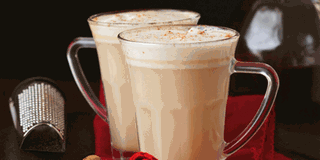
Eggnog is popular in North America, but originated from Europe. It is a sweetened dairy-based beverage traditionally made with milk and/or cream, sugar, and whipped eggs (which give it a frothy texture).
Brandy, rum, whisky, bourbon, Kahlúa, vodka, or a combination of liquors is often added. The finished serving is often garnished with a sprinkling of ground cinnamon or nutmeg.
There are various schools of thought on the origin of eggnog. One is that the drink originated from England and that the “nog” comes from “noggin, a small, wooden mug. The noggin was used to serve drinks at table in taverns (while drinks beside the fire were served in tankards).
The second suggestion is that eggnog is related to various milk and wine punches concocted long ago in the “Old World” (Europe). It is thought that eggnog started out as a mixture of Spanish “sherry” and milk.
Yet another theory says that rum was commonly called “grog”, so the name eggnog is likely to have been derived from “egg-and-grog”, which corrupted to “egg’n’grog” then “eggnog”.
Whatever the origin, the eggnog is still popular for the social character it maintains over the Christmas period – one that spices up the atmosphere and lends tradition to the occasion.
Not everyone is keen on eggnog, and first-timers may also be put off drinking egg. However, if you have the correct recipe you can not only make it but enjoy it.
Do remember that Christmas in the West is usually cold so the light spices make it pleasurable, but Kenyans love cold drinks in hot weather so I think it will go down well.
1. Combine the milk, cloves, ¼ teaspoon vanilla, and cinnamon in a saucepan
4. In a large bowl, combine the egg yolks and sugar. Whisk until fluffy.
6. Pour the mixture into a saucepan. Cook over medium heat, stirring constantly for three minutes, or until thick. Do not allow the mixture to boil.
7. Strain to remove cloves, and leave to cool for an hour.
8. Stir in the rum, cream, ½ teaspoon vanilla and nutmeg.
• There are various types of nonalcoholic and alcoholic eggnogs. Bourbons and brandies are popular choices in the alcoholic version, but some people add dark rum, whiskey or wine as well.
• Most variations of nonalcoholic eggnog will change the amounts of sugar or cream to create varying levels of sweetness or thickness.
• Garnishes are important as well. Some people choose to use no garnish, while others sprinkle a little nutmeg or cinnamon on top. Some people even add a candy cane to stir their eggnog and add a little mint to the flavour. To make it more attractive to children, float a couple of colourful Smarties or grate some chocolate on the top.
• If you are going to be serving eggnog to a large group then you may try serving it from a large punch bowl. Keeping the bowl in the middle of a table looks very festive and serving it from there adds to the party atmosphere.