Hello

Your subscription is almost coming to an end. Don’t miss out on the great content on Nation.Africa

Ready to continue your informative journey with us?

Hello

Your premium access has ended, but the best of Nation.Africa is still within reach. Renew now to unlock exclusive stories and in-depth features.

Reclaim your full access. Click below to renew.

Improving digital safety: quartet eager to change young girls’ lives

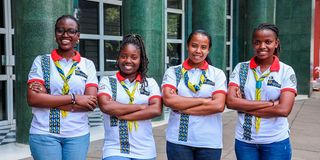
From left: Iduteyiteka Louange Princia, Shamiso Evangelista Muchena, Razafiniarivo Nosoloina Theothaina and Ema Fidelite Niyonkuru. The quartet is driven by a shared passion for empowering young women and fostering leadership. 

Photo credit: Lucy Wanjiru | Nation Media Group

What you need to know:

  • By prioritising girls and young women, we can address these disparities, bridge the digital divide, and empower them with the skills and knowledge they need to navigate the digital world safely and confidently.
  • This is not only vital for their personal growth and safety but also a critical step toward fostering gender equality in the digital age.

Meet Shamiso Muchena, 23, Iduteyiteka Louange Princia, 23, from Burundi, Razafiniarivo Nosoloina Theothaina, 24, from Madagascar and Ema Fidelite Niyonkuru, 22, from Rwanda.

These four young women are part of the transformative YESS (Youth Exchange South to South) programme and have spent the past two months in Kenya with a mission that transcends borders: Inspiring change among young girls.

As Girl Guides under the World Association of Girl Guides and Girl Scouts (WAGGGS), they are driven by a shared passion for empowering young women and fostering leadership.

Central to their efforts is the Surf Smart Programme. This initiative empowers young people—especially girls and young women—to navigate the digital world safely and responsibly.

In an interview with Nation Lifestyle, Shamiso highlights the importance of equipping young people with the tools and knowledge to navigate the digital world confidently and responsibly. She emphasises that fostering digital literacy is key to empowering the next generation to protect themselves, make informed choices, and contribute to building a safer, more inclusive digital future.


Tell us about your role in WAGGGS and what inspired you to bring the Surf Smart Programme to Kenya…
The programme empowers young people, especially girls and young women, to navigate the digital world safely and responsibly. Digital literacy is essential in today’s fast-paced, tech-driven world, and I am passionate about helping young people develop the skills they need to thrive online. What inspired me is the pressing need for digital literacy and online safety education in our community. With the increasing reliance on technology and social media, it has become vital to equip young people with the knowledge and tools to protect themselves and make informed choices in the digital space.


Why is it important to focus on girls and young women when it comes to digital literacy and online safety?
Because they are disproportionately vulnerable to online risks such as harassment and exploitation. Many face challenges like cyberbullying, stalking, and other forms of abuse, which can have profound impacts on their mental health and overall well-being. Moreover, online harassment often perpetuates gender-based violence and reinforces harmful stereotypes and biases, further entrenching inequality. By prioritising girls and young women, we can address these disparities, bridge the digital divide, and empower them with the skills and knowledge they need to navigate the digital world safely and confidently. This is not only vital for their personal growth and safety but also a critical step toward fostering gender equality in the digital age.


What are the key elements of the Surf Smart Programme and how do they help participants navigate the digital world safely?
The programme is anchored in five key elements that work together to empower participants to navigate the digital world safely and responsibly: understanding online risks, digital citizenship, privacy and safety, critical thinking, and positive online interaction and empowerment. My colleagues and I guide participants in recognising online risks and taking proactive steps to protect themselves and others. As they develop their digital citizenship, they learn to engage in the online space with respect and responsibility. I emphasise the importance of privacy and safety, showing them how to safeguard their personal information and steer clear of online threats. Critical thinking plays a vital role as I encourage them to evaluate online information critically and make well-informed decisions. Finally, the programme inspires positive online interaction and empowerment, motivating participants to use their digital skills to create meaningful change and contribute positively to their communities. These interconnected elements ensure participants gain the confidence and knowledge they need to thrive in the digital age.


What feedback have you received from participants about Self Smart's impact?
We have received overwhelmingly positive feedback from participants and their communities. Many participants have reported feeling more confident and empowered to navigate online spaces safely and responsibly. Some have even shared stories of how they have used the skills and knowledge they've gained from the programme. We have visited 96 schools in Kenya, including State House Primary School in Nairobi, Kabati Primary School in Nakuru, Nyeri's Saint Teresa, and Kanyange in Nyeri, just to mention a few. We have worked with teachers, parents, and community leaders to develop the programme and ensure that it is tailored to the needs of the local community.


What are the plans for expanding the programme to reach more girls?
Next year, we plan to scale up our efforts to reach an additional 50,000 girls in Kenya, with a focus on underserved communities. We also aim to deepen our impact in existing regions, building on the success of our global programme to empower girls and young women through digital literacy and online safety education. To support this expansion, we are exploring new funding opportunities and partnerships with organisations that share our commitment to empowering girls and young women.


How do you measure the success of the programme, and what indicators do you use to evaluate the impact?
I track the number of girls reached, improvements in digital literacy and confidence, reductions in online harassment, and feedback from participants, parents, and educators. Using tools like surveys, focus groups, and case studies, I evaluate its impact and identify ways to enhance its effectiveness.


What advice would you give to other organisations or individuals looking to implement a similar programme in their community?
Start by conducting thorough research and needs assessments to fully understand the unique challenges and requirements of your target audience. Building strong partnerships with local organisations and stakeholders is also crucial for ensuring the programme’s sustainability and broadening its reach. I emphasise the importance of providing ongoing support and resources to participants, enabling them to continue developing their skills and knowledge long after the programme ends. Lastly, I continuously evaluate and refine the programme to ensure it remains effective, impactful, and relevant to the evolving digital landscape.


