We were at a local drinking shebeen in the armpits of Kakamega after my mother’s funeral, one of those dimly lit dens where the pulse of the nation is felt. Dusk had gripped the day, the sky a bruised red shot with black, exactly the colours of a bleeding man. Sunset had two minutes left to live.
The wazees here have been here since they were our age, no matter the regime, no matter the economy, this was a drinker’s paradise, a Mecca of sorts for the serious alcoholic wannabe. The English say there is safety in numbers. The Swahili, not to be outdone, put it much better: Wengi wape . Give the majority what they want. What the majority want here is simple: Liquid intelligence from Mama Pima’s fountain.
The Epistle to the Romans specifically says that loyalty rather than insurrection is the supreme Christian virtue, and so, here, each in their own way, the wazees pledged allegiance to Mama Pima. In any case, the local brews hardly dented your pocket, if anything, with 100 bob, you’d be tipsy, double it to 200 bob and you are elevated to drunk and disorderly. A thousand bob? Now you are just showing off, and have you heard about liver cirrhosis?
Liver cirrhosis is a rich man’s disease, and in the village, we don’t die from alcohol, but alcohol-related incidents such as falling asleep next to a river and a wild animal treating itself to Christmas with you, perhaps falling in a river and drowning, or the classic, your wife pushing you into a river. You know, the usual.
We had congregated here to dull the fangs of death, all of us trying too hard to cultivate the vices that will launch us into manhood, having spent our youth with a rash otherwise called naivety all over us. I remember an old uncle, that’s what he told me, “I am your old uncle,” I remember that old uncle coming up to me and saying, “Eddie, the hard part is over. Now the hard part begins.”
I didn’t necessarily understand those words then, but as the seconds have murdered the minutes and the minutes strangled the hours, they have been tattooed into my brain. The patrons in this chang’aa den were mostly older men, beating stories of their youth and watching the male village dogs, Osama and Hitler and Simba chasing the females in the alleys. In time, death will come for them too. Both the dogs and the men.
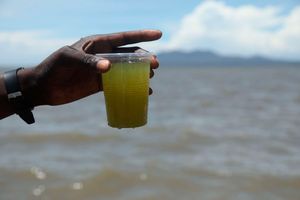
As the alcohol wove its magic, we became increasingly louder. We hated the gnawing silence of the wazees, as the river, the source of today’s brew, moaned in the distance for every cup of chang’aa it belches out. The elixir is a temporary gauze on life’s permanent wounds.
Father and sons in a chang’aa den
The wazees would shrug, the still air between us becoming a wall, they’d eye us from the corner of their tin cups, waiting, what was it they were waiting for? I was fascinated by them. Nothing could shake them. They’d seen it all. What more could a man want? A wife and children—that they already had. Yet, they'd wasted their entire lives. Such people were very dear to those of us who'd wasted only a few years.
Surprisingly, some of their sons were here too, a mark of resignation, or maybe indifference. When I was a boy, I would never have been allowed within the precincts of this shrine. Men would walk in straight gaits and come out staggering, if they did come out at all. What did they do to men in there? Now that I am a man, or at least no longer a boy, I have found out. What have I found out? I can’t tell you that.
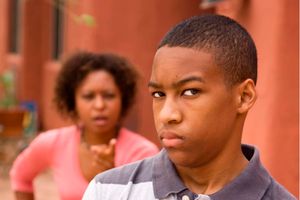
It's a strange picture when you think about it, a father and his sons drinking in a chang’aa den. So we try not to think about it. A father is always a cautionary tale for a son. Who has failed who? Had the fathers let down the sons for not aiming higher, or had the sons resigned to not superseding their fathers? You could see in the sons where they got their shrivelled faces and the self-confidence, but what in the sons was smirking and pushy was in the father shrewd and masterful. What in the son was blind, in the father had chosen not to see.
“Nyinyi vijana muache bangi ,” the wazees admonished. What bangi got to do with anything, I couldn’t tell. When we tried to protest, they told us to shut up and listen. Shut up and listen? To drunk men? Shutting up and listening could either be the greatest fortune, or the greatest misfortune. Born into a country where betting is a national pastime, some of us shut up, others listen, but none of us completely shut up or completely listen. The odds seem fair.
I think to myself, this is not normal. But across the village, it is the same old wives' tale. The fathers here think the sons are lazy, and the sons here think their fathers have no ambition. Somehow, I get the feeling they are all cut from the same cloth. Didn’t the same elders say charity begins at home? It’s a waiting game; the fathers wait for the day the sons will grow up—grown-up men, lest you forget the emphasis. The sons wait for the day the fathers will die, so they can hack each other over the ancestral land, or perhaps, more accurately, drink the ancestral land. They’d already drunk their college fees, already drunk their menial jobs, already drunk away their whole lives. It’s normal. After all, what is more normal than a thing that keeps happening?
Everywhere I looked, I saw the son I was, and the father I might turn out to be. There is a popular Luhya song: Mwana Wa Mberi ni Shikhoyalo —the first-born son is an apron, a protector. The more I looked, the more I saw: The sons had abdicated their roles, because the fathers were well beyond their sell-by date. All this could be catalogued under that unhealthy parent-child relationship, characterised not by mutual affection and respect, but mutual suspicion and resentment that turns trauma into taxidermy. Trauma? We, the Abaluhya people, do not have such a word in our language. Do you have it in yours? These are all mzungu terms, all that Freudian and Jungian and Pavlovian psycho-babble of penis envy and father complexes and all that jazz.
As far as our fathers are concerned, either you do what they say, or you do as they say. Why? Because they said so.