I am in my 30s and have a Master's. I am in freelance consultancy and on average, I earn between Sh140,000 and Sh190,000 per month. I am servicing a Sh2 million bank loan at Sh65,000 per month. My other expenses are as follows: Rent 25,000, Kenya Power and Water Sh3,000, Airtime and Entertainment 10,000, Recurring Credit Card Debt 40,000, Church Tithe and Donations Sh15,000. I use credit card debt for groceries, shopping, and fuel. Salon and Fashion Sh15,000, boyfriend treats Sh10,000.
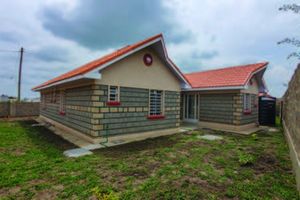
I have a 40*80 plot in Ruiru that I inherited from my parents. It is near a university and in a neighborhood surrounded by rental apartments. My goals are to clear my current debts and develop this plot. My boyfriend thinks this plot is ideal for a rental property and not a residential home. He has also said I can sell it off and build a home elsewhere. Is this really a good decision given its prime location? If I wanted to build an apartment, how can I raise the funds? Should I seek formal employment to increase my income? — Daisy
Dominic Karanja, a financial planning and investments consultant
Your monthly expenditures exceed your income by Sh18,000 if you take an average of Sh165,000 as your monthly earnings. This aligns with your observation regarding your current earnings not meeting ongoing expenses. As a result of this negative cash flow, savings remain limited and reliance on credit cards for essential purchases has increased.
It is critical to develop a comprehensive and rigorously enforced budget to address ongoing financial challenges. This process involves systematically monitoring all sources of income and expenditures. Utilising budgeting software or tools such as Excel spreadsheets can provide clear and timely insights into financial flows, which are fundamental to achieving effective management.
The primary objective should be to convert any current monthly deficit into a surplus, thereby enabling accelerated debt reduction. Implementing a disciplined debt repayment plan should begin with the immediate cessation of credit card use to prevent further accumulation of high-interest liabilities.
To address the debt cycle effectively, initiate a three-month “Emergency Reset” Plan. Temporarily pause tithes and donations, resulting in a Sh15,000 saving (to be resumed at 50 per cent once total debt is reduced below Sh500,000). Discontinue discretionary spending on partner-related outings (saving Sh10,000 by opting for home-based activities) and reduce salon and fashion expenses by 50 per cent to Sh7,500 through alternatives such as home nail care or less frequent appointments. Entertainment expenditure should be capped at Sh5,000, by leveraging cost-effective options
These measures collectively create a monthly buffer of Sh37,500, resulting in a surplus of Sh19,500. Allocate the entire surplus toward repaying high-interest credit card debt. Once you repay the high-interest credit card debt, redirect the surplus amount to accelerate repayment of the bank loan, thereby expediting its clearance and facilitating future development funding.
Given the prime location of your Ruiru plot—adjacent to a university and surrounded by established rental properties—developing a commercial rental building appears to be the most financially prudent option. Selling the land to purchase a residential home elsewhere would involve exchanging a high-potential, income-generating asset for one primarily driven by consumption. With its 40x80 dimensions, the plot is well-suited for constructing a modest apartment block comprising approximately six to 10 bedsitter or one-bedroom units.
Such a development could provide a reliable passive income stream, which would be instrumental in addressing existing debts and fostering long-term financial growth, thereby making property development a more advantageous choice compared to selling.
Given your current negative cash flow and the objective of developing the Ruiru plot, it is imperative to increase your income to attain financial stability prior to pursuing development financing. Augment your overall income. However, if you choose formal employment, it should replace rather than supplement your freelance activities to mitigate the risk of burnout.
You may consider two approaches. Firstly, expand your existing consultancy by acquiring additional clients, adjusting your rates upward, or implementing retainer agreements to ensure a steady revenue stream. Alternatively, you could secure a single, formal position with a higher and stable salary.
This could enhance your ability to service debt, accumulate savings, and improve eligibility for a building loan, although this may require forfeiting some flexibility. Developing a consistent income stream and a robust history of savings is essential, as it significantly enhances your financial profile and positions you as a credible and desirable candidate for construction loan lenders.
To secure funding for the development of the Ruiru plot, it is advisable to implement a two-phase strategy. Initially, prioritise financial stability over the next 12–18 months by eliminating credit card debt, ensuring regular loan repayments, and establishing an emergency fund sufficient to cover six months of living expenses. Once liabilities are effectively managed, consider capital-raising options such as leveraging the land as collateral for a construction loan, entering into a revenue or unit-sharing partnership with a developer, or seeking cost-effective financing from a Sacco.
Additionally, adopting a phased approach to development—beginning with a limited number of student units and expanding in response to increasing rental income—may provide a sustainable path forward.
The comprehensive action plan should prioritise financial readiness for the development of the Ruiru plot. The initial step should involve financial stabilisation through the immediate implementation of the revised budget and reducing discretionary expenditure to address negative cash flow.
Funds made available through these adjustments should be allocated to debt clearance, with particular attention to repaying high-interest credit card balances. This approach will help eliminate costly debt and improve your credit score.
Simultaneously, efforts should be directed at enhancing income generation opportunities and considering membership in a Sacco. Upon achieving substantial debt reduction, the focus should shift to plot preparation by obtaining a basic valuation and consulting architects for a preliminary Bill of Quantities (BQ), thereby accurately determining the funding requirements for a construction loan.
If you have any money problems, send us an email at [email protected] and leave your number for contact. Money questions will be answered here