Of Ngugi winning the PEN award and comparisons with the Russian giant
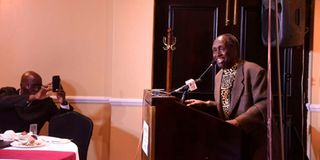
Prof Ngugi wa Thiong’o during a Kenya Editor’s Guild meeting at the Sarova Stanley in Nairobi on February 6, 2019, where he unveiled the book Kenda Muiyuru. Prof Ngugi was named a recipient of the PEN/Nabokov Award for Achievement in International Literature.
“No single word in English renders all the shades of toska. At its deepest and most painful, it is a sensation of great spiritual anguish, often without any specific cause. At less morbid levels it is a dull ache of the soul, a longing with nothing to long for, a sick pining, a vague restlessness, mental throes, yearning. In particular cases it may be the desire for somebody of something specific, nostalgia, love-sickness. At the lowest level it grades into ennui, boredom,” so wrote Vladimir Nabokov on the Russian word toska; roughly translated as sadness.
I was reminded of Nabokov and his unique style of writing on February 2, 2022, when Ngũgĩ wa Thiong'o was named a recipient of the PEN/Nabokov Award for Achievement in International Literature. The award is given to writers “whose works evoke to some measure Nabokov's brilliant versatility and commitment to literature as a search for the deepest truth and the highest pleasure — what Nabokov called the 'indescribable tingle of the spine’.” As I absorbed the news, I thought of Nabokov and other Russian literary greats from Pushkin, Gogol, Turgenev, Dostoevsky to Tolstoy and in what ways our own Ngũgĩ evoked them through his life and works.