Corruption, procurement irregularities and bribery are some of the techniques used in generating proceeds of money laundering, an annual report on the State of National Security shows.
The report tabled by President William Ruto in Parliament during his third State of the Nation Address on November 20 indicates that money laundering and terrorism financing continue to threaten the country’s financial system.
It shows that money laundering enables criminals to conceal proceeds of crime while terrorism financing supports networks that orchestrate violence and threaten the safety and well-being of the citizenry.
According to the report, Kenya’s National Risk Assessment on Money Laundering has identified fraud, corruption and economic crimes, procurement irregularities, tax-related crimes and bribery as some of the techniques used in generating proceeds for money laundering.
“Despite the Country’s commitment to meeting the Financial Action Task Force (FATF) Standards, it remains in the list of jurisdictions under increased monitoring (Grey List) due to strategic deficiencies in its AML/CTF framework.”
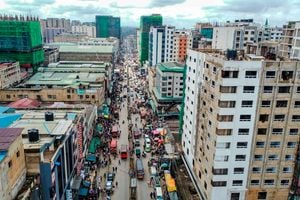
Trade-based money laundering remains a significant risk, with Kenya's proximity to Somalia.
Photo credit: Pool
“Further, the European Union (EU) added Kenya to the list of high-risk countries for money laundering and terrorism financing. The EU Member States are implementing enhanced due diligence measures when dealing with financial institutions or transactions originating from Kenya.”
Last year, FATF, the global anti-money laundering watchdog, made a decision to put Kenya on the grey list, a move that is hurting Nairobi’s standing as the financial centre of the region.
Grey listing refers to countries that have deficiencies in dealing with money laundering and terrorist financing.
The report highlights various intervention by the government to contain the menace, including coming up with reforms as well as heightened cooperation with FATF.
These efforts, the report indicates, are designed to restore Kenya’s standing and protect its financial systems and economy from illicit activities.
“To this end, significant strides have been made in addressing the identified deficiencies including enactment of key legislation and updating its national AML/CFT strategies.”
Some of the measures taken include enactment of the Anti-Money Laundering and Combating of Terrorism Financing Laws (Amendment) Act, 2025, Virtual Assets Service Providers (VASPs) Act, 2025 as well as implementation of the national AML/CFT strategies.
The country is, however, still facing challenges as a result of inadequate trained personnel involved in the AML/CFT/CPF framework across most of the agencies. There are also cases of delays in enactment of legislations such as Trust Administration Bill, 2025 as well as resource and budgetary constraints to implement some of the action plans.
The Annual Report on the State of National Security covers the period from September 1, 2024 to August 31, 2025. The report is submitted to the National Assembly in accordance with Article 240 (7) of the Constitution of Kenya and Section 16 of the National Security Council (NSC) Act.
Kenya has also continued to be exploited as a source, transit and destination for trafficked and smuggled persons.
During the period under review, the country witnessed persistent activities of transnational human trafficking and smuggling syndicates that posed a threat to national security.
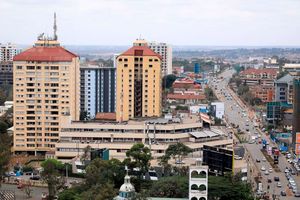
The money laundering schemes are often carried out through illicit trade and designated non-financial businesses and professions such as real estate agents.
Photo credit: Shutterstock
“The persistence of this vice was attributed to inadequacies in law enforcement and border management, economic vulnerabilities especially among the youth due to unemployment as well as fragility of some states within the region,” states the report.
It indicates that human smuggling syndicates capitalised on the influx of refugees, asylum seekers and undocumented aliens to perpetuate their activities.
Smuggled persons during the period under review included Kenyans, Somalis, Ethiopians, Eritreans, Burundians, Rwandese, Congolese, Nigerians, Tanzanians and Ugandans.
State agencies have since intensified intelligence-led security operations targeting human trafficking and smuggling syndicates. They have also enhanced investigations, arrests and prosecution of perpetrators.
But exploitation of Kenya’s porous borders for illegal entry and lack of awareness among vulnerable individuals, which makes them susceptible to trafficking and smuggling, still pose major challenges.
Going forward, the government is committed to review legal frameworks and enhance the criminal justice system’s capacity to counter human trafficking and smuggling as well as enhancing regional and international cooperation the menace.
Other measures in place include implementation of the United Nations Convention Against Transnational Organized Crime (UNTOC) and its protocols.
The report shows that the country remains a transit point for narcotics, with drugs being trafficked to various destinations, including Southern and Western Africa, Asia, Europe and the Americas.
During the period under review, drug trafficking and substance abuse was prevalent in Mombasa, Migori, Kwale, Kilifi, Lamu, Nairobi, Kisii, Isiolo, Marsabit and Garissa counties, where Bhang, heroin, cocaine and methamphetamine among other synthetic drugs were trafficked and consumed.