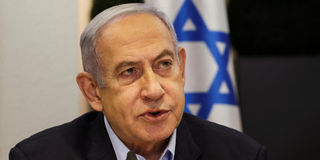
Israel on Friday jolted the Horn of Africa by formally recognising Somaliland as an independent state.
The move, announced in a video by Prime Minister Benjamin Netanyahu, makes Israel the first country to acknowledge Somaliland’s three‑decade quest for sovereignty, setting the stage for fresh diplomatic tensions with Somalia. Somaliland has sought recognition since 1993. Now this move could likely trigger a series of diplomatic protests from Somalia, which itself has no formal diplomatic ties with Israel. Either that or more countries could recognise Somaliland.
A statement from the Prime Minister’s Office said Mr Netanyahu had signed a joint declaration with Somaliland’s President, Abdirahman Mohamed Abdullahi ‘Irro’, for mutual recognition. Mr Netanyahu also invited Mr Irro, a former Somali diplomat, to visit Israel, a gesture he affirmed during a video call.
“I want you to know that I am signing now Israel’s official recognition of Somaliland and its right to self-determination. Our friendship is seminal and historic,” Mr Netanyahu said in the publicised call.
“I am very excited and want to wish the people of Somaliland the very best. I think this will be a great opportunity to expand our partnership.”
The recognition marks a significant achievement for Hargeisa’s diplomacy, which recently sent lobbyists to the US to pitch its case. US President Donald Trump is said to have backed Israel’s call, especially since Somaliland would recognise Israel in return.
Yet it also underscores Somalia’s failure to promote its unity on the world stage. Mogadishu has long insisted Somaliland is part of its territory, even though the northern region has functioned almost as a fully independent state, with its own central bank, currency, military and regular elections. Somaliland had never before been recognised by any sovereign state, although Taiwan maintains formal ties with Hargeisa.
“Israel’s recognition of Somaliland is a failure of Somalia’s diplomacy. But it signals serious challenges ahead,” warned Idd Bedel Mohamed, a former Somali diplomat now turned politician. He argued that Israel had been ignored by Somalia when it sought to thaw relations.
“This failure to engage diplomatically created an opening for Israel to pivot towards Somaliland and pursue separate partnerships,” he added.
Mr Irro was elected in November 2024, replacing Muse Bihi, a former Somali air force pilot. Somaliland’s earlier attempts at recognition often sparked diplomatic spats. In January 2024, it signed an MoU with Ethiopia, ostensibly to lease a military base in exchange for recognition. Somalia reacted angrily, cutting diplomatic ties and protesting at every international platform. Turkey later mediated the dispute, enabling Ethiopia and Somalia to resume relations.
Israel’s decision was also shaped by its own geopolitical needs. It had first courted Somalia to join the Abraham Accords—a series of agreements signed by Muslim-majority countries in the Middle East and Africa to formally recognise Israel. The United Arab Emirates, Morocco, Sudan and Kazakhstan had already signed. Mr Irro has now pledged Somaliland’s accession.
Somaliland, initially known as British Somaliland, voluntarily merged with southern Somalia to form the Somali Republic at independence. However, after a civil war erupted, it unilaterally declared independence in 1993.
“This recognition signals a milestone in Somaliland’s longstanding pursuit of international legitimacy, reaffirming its historical, legal and moral entitlement to statehood,” the presidency said in a statement.
“In response to this recognition, and guided by a vision of advancing regional and global peace, the Republic of Somaliland hereby expresses its firm intention to accede to the Abraham Accords.”