Ethiopians were sometimes accused, in the past, of being aggressive. But their own history, they say, has taught them the importance of living in harmony with neighbours.
On Saturday, Ethiopians marked the anniversary of the Battle of Adwa, when the imperial forces of Ethiopia defeated an invading Italian army at Adwa town, sometimes also rendered as Adowa.
That Victory Day, March 1, 1896, marked Ethiopia’s independence. It remained the only country not to be colonized even after the Berlin Conference, where European powers carved out African territories for themselves.
That victory is often used to symbolise the resilience of black people. But some observers also say it reminds of the need to seek co-existence with African neighbours.
For Ethiopians like Demeke Atnafu, the Deputy Head of mission said the Adwa Victory Day, which has now become an annual event, is a reminder of the ability of African nations to stand united in the quest for justice.
“The significance of Adwa extends far beyond its immediate aftermath. It became a symbol of resistance and empowerment for oppressed peoples everywhere.
“The victory challenged the narrative of European superiority and proved that African nations could stand firm against colonisation. It instilled pride in our heritage and served as a beacon of hope for generations to come,” Mr Demeke said.
He said the Adawa victory is a challenge to Africans to embrace the spirit of bravery and determination.
“The victory challenged the narrative of European superiority and proved that African nations could stand firm against colonisation. It instilled pride in our heritage and served as a beacon of hope for generations to come.
Let us also remember the sacrifices made by those who fought valiantly on that day. Their bravery and commitment to freedom laid the foundation for the Ethiopia we know today—a nation rich in culture, history, and resilience,” he added.
Ethiopia, today as a federal democracy, has faced its challenges, sometimes spilling onto neighbours.
Between 2020 and 2022, a deadly war ensued in the Tigray region, pitting the Ethiopian forces against the Tigray People’s Liberation Front (TPLF), the armed wing of a former ruling party.
The war ended after an African Union-mediated settlement between the two sides. Among the co-mediators was Kenya’s former President Uhuru Kenyatta, whose personal ties to the country’s political elites were influential.
But Ethiopia too has had occasional tiffs with neighbours. For example, until December last year, a year-long set of tensions simmered with Somalia.
Turkey helped mediate and cool the tensions. Ethiopia and Sudan have also had a perennial tiff to resolve their border. And they have unfinished issues with Eritrea, which seceded from Ethiopia in 1991.
Ethiopia and Kenya enjoy long-running smooth ties, established first during the tenure of President Jomo Kenyatta and then Ethiopian Emperor Haile Selassie.
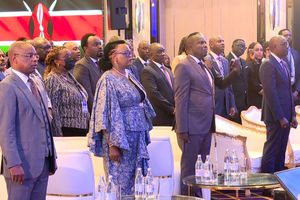
During the celebration, the Association of Kenyans for Ethiopian Friendship (AKEF) Programme Officer Humphrey Otieno said the Battle of Adwa is a reminder that African countries need to be united.
“We will continue to strengthen cultural and historical ties between our nations, ensuring that our shared heritage is preserved for future generations.
We are dedicated to promoting economic partnerships and regional cooperation that benefit both our peoples. We believe that the best way to honor Adwa is by working together for a more united, peaceful, and prosperous Africa,” Mr Otieno said.
In modern-day history, Ethiopia says the Adwa Victory Day symbolises the quest for Pan-Africanism and the aspiration of black people. It is also used to underscore the significance of self-determination and the fight for justice.
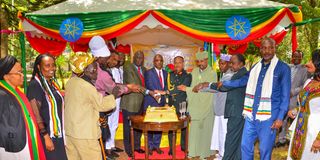
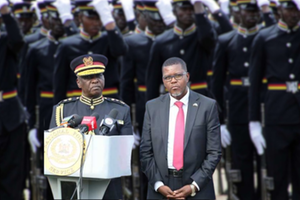
The day is commemorated yearly to pay tribute to the Ethiopian army and usually involves parades, and dramatic and artistic performances that reflect Ethiopian culture.