Critical minerals such as lithium, cobalt, nickel, copper, rare earth elements, and platinum group metals are essential for modern technologies. They are key to industries ranging from electronics and telecommunications to renewable energy, defence, and aerospace systems.
The global demand for these minerals has been growing, as has the competition for them.
The question is what African countries are doing to take advantage of this demand for these critical minerals, especially to drive their own development.
We recommend that African countries determine for themselves how to benefit from this global competition. This includes developing national strategies that emphasise local value addition and benefits. Also, national strategies should begin positioning African countries to gain from their resources beyond value addition.
The competition for Africa’s critical minerals underscores the urgency of governance reforms and regional cooperation to transform mineral wealth into sustainable prosperity, avoiding another “resource curse .”
The emerging ‘New World Order’
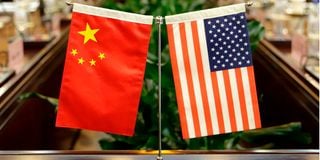
A Chinese-led ‘New World Order ’ is emerging to counter the US-led Western influence. Eastern and global South countries demonstrate this shift through groupings like BRICS and South-South cooperation in technology and development. China has strengthened its influence in the global South through initiatives such as the Belt and Road Initiative .
Launched in 2013, the Belt and Road Initiative is an ambitious infrastructure project that connects continents by land and sea. Since then, over 200 agreements have been signed with over 150 countries and 30 international organisations. The initiative has expanded China’s access to resources. This is often in exchange for infrastructure development that links mining regions to ports.
In Africa, China has invested heavily in mining and infrastructure. Its firms have spent about US$4.5 billion in lithium projects in Zimbabwe, the DRC, Mali, and Namibia. China’s strategic focus includes resource-rich countries such as the DRC, Zimbabwe, Zambia, South Africa and Ghana.
China is emboldened by its influence and access to critical minerals. This has strengthened its ability to acquire military hardware and other advanced technologies.
Competition for Africa’s critical minerals
The EU has strategic partnerships on minerals with the DRC, Rwanda, Namibia and Zambia. China has bilateral agreements with eleven African countries in the mining sector. The US also has a trilateral agreement with the DRC and Zambia. Its purpose is to support an integrated value chain for electric vehicle (EV) batteries. It also recently signed a ‘Minerals for Peace ’ deal with the DRC and Rwanda to help end decades of conflict in eastern Congo.
Although African countries need support to turn their resources into prosperity, our research found that these partnerships risk reinforcing Africa’s marginal position in the global value chain. They often reproduce conditions reminiscent of colonialism: dependency, resource extraction, and power imbalances.
Our research argues that the struggle between the US-led and Chinese-led world orders will hinge on a few things. One is control over emerging technologies. These include renewable energy, defence, aerospace, and AI — all of which depend on critical minerals. Expanded access to, and control of, these minerals and their supply chains will be a key determinant of global power.
Competition between the US and China for critical minerals will intensify. Yet it is crucial that African countries remain neutral. They must engage only in meaningful, mutually beneficial partnerships that genuinely advance their countries and its economies.
African countries must explicitly define their priorities in the extractives sector. Without clear strategies, external powers will continue to dictate Africa’s future. The continent will be locked into dependency rather than enabling it to capture real value from its mineral wealth.
Finally, rather than just competing for Africa’s critical minerals, China, the US, and the EU should equitably engage with African countries in the extractives sector to ensure just development across the continent.