Kenyan courts can presume someone dead after seven years without contact, allowing families to obtain death certificates and proceed with legal affairs. However, the declaration is not final: the law provides a way to reverse it if the person turns up alive.
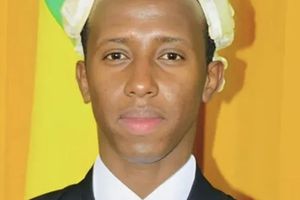
When Kennedy Ambaka Kegode left home on July 2, 2017, to buy medicine for his wife, Rose Lotumia Okumu, neither of them could have imagined that the ordinary errand would become a nine-year mystery.
At about 3.40pm that day, Kegode called his wife to ask which medicine she wanted. That was the last time she heard from him.
He never returned. His phone went off, and searches by his family, neighbours, police, school and local administration failed to establish his whereabouts.
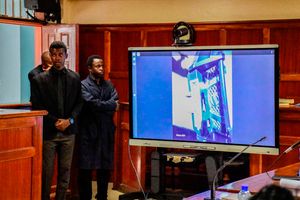
Kegode, a teacher at St Joseph Kogo Secondary School in Lukuyani, left behind his wife and four children. After more than nine years without a trace, the High Court in Vihiga on November 10, 2026, declared him presumed dead and directed the County Registrar of Births and Deaths to issue his wife with a death certificate.
But the order raises a question that families confronting similar disappearances may not immediately consider: what happens if a person declared dead walks back into their family's life?
Kenyan law recognises that possibility. A declaration of presumed death is not proof that someone has actually died. It is a legal presumption that can be challenged if sufficient evidence emerges that the missing person is alive.
Section 118A of the Evidence Act provides that where a person has not been heard from for seven years by people who would naturally have expected to hear from them if they were alive, the court may presume that the person is dead.
The provision is deliberately framed as a rebuttable presumption, meaning it is not an irreversible declaration.
In a ruling delivered on April 30, 2025, in Oluoch v Registrar of Births and Deaths , the High Court applied the provision to the disappearance of John Oluoch Wasamba, who had been missing for 19 years.
Justice S.N. Mutuku identified family members, friends, an employer and local authorities as people who would ordinarily be expected to hear from a person if they were alive.
The judge was satisfied that none of them had heard from Wasamba and that efforts had been made to trace him.
The court stated that the presumption could be overturned if sufficient evidence emerged to show that he was alive. It ordered the Registrar of Births and Deaths to register his death and issue a certificate.
The seven-year period, however, is not simply a matter of waiting for time to pass.
A death declaration is not final, and the law provides a procedure for reversing it if the missing person returns.
Photo credit: Shutterstock
Three requirements for presumption
In a ruling delivered on March 30, 2026, in Milimani Family Miscellaneous Application E280 of 2024, the High Court set out three requirements for establishing the presumption.
There must be people who would naturally have been expected to hear from the missing person; those people must not have heard from them during the seven years; and reasonable efforts must have been made to find them.
“The presumption cannot be activated by mere passive waiting or the simple passage of time,” the judge stated.
The applicant must prove the case on a balance of probabilities, the ordinary standard used in civil disputes. This means providing evidence that makes it more likely than not that the missing person has not been heard from and cannot be traced.
Such evidence may include accounts from relatives, friends and colleagues, police reports, letters from local administrators, inquiries made at hospitals and mortuaries, and records of searches or public appeals.
In the 2026 case, the court considered searches at hospitals and mortuaries, police inquiries and a missing-person notice before finding that the family had made sufficient efforts.
In Republic v Attorney General and another; Cheluget (Ex parte Applicant) , decided on February 13, 2025, the High Court addressed the procedure for reversing a presumed-death registration.
The Milimani Law Courts in Nairobi.
Photo credit: File | Nation Media Group
The case concerned a previous court order presuming Erick Kipyegon Mutai dead. The applicant sought to compel the Registrar of Births and Deaths to issue the certificate arising from that order.
Justice J.M. Chigiti observed that although the presumption was rebuttable, a formal process had to be followed if the person was later found alive.
“Though this is a rebuttable presumption, there is a procedure that must be followed to reverse the process in the event that the person is later on found alive,” the judge said.
The court referred to Rule 15(2) of the Births and Deaths Registration (Amendment) Rules, 2024.
The rule provides that where a death has been registered under the presumption procedure in Section 388(4) of the Criminal Procedure Code, the certificate may be rebutted upon presentation of satisfactory proof to the Principal Registrar that the person is alive and a determination by a competent court that the person is indeed alive.
This means a family cannot simply announce that a death declaration has been cancelled because the missing person has returned. The prescribed process requires proof of life and a court determination.
The return could also create complications where relatives have already started administering the person's estate.
Under Section 76 of the Law of Succession Act, a court may revoke or annul a grant of representation if it was obtained through fraud, concealment of material information, an untrue essential statement or if it has become useless and inoperative because of subsequent circumstances.
A returning person could therefore seek appropriate orders in the succession court. However, the return does not automatically reverse every transaction involving the estate. The court would have to consider the circumstances, the property involved and the rights of those who may have received it.
In the case of the Presumption of Death of Joseph Macharia Karanja, decided on December 18, 2025, the High Court considered the difficulty of assigning a date of death to someone whose disappearance had never been explained.
The judge noted that the law does not establish the exact date on which the person died during the period of absence. For purposes of the certificate, the court declared that the date of the ruling would be used, rather than assuming that the person died on the day they disappeared.
The issue is significant because a declaration of presumed death does not establish when, where or how a person actually died.
For families, the legal process can provide a way to address matters that remain unresolved after years of uncertainty, including registration of death and administration of an estate.
In Kegode's case, the Vihiga court made its decision based on the evidence presented by his wife after years of unsuccessful searches. Should he ever return, the legal presumption could be challenged through the appropriate procedure.