Funding for primary school education is set to increase by 58 per cent to Sh2,238 per learner, even as education experts warn that the amount remains low given the rising cost of living.
Currently, the government caters for tuition and operational costs for learners in primary level at the rate of Sh1,420.
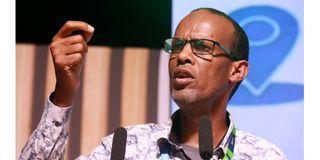
Basic Education Director-General Elyas Abdi, in a televised interview, stated that there is official communication that the capitation for primary school learners is set to rise to Sh2,238.
Elimu Bora Working Group said the move is commendable, but the amount still falls short.
“That is a good intention, but should be implemented on the interim as a unit cost analysis is done so that what’s provided for learners is adequate,” said the working group’s Policy and Strategy Advisor, Boaz Waruku.
When he took office, President William Ruto established the Presidential Working Party on Education Reforms to find recommendations to the challenges bedevilling the education sector. In its report, it recommended that the government revise the capitation for the primary level to Sh2,238 in view of the realities of the Competency-Based Curriculum.
Mr Waruku argued that the implementation of the recommendations should have begun earlier and that the new amount is inadequate due to inflation.
The Kenya Kwanza administration has been struggling to release the full capitation per learner, blaming it on constrained fiscal space.
Treasury Cabinet Secretary John Mbadi also told Parliament recently that the inconsistency in disbursing the capitation comes about because the amount budgeted for is less than the expectation.
This comes on the back of fears that parents with children in day secondary schools will have to dig deeper into their pockets after the government abdicated its responsibility to fully cover tuition fees.
Parents will be required to top up Sh9,374 annually for tuition, bringing the total tuition capitation for day secondary schools to Sh22,244, according to the Ministry of Education Guidelines for the Implementation of Senior School Education 2025.
Curiously, the guidelines, released to school principals in October, include a Gazette notice dated March 10, 2015, which stipulates that the government’s capitation for day schools is Sh12,870.
Under the free secondary school education programme introduced in January 2018, schools only required parents to pay an average of Sh5,000 per term to cover meals, school uniforms and personal items.
Already, school principals have started sending fee structures with the additional Sh9,374 financial obligation on parents, spreading it across three terms.
“Our fear is, are these parents going to afford given that it has been a struggle getting them to pay the amount for meals?” said a school principal in Murang’a who did not wish to be named.
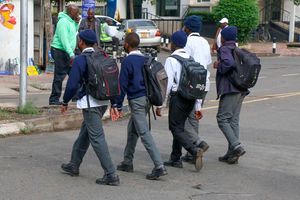
The additional financial burden comes at a time when the first cohort of learners under the Competency-Based Education is transitioning to Grade 10, which is domiciled in secondary schools.
“We can foresee that some of the schools will not receive many of the Grade 10 pupils owing to the financial impediment on parents,” said another principal.
State Department for Basic Education Director-General Elyas Abdi during the 2025 Kenya Primary School Heads Association Annual Delegates Conference in Mombasa on November 11, 2025.
Photo credit: Kevin Odit | Nation Media Group
“The capitation still stands at Sh22,244 for senior schools next year,” he said, responding to assertions by Kiharu MP Ndindi Nyoro that the government intends to increase fees based on the ministry’s guidelines.
Dr Abdi could not, however, offer a straight answer on why the ministry attached a decade-old Gazette notice to the guidelines to assist in transitioning learners to senior school.
Free Day Secondary Education in Kenya was introduced in January 2008 by the government of President Mwai Kibaki. In January 2018, the government of President Uhuru Kenyatta rolled out an enhanced version as part of efforts to achieve 100 per cent transition from primary to secondary school.