An acute shortage of teachers specialised in science, technology, engineering and mathematics (STEM) in junior and senior schools poses a threat to specialisation in these learning areas, a new report shows.
The report by Zizi Afrique Foundation and Usawa Agenda paints a dire picture of the competency-based education (CBE) rollout at the junior secondary level. It reveals that some schools do not have any teacher specialised in teaching STEM subjects, and that many are forced to improvise, with teachers handling subjects for which they are not trained.
The shortage is likely to jeopardise government plans to transition 60 per cent of learners exiting junior school to the STEM pathway. Junior secondary schools are grappling with a deepening teacher crisis, with data revealing that only 21 per cent of public junior school teachers are trained in STEM subjects — leaving thousands of students without critical learning opportunities.
Only one in 5 teachers in public junior schools trained in STEM subjects
“Teachers are expected to teach multiple classes and learning areas, including subjects they were not trained in. Only 21 per cent of teachers in public junior schools were in STEM learning areas, with 35 per cent of the schools lacking even a single STEM teacher,” reads the report.
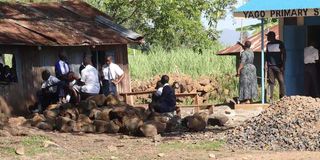
The teacher shortage is especially alarming in rural and marginalised regions, where 35 per cent of public junior secondary schools do not have a single STEM teacher. This is exacerbated by infrastructure gaps, with fewer than half of public junior school learners having access to laboratory facilities.
With only a few months to go before Grade Nine learners transition to senior schools, the report shows that 1,600 schools lack laboratories, a critical component of competency-based education.
Usawa Agenda Executive Director Emmanuel Manyasa.
Photo credit: File | Nation Media Group
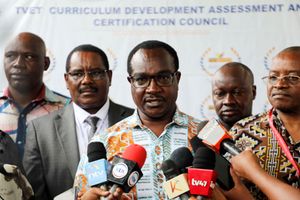
“At the national level, we only have 33.9 per cent of schools currently offering computer studies. That means these are the only schools ready to offer the new curriculum, where computer studies is now a compulsory subject. Of these 33.9 per cent, 92.9 per cent are actually Cluster 1 (former national schools), and only 17 per cent are Cluster 4 (former sub-county schools),” said Dr Emmanuel Manyasa, the Executive Director of Usawa Agenda.
The crisis comes at a critical time when the first CBC cohort is now in Grade Nine, but the ambitious curriculum is straining under the weight of teacher shortages and poor resource allocation. The report further shows that laboratory infrastructure is worryingly inadequate across public junior schools.
Some of the innovations by learners during the World Robotics Olympiad in partnership with STEM Impact Center Kenya at Nova Pioneer School Tatu City, Kiambu County, on June 28, 2025. The event showcased the ingenuity and robotics skills.
Photo credit: Wilfred Nyangaresi | Nation Media Group
The disparity is also evident in the type of laboratories available. National schools report over 80 per cent ownership of science labs, while sub-county schools, the majority in rural areas, struggle with rates as low as 6.5 per cent for physics laboratories and 3.7 per cent for computer laboratories.
“Only 48 per cent of learners in public junior schools had access to laboratory facilities. Nationally, 33.9 per cent of secondary schools in Kenya offer computer lessons. Ninety-two per cent of national schools offer computer lessons, compared to only 17.3 per cent of sub-county schools, ” reads the report.