The senior school implementation guidelines that were released last week have reignited debate over whether boarding education in Kenya is gradually slipping out of reach for poor families.
While the Ministry of Education says that no school fees has been increased, the cost of keeping a child in a boarding school continues to rise, turning what was once a symbol of opportunity and academic excellence into a privilege for a few.
Under the new guidelines, the ministry capped fees for all categories of boarding schools at Sh53,554, as per Gazette Notice No. 1555 of March 10, 2015. Currently, this is only applicable to national schools as extra-county and county boarding schools charge Sh40,535 per year.
However, the reality on the ground paints a different picture. When additional costs of uniforms, transport, books, shopping, remedial classes, and activity levies are factored in, the total annual expense could easily exceed Sh70,000.
In sharp contrast, parents with children in day schools (as per the Gazette Notice) will pay Sh9,374 a year. Day scholars do not pay any tuition fees, which is covered by the Free Day Secondary Education programme. Learners with special needs will pay Sh37,210.
As per the Gazette Notice, the government will continue providing equal capitation grants of Sh12,870 per learner in both boarding and day schools. The current allocation is Sh22,244.
However, education experts argue that this one-size-fits-all funding model will entrench inequality, disadvantaging families that depend on boarding facilities due to geographical or safety reasons.
Education Cabinet Secretary Julius Ogamba maintains that the State has not raised fees and remains committed to free and compulsory basic education under Article 53 of the Constitution.
“We provide free and compulsory basic education. The ongoing reform process under Competency-Based Education will not change this. The approved capitation rates remain Sh1,420 per learner in primary schools, Sh15,042 in junior school, and Sh22,244 in senior school,” said Mr Ogamba.
He further clarified that boarding fees remain unchanged, dismissing claims of any increments.
“The government has not revised the boarding fees payable by learners at any level. The approved rates remain as they have always been,” he said.
However, the guidelines state otherwise.
"The school fees to be charged for all categories of boarding school shall, for the time being, remain at Sh53,554.00 as per the Gazette Notice No. 1555 of 10th March 2015," reads the guidelines.
This comes at a time when the cost of living has more than doubled. Inflation, transport costs, and textbook prices have soared, while household incomes have stagnated, creating a silent crisis for parents.
Mr Edwin Shireku, a secondary school teacher in Mombasa, said the government’s figures ignore the “hidden costs” that make boarding unaffordable.
“Parents still pay for uniforms, remedial lessons, and other levies not captured in the guidelines. Boarding will become a preserve for the rich. Many poor families will have no choice but to take their children to day schools,” he said.
Mr Shireku said that under the old 8-4-4 system, boarding fees varied, and parents were able to choose schools they were able to afford. He added that the new flat-rate system risks pushing more students out of boarding schools.
Ms Jackline Akinyi, a parent from Siaya, said: “A child in Turkana cannot commute that distance daily. Boarding is the only option, but the costs are punishing.”
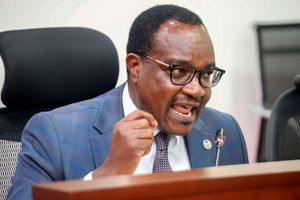
The Kenya National Union of Teachers (Knut) Secretary General Collins Oyuu.
Photo credit: File | Nation Media Group
Private academies are already capitalising on the shift. Many now market themselves as “affordable boarding schools,” charging between Sh80,000 and Sh150,000 a year. Middle-income parents are jumping at the offer to “flee overcrowded public day schools”.
Education experts said the policy may widen regional and social disparities. Urban families will have easier access to well-equipped schools, while rural learners risk being left behind.
Kenya National Union of Teachers Secretary-General Mr Collins Oyuu says Kenyans should be patient. National Parents Association chairperson Silas Obuhatsa urged parents to brace themselves for the challenges ahead.