For Rosa Savai Vivo, the old house on her compound was a painful reminder of loss.
The 76-year-old widow wanted it demolished, believing its removal would mark the end of a chapter that had lingered for more than a decade since her husband’s death.
Instead, the crumbling structure became the scene of a brutal killing that would tear apart a family and send a father and his two sons to prison for murder.
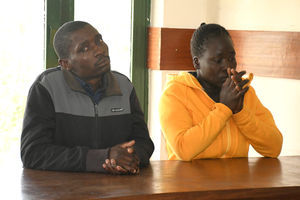
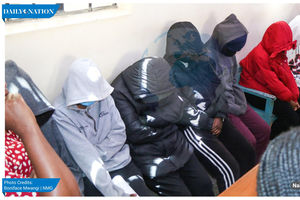
On June 4, 2026, the High Court in Kakamega sentenced Alex Lugalia Vivo and his sons, Fred Muhako Lugalia and Stanley Akwiyanga Lugalia, to 25 years in prison each for the murder of Henry Akwiyanga, a relative who had gone to help demolish the house in Mukingi Village, Vihiga County.
Photo credit: Shutterstock
The killing occurred on the morning of May 18, 2020, in what the court found was a coordinated attack rooted in a simmering family dispute over land and property.
According to evidence presented during the trial, Rosa had informed family members of her intention to bring down the dilapidated house, which had partially collapsed and become unsafe.
Under Maragoli custom, a widow cannot simply pull down her deceased husband’s house. Before demolition begins, a male relative must first remove an iron sheet from the roof, symbolising the end of the homestead’s life and allowing the structure to be dismantled.
To perform the ritual, Rosa called her brother-in-law, Henry Akwiyanga.
Court records show that family members, including Alex and his sons, had been informed of the planned demolition. Rosa believed there was consensus but she was wrong.
That morning, Henry arrived and placed a ladder against the house. As he climbed to remove the first iron sheet, violence erupted.
Rosa told the court that Alex emerged carrying a panga while his sons armed themselves with clubs. As Henry stood on the ladder, Alex allegedly climbed up and attacked him.
“The deceased was cut before he fell down,” Rosa testified.
According to Rosa’s testimony, the two sons descended on the injured man, striking him repeatedly with clubs as he lay helpless.
She further told the court that Alex cut the deceased on the chin and urged the others to finish him off. The attack happened in broad daylight and in the presence of relatives who knew each other well.
A post-mortem examination conducted by Dr Collins Masika painted a grim picture of the violence he had endured.
The pathologist documented deep cuts to the scalp, a gaping wound on the chin measuring approximately two by three centimetres, and a separation of the first and second cervical vertebrae. He concluded that Henry died from severe haemorrhage caused by the injuries.
Faced with the murder charge, the three accused denied responsibility.
They claimed Henry had accidentally fallen from the ladder while attempting to remove the iron sheets and sustained fatal injuries in the fall.
Alex told the court he was outside collecting garbage when he saw a group of about 30 armed people. He insisted he was not involved in any attack.
However, the prosecution’s evidence told a different story. Apart from Rosa, another witness, Hellen Oside, placed the three accused at the scene.
Charles Kisambo Sadi, a relative who helped take Henry to the hospital, testified that he found him lying near the old house with visible injuries to the head, chin and leg.
Police investigations also faulted the defence narrative. Constable Evans Korir, who testified on behalf of the retired investigating officer Richard Korir, told the court that investigators recovered the rungus allegedly used in the attack.
“The accused persons’ defence was mere denial and did not displace the consistent and cogent evidence adduced by the prosecution,” the judge ruled.
The court observed that the accused and the witnesses were close relatives living within the same homestead, making mistaken identity highly unlikely. This was not a case of strangers caught in confusion or poor visibility.
Although the ladder had been removed from the scene before investigators arrived and the house had already been demolished, the judge found that witness testimony established a clear and uninterrupted chain of events.
The judge held that the three men acted together in pursuing a common objective and were therefore equally responsible for the death, regardless of who inflicted the fatal injury.
“There is sufficient evidence that the accused persons before court had a common intention to cause the death of the deceased,” the judge said. “The conduct of each one of them is legally imputed to all the others.”
The defence sought to persuade the court that the offence amounted to manslaughter rather than murder, arguing there was no evidence of premeditation but the court found otherwise.
The nature and severity of the injuries, coupled with the manner of the attack, demonstrated an intention to cause grievous harm.
Under Kenyan law, such intent is sufficient to establish malice aforethought, a key ingredient of murder.
“The beatings the deceased suffered were not only unlawful but could not be said to have been bereft of malice aforethought,” the judge observed.
Beneath the violence lay a familiar source of conflict in many rural communities: a dispute over land and inheritance.
Rosa told the court that relations between her and Alex had long been strained. According to her testimony, they wanted her to vacate the land.
The house at the centre of the dispute belonged to her late husband, but Alex opposed its demolition. During her testimony, Rosa struggled to recount the events of that day.
Court records note that she frequently paused before answering questions, visibly affected by the memories.
“The deceased was cut before he fell down,” she insisted. “It was not true that he fell and died from the fall.”
Fred, 43, expressed remorse for the loss of life, while Stanley, then 25, had been pursuing studies at Sigalagala Polytechnic before his arrest. In mitigation, they all asked the court for forgiveness, but they could not persuade the judge.
He found no evidence of provocation, self-defence or any exceptional circumstances that would justify a non-custodial sentence.
The court sentenced all three men to 25 years’ imprisonment, with the sentence backdated to May 28, 2020, when they were first remanded in custody. For Rosa, the old house is gone. But six years after blood stained the iron sheets that were meant to be removed in a ritual of remembrance, the wounds left behind remain far from healed.