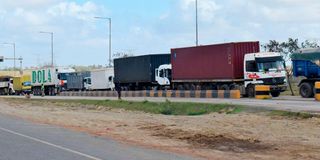
The cost of transporting goods across the country and the region has risen by about 14 percent following Tuesday evening’s announcement by the Energy and Petroleum Regulatory Authority (EPRA) increasing fuel prices by up to Sh40 per litre, from Sh163 — a jump of approximately 24.5 percent.
The increase is expected to ripple across the economy, affecting goods ferried from the port of Mombasa and driving up costs in manufacturing and other sectors.
The Kenya Transporters Association (KTA) chairman, Newton Wang’oo, in a notice to members, urged them to promptly engage customers and contractual partners, clearly communicating the basis of the adjustments to ensure transparency and continuity of service.
KTA, which oversees more than 6,000 trucks transporting goods from the port of Mombasa and across the country, said its members cannot absorb the sharp rise in fuel costs and will have to pass the burden on to consumers.
Mr Wang’oo noted that fuel is the single largest cost component in road freight transport, accounting for about 55 percent of total operating costs.
“Members are reminded that fuel constitutes the single largest cost component in road freight transport, accounting for approximately 55 percent of total operating costs. This translates to an estimated 13–14 percent increase in overall transport operating costs,” he said.
He added that such a substantial rise in input costs cannot be absorbed, urging members to immediately review their cost structures and adjust transport rates to reflect the new realities.
Mr Wang’oo said the association will continue monitoring developments in fuel pricing while safeguarding the interests of transporters across Kenya and the wider region.
The fuel price increase, driven by surging global costs and supply shocks, has pushed pump prices to record highs, raising transport costs, fuelling inflation, and increasing food and manufacturing expenses.
The sharp rise in diesel and petrol — with diesel increasing by up to Sh40 per litre — is also expected to push up public transport fares and freight charges, directly impacting food prices due to higher production and distribution costs.
This will further strain consumers’ disposable incomes, as more household spending is directed towards energy and transport, while manufacturers face higher operational costs, reducing profitability and output.