'Not one reported’: Fida intervenes as SGBV survivors decline to report to police
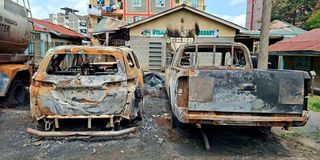
Vehicles reduced to shells at Ol Kalau, Nyandarua County, during the June 25, 2025 protests. Sexual violence rose against female protesters during the demonstrations.

What you need to know:
- Sexual violence against women protesters surged, with survivors fearing retaliation and opting for silence.
- Women faced gang-rape and harassment amid protests, as justice remains elusive and police deny formal reports.
Sexual violence rose against female protesters during the Gen Z demonstrations, with women being the main target. Some women protesters reported sexual abuse, including rape, gang-rape and attempted rape. For this reason, the Federation of Women Lawyers - Kenya (Fida-K) has rolled out a programme to help survivors.
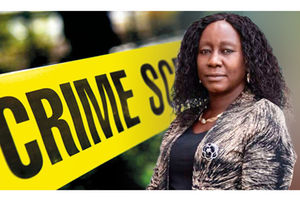
Fida-K chair Christine Kung’u says the organisation is giving survivors free legal aid, trauma counselling, psycho-social support, and mental health support and counselling. So far, Fida-K has received 21 cases of sexual and gender-based violence survivors, with the majority of them coming from Nairobi, Kiambu and Kajiado.
The organisation is concerned about the rise in cases of women being harassed, assaulted and sexually abused, including being raped. “Such an outrage must never be normalised,” Christine said during a press conference at a Nairobi hotel.


Fida-K is also concerned about media reports documenting criminal gangs that used sexual violence to intimidate women protesters and diminish female participation in the protests. “These incidents reflect the disproportionate risk and trauma that women and girls face during public unrest,” she said.
Fida-K Executive Director Anne Ireri said Article 37 of the Constitution grants citizens the right to protest as part of the broader framework of fundamental freedoms and democratic governance. She, however, regretted that during the protests, instead of hope, our nation witnessed bloodshed, terror, wanton looting, destruction of property and gross human rights violations.
She cited a gang that stormed a press conference at the Kenya Human Rights Commission offices and terrorised innocent women, journalists, and staff of the commission. “We are calling for an independent investigation into all cases of police brutality, abductions, and sexual violence, including rape and sexual harassment. The survivors of these acts must be protected, supported and given access to justice,” Anne said.
She welcomed the intervention of the Office of the High Commissioner for Human Rights, which recently called for a speedy independent probe into all cases of human rights violation during protests. Anne further appealed to survivors of sexual violence and police brutality to seek free aid and counselling from Fida-Kenya offices in Nairobi, Mombasa and Kisumu.
Rights organisations documented that 14 women were raped during June 25, 2025 anti-government protests. Thirteen of them reached out to Usikimye, which supports survivors of sexual violence. Of those, 11 were gang-raped by between three and 11 men. The attacks occurred in Nairobi (10), Ngong’ (2), and Nakuru (1). Fida-K confirmed an additional case in Nyeri.
Njeri Migwi, founder and executive director of Usikimye, received calls from the survivors and offered them psychosocial support. She said the women described being ambushed by gangs, some armed with pangas and sticks, dragged off motorbikes, raped, and robbed. “Some of the survivors didn’t even have their phones. They called using borrowed ones. One university student used her roommate’s phone. Another was too afraid to leave her house, I had to convince her and eventually promised to go to her myself,” Njeri recounted.
With no therapists immediately available, Njeri and her team provided psychological first aid, medical assistance, and temporary safety. She said none of the survivors were willing to report to the authorities. “Not a single one has agreed to report. They feel they will not get justice and necessary support from the police. Even convincing them to go to hospital has been a struggle.”
She said fear has paralysed the survivors and they are even afraid to leave their homes. “There’s a real fear for their safety. What if it happens again? What if those men recognise me? What if the neighbours can tell?”
The National Police Service said it is aware of the allegations but had yet to receive any formal complaints. Spokesperson Muchiri Nyaga said, “It’s not any data that I have, but we’re still trying to collect that.”
Asked about a social media post showing a man bragging about rape, he said, “Sometimes you’re ahead of us. If it’s on social media, send screenshots … But there has to be someone who says, ‘I was raped.’ That’s how the process begins.”
He explained that for any official action to be taken, cases must be reported at police stations. “We’re asking stations to provide such data. Until then, we cannot act on hearsay,” he said.
So far, the media, the Kenya National Commission on Human Rights, and civil society organisations’ data confirm that at least 50 people have died from the protests that happened in June and July. The UN human rights office this week expressed concerns about violation of human rights, including sexual abuse and police brutality.
“All reported killings and other alleged violations and abuses of international human rights law, including with respect to use of force, to be promptly, thoroughly, independently and transparently investigated,” said UN High Commissioner for Human Rights Volker Türk.