‘Upcountry matters’: Sharon Oyoko’s bid to reshape LSK representation

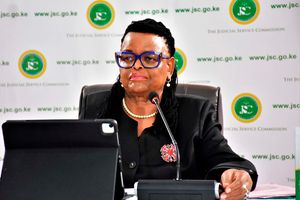
Sharon Oyoko, who is vying for Upcountry Representative seat in the upcoming LSK elections.

What you need to know:
- Admitted to the bar in 2020, Sharon is now in her sixth year of practice and runs her own firm.
- She believes her professional journey has prepared her for national leadership.
For thousands of advocates practising beyond the glare of Nairobi and Mombasa, the corridors of the Law Society of Kenya (LSK) Council can feel distant.
Sharon Oyoko wants to change that. In the race for LSK Upcountry Representative, the Kisumu-based lawyer is positioning herself as a determined voice for lawyers working in towns and rural centres across the country — advocates who, she says, have long been heard less, seen less, and prioritised less.
Admitted to the bar in 2020, Sharon is now in her sixth year of practice and runs her own firm. She believes her professional journey has prepared her for national leadership.


"I believe I am mature enough in practice to seek this position," she says. "Over time, we have elected leaders for this role, but there hasn't been much impact. It is time that the voices of upcountry advocates are heard."
Within the LSK, an upcountry advocate refers to any lawyer practising outside Nairobi and Mombasa. The upcountry representative, she explains, therefore speaks for advocates spread across the rest of the country — from major urban centres such as Kisumu to smaller rural towns like Siaya.
Sharon is keen to dispel the notion that the position pits regions against each other. While the Nairobi representative focuses on advocates practising in the capital, both sit on the LSK Council — the society's decision-making organ whose resolutions affect all advocates nationally.
Running her own law firm, she says, has honed her leadership skills.
"Every day I am making decisions — about clients, staff, finances and strategy. That kind of responsibility builds leadership," she says, noting that it ultimately pushed her to seek elective office.
Her leadership experience extends beyond private practice. She previously served as secretary of the Kisumu branch and currently sits on the LSK West Kenya branch council, representing counties including Bungoma, Kakamega, Busia and Kisumu.
Serving a wide and diverse region, she says, has tested her resolve. "There are moments when you are faced with very difficult situations, and you have to stand firm. That experience has really shaped how I approach leadership," she says.
If elected, she vows to remain accessible to all upcountry advocates.
She argues that advocates practising outside Nairobi are often overlooked when it comes to professional opportunities.
"I want to be their voice and ensure they get equal opportunities like any other advocate in this country," she says.
She commits to protecting what she calls advocates' "bread and butter" — their professional space and livelihoods — by taking a firm stance against undercutting and the encroachment of legal work by unqualified individuals.
She believes the LSK must take a stronger and more visible public stance to protect its members, particularly those handling sensitive matters such as corruption and sexual violence cases.
While acknowledging that such action requires collective council decisions, she insists the society must be unequivocal that harassment of advocates will not be tolerated.
Sharon describes herself as "a product of mentorship" and believes structured mentoring is especially crucial for young advocates and pupils practising upcountry, where access to clients and briefs can be limited.
"Mentorship helps you learn how to run your firm, attract clients and charge properly," she says, adding that she is willing to share briefs where possible and advocate for young lawyers' inclusion in opportunities such as public interest litigation.
On pro bono work, she views it as both a learning platform and a civic duty. While rejecting claims that pro bono exploits young advocates, she draws a clear line against undercutting legal fees. Where clients genuinely cannot afford representation, she prefers pro bono services rather than charging below the Advocates Remuneration Order — legislation that has standardised legal fees.
"The profession must be respected," she says. "Uniformity in legal fees is important whether you are in Nairobi or upcountry."
Integrity and accountability, she says, will anchor her leadership. She is emphatic that members should hold her to account.
"If I have done nothing, then I have done nothing," she says. "Members deserve a report on what they elected me to do."
On gender equity, Sharon acknowledges the progress made since the 2010 Constitution but insists that sustained pressure remains necessary.
"We must continue reminding institutions and law firms that the two-thirds gender principle must be observed and that women must be given opportunities," she says.
With LSK elections set for February 19, Sharon's message to advocates is clear: "Upcountry advocates need to be heard. Our issues need to be addressed. Upcountry