‘Who will pay?’: Teenage mothers grapple with health insurance lockout
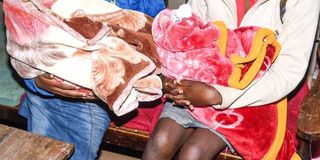
Teenage mothers. In the 2025/26 Budget, CS John Mbadi made no mention of a provision for healthcare insurance cover for teenage mothers.

What you need to know:
- Teenage mothers like Xila remain uninsured, despite government promises because of unmet funding and rising fear.
- The government pledged health coverage, but young mothers face doubt, misinformation, and budgetary neglect in accessing services.
In April, 17-year-old Xila* from Mathare, Nairobi, responded to the Social Health Authority call for registration as a teenage mother to access health services under the new structure designed to promote universal health coverage, meaning every Kenyan, including a child, is covered.
Her son is now 10 months old, yet she is still unregistered, fearing who will pay the Social Health Insurance Fund (SHIF) premium for her. “I had gone to a level 4 hospital in Mathare, and the nurse told me to return with my child’s birth notification to facilitate the registration,” she said on Tuesday.
“I informed my mother, who is a casual domestic worker, and the question she asked me was, ‘Did you ask them who will pay for the cover?’ I said, ‘The government will.’”


However, she said she grew hesitant after hearing her peers claim that she would need to find a ‘sponsor’ to pay her cover because the government is unreliable. “I asked them, ‘A sponsor again?’ That I fear. I don’t want another child.”
When told that the government has not set aside funds to cover their SHIF premiums, she was clearly disappointed. “Hii serikali haitupendi. Ni sawa tu. Sasa tufanye nini? Hakuna. (This government hates us. It's okay. What can we do? Nothing),” she responded, a trace of hopelessness lacing her words.
In an interview in April, acting Social Health Authority chief executive officer Robert Ingasira explained that teenage mothers fall under a category eligible for government support. If they are unable to pay and are classified as vulnerable through a means-testing tool, their premium may be paid by the national or county government, an elected leader, or even a well-wisher, he said.
However, in the 2025/26 budget read last Thursday by John Mbadi, the Cabinet Secretary for National Treasury and Economic Planning, no such provision was made. Instead, he announced an allocation of Sh430 million for SHIF premiums only for orphans, the elderly, and persons living with severe disabilities, leaving out teenage mothers entirely.
According to Mercy Kamau, executive director of Mathare Children’s Fund Panairobi, an organisation that empowers teenage mothers with information and income-generating skills, there is a need for “serious advocacy” to ensure they are not left behind. The burden of motherhood on teenagers in Kenya is immense and painful, largely because many of these girls are victims of sexual exploitation, sexual violence, and child marriage. Yet, they continue to shoulder parental responsibilities far too heavy for children to bear.
Economic surveys by the Kenya National Bureau of Statistics in 2024 reveal that the number of adolescents (aged 10–19), who presented with pregnancy at their first antenatal care visit, was 253,300. Of these, 11,831 were aged 10–14, while 241,483 were aged 15–19.
This year, the number of adolescents aged 10–19 presenting with pregnancy at their first antenatal care visit stands at 241,228, the thousands thrust into parenthood while still children themselves. Xila says, “I didn’t plan to be pregnant. In fact, I didn’t even know until three months later when my mother noticed my face looked puffy and I was tired all the time.”
“The man owned a shop and would give us items on credit. I only slept with him once to clear the debt. I didn’t know I’d get pregnant, and my mother had no idea what had happened. You see her struggling on her own, and it breaks your heart. I don’t know who my father is, and I have no idea where he disappeared to.”
*Her name changed to protect her identity.


