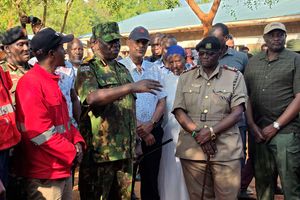
Free trade for whom? Women traders decry their exclusion
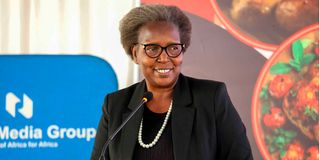
Trade Principal Secretary Regina Ombam at an event in Nairobi in August. During the African Women in Trade Forum held in Nairobi this week, she said that women traders would be instrumental in increasing regional commerce if existing barriers were addressed.

What you need to know:
Women cross-border traders have criticised the implementation of the African Continental Free Trade Area, saying it has done little to address the safety and welfare concerns they encounter at border points across the continent.
Miriam once took eggs across the Kenya-Uganda border using unofficial routes, putting her safety at risk. Today, she chairs the Women's Cross-Border Traders Cooperative Society, where she helps other women traders navigate cross-border trade and pursue their economic goals.
Trade Principal Secretary (PS) Regina Ombam shared the story of Miriam, who trades between Busia in Kenya and Uganda, at the Africa Women in Trade Forum in Nairobi.
The forum, hosted by the State Department for Trade in collaboration with the Organisation of Women in International Trade (Owit) Kenya, was held at Weston Hotel, Nairobi, from October 27 to 29, 2026, under the theme Accelerating Women-Led Trade for Africa's Economic Transformation.


Ms Ombam said Miriam ventured into business to support her family, but faced numerous challenges before the introduction of the one-stop border post and reforms aimed at easing cross-border trade.
Complex documentation, high transaction costs and lengthy clearance procedures made it difficult for her to trade through formal channels. She, therefore, used unofficial routes, exposing herself to insecurity, harassment and the possibility of losing both her merchandise and income.
Improvements in border infrastructure and the streamlining of trade procedures changed her fortunes, Ms Ombam said. With better support for small-scale traders, Miriam was able to formalise her business and trade in a safer environment.
The PS said Miriam's experience illustrates how effective policies, improved infrastructure and targeted support can help women grow their businesses, support their families and contribute to their communities.
"When we make trade work for women, we make it work for families, communities, and the entire economy," she said.
Miriam's experience reflects the challenges facing thousands of small-scale traders, particularly women, at border points across Africa. For many, cumbersome procedures, high costs and safety concerns continue to undermine their businesses and limit their access to formal markets.
Women cross-border traders have, however, criticised the implementation of the African Continental Free Trade Area (AfCFTA), saying it has done little to address the safety and welfare concerns they face at border points across the continent. The agreement was adopted in 2018 to create a single continental market for goods and services and unlock the continent's economic potential, as African countries seek to increase intra-African trade.
The traders, who attended the forum that ended in Nairobi on Thursday, said the agreement places considerable emphasis on reducing tariffs and duties but gives insufficient attention to the challenges facing small-scale traders, particularly those in the informal sector.
Border crossing
They cited harassment, extortion by border officials, inadequate sanitation, poor storage facilities and insecurity as some of the obstacles affecting their businesses. They also pointed to the lack of dedicated breastfeeding rooms and adequate shelter at border crossings.
Jackie Maloba, chairperson of the One Voice Women in Trade Network, said implementation of the agreement should go beyond trade liberalisation to address the everyday difficulties women traders face. She noted that women account for a significant proportion of people engaged in cross-border commerce but continue to face abuse and other forms of exploitation while doing business.
According to figures cited by the traders, up to 40 per cent of women crossing borders for business experience severe physical or verbal abuse, sexual harassment or extortion.
Ms Maloba called for practical measures to make border crossings safer, including the deployment of more female officers at service desks. She said this could help reduce harassment and extortion and provide a more secure environment for small-scale traders.
"The implementation must also address the practical challenges faced by small-scale traders, many of whom are women operating in the informal sector," she said.
Lucia Namubiru, President of the Organisation of Women in International Trade (OWIT), Uganda Chapter, said women traders also face financial constraints that limit their ability to expand their businesses and compete in regional markets. Limited access to capital and high borrowing costs, she said, make it difficult for women entrepreneurs to grow their enterprises.
Ms Namubiru said AfCFTA should help remove these barriers and create opportunities for women to participate more effectively in regional trade. She also called for capacity-building programmes to equip women traders with the skills and networks needed to access new markets.
She added that embassies should play a more active role in identifying markets for products from their home countries, including goods produced by women entrepreneurs. Commercial attachés should help connect local businesses to buyers abroad, she said, while diplomatic missions should raise awareness about regional trade agreements and explain their provisions to small-scale traders. Many women, she noted, remain unfamiliar with the agreements and the opportunities they offer.
Data from the United Nations Economic Commission for Africa indicates that women account for between 70 and 80 per cent of informal cross-border traders on the continent. They are largely involved in the sale of lower-value and perishable goods, including maize, rice, beans and fresh produce, which often require frequent border crossings.
Informal cross-border trade accounts for an estimated 30 to 40 per cent of total intra-African commerce, with women playing a dominant role in this segment. Small businesses also make a significant contribution to regional trade, with women and young people featuring prominently among those who own and operate cross-border enterprises.
Salome Kavindu, president of OWIT Kenya, said making African trade more inclusive would require concerted efforts to address the barriers preventing women from expanding their businesses. She identified access to markets, affordable financing and business networks as critical areas for intervention.
"We need to act on existing gaps that bar women from engaging in trade, which include access to markets for their products, access to financial resources to expand their businesses, and access to networks that will help them get to market," she said.
Export opportunities
Ms Ombam said there was an urgent need to increase trade between African countries, which currently accounts for about 16 per cent of the continent's trade, compared with approximately 70 per cent among European Union member states. She said women traders would be instrumental in increasing regional commerce if existing barriers were addressed and informal businesses supported to formalise and expand.
The AfCFTA framework commits participating countries to promoting inclusive and sustainable socio-economic development, gender equality and structural transformation. The PS said women needed to be involved in its implementation to ensure the continent benefits fully from its potential.
She reaffirmed the Trade Department's commitment to supporting women entrepreneurs through information on export opportunities, guidance on international market standards and capacity-building initiatives to improve their competitiveness.
Meanwhile, Jirm Halake of the State Department for Micro, Small and Medium Enterprises said the government was committed to supporting women entrepreneurs, particularly those running small businesses at the lower end of the market. He called for specialised credit guarantee schemes to help women-owned enterprises access financing and expand into regional markets.
Trade information
Mr Halake said the government was also developing a formalisation policy to recognise businesses operating in the informal sector, many of which are run by women. He added that interventions under the national financial inclusion policy would help address some of the financial challenges facing women traders.
Participants at the forum stressed the need for accessible trade information, better coordination among institutions and business-friendly systems to enable women entrepreneurs to participate more effectively in regional and international markets.
The challenges were also highlighted during a visit by women members of the East African Legislative Assembly to the Namanga border point, where traders described the difficulties they face moving goods across the Kenya-Tanzania border.
They cited inadequate shelter as a major concern, saying the lack of shaded areas leaves them and their children exposed to the sun and offers little protection for their goods when it rains. They said addressing such basic infrastructure gaps, alongside harassment and financial constraints, would be critical to making cross-border trade safer and more accessible for women.