From Nairobi to Murang’a: Discovering family, food and shared traditions in the countryside
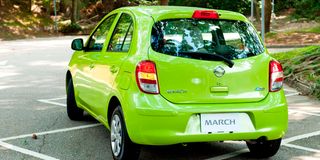
A car on a trip to the countryside.

What you need to know:
- My journey to Murang’a has been a heartwarming reminder of family, culture and the bonds that connect Kenyans.
- The Nairobi-to-Murang’a trip offered a fresh perspective on Kenya, belonging and the similarities that unite us.
Last Saturday, I travelled to Murang’a with a friend, to visit her aunt. I looked forward to that trip the same way children look forward to wearing their new clothes on Christmas day! A chance to be out of Nairobi even for a few hours is always refreshing.
Two weeks ago when my mentor and friend, Prof Jennifer Muchiri, called to invite me to the trip to her ushago, I had asked her if I needed to carry a change of clothes. She said I did not need to because we would not sleep over. I unconsciously asked, “are you sure?” and the answer was something along the lines of “What do you mean am I sure? Of course, I know where I was born and how long it takes me to get there.”
If your countryside home is anywhere in western Kenya, you will understand why I did not believe anyone could travel to the countryside and return the same day! For context, if you travel to my countryside home by road, it takes a solid eight hours to get home from Nairobi. These eight hours include a stopover in Nakuru for a meal that will sustain you for six or so hours. God help you if you suffer from fast metabolism. Whenever I travel to western Kenya by road, I understand why sometimes Uganda insists that parts of Kenya belong to them.


The journey from Nairobi to Murang’a started at 7am. Prof Muchiri reassured me that we would have breakfast with her aunt. In her explanation, we would take under three hours on the road. Therefore, if we had breakfast on the road, we would be too full to enjoy the meals prepared for us. I believed her but still, when we had a bathroom stop, I decided to play it safe and eat something – just in case she was mixing the time up.
The journey was beautiful. Everything felt new and exciting, especially after we passed Murang’a town and entered the mountainous terrain on our way to her village. Suddenly, all the books I had read as a child describing central Kenya as “the hill country” came to life.
Well, it turned out that the good professor was not bluffing. We actually needed less than three hours to arrive! We were warmly received. The matriarch made no attempt to hide her excitement at seeing us. As we settled into her beautiful living room, it felt like sitting in the presence of immense history. Plastered across the walls were photographs of her loved ones – her husband, siblings, children, nieces, nephews, in-laws, grandchildren…
Also read: Peace and serenity in Karamoja’s countryside
The walls of that house reminded me of those in my grandaunt’s home. I looked at the elder in front of me, now deep in conversation with my professor and the other guests, and was struck by how much she and her home reminded me of my grandaunt.
One thing became clear: As human beings, we are similar in more ways than we are different. And at the centre of it all is the love and devotion we have for family.
I felt totally at home. I had a hearty meal, laughed at conversations I only half understood because they happened largely in Kikuyu. I also had fun walking and running through tea and coffee plantations and listening to stories about family heirlooms. There is nothing I could have done at my grandmother’s place that I could not do in Murang’a.
At the end of the visit, my freshly minted shosho packed foodstuff for me in a small sack. To complete the African tradition, she included cooked chapati in the package. Besides that, she gave me eggs packed in a carrier bag.
I do not know the longest distance you have travelled while carrying eggs. But if you are to carry eggs from Murang’a to Nairobi on your lap, you will need all the qualities of present love – you must be homely, comely, intentional and caring.
The trip to Murang’a was a reminder that as human beings, and as Kenyans, we are similar in more ways than we are different. We stand a better chance of enjoying life when we see the differences as an opportunity to expand our repertoire of knowledge than as something that drives us apart. PS: I can confirm that, indeed, there is an ushago you can go to from Nairobi and come back on the same day!
The writer is the Research & Impact Editor, NMG ([email protected]).