From stylist to billionaire: The unlikely rise of Africa's wealthiest woman
On November 20 2012, Forbes Magazine listed Fleur as Africa's wealthiest woman, valuing her OPL 216 asset at $600 million. By 2020, the value of her stake had risen to $1.98 billion.

What you need to know:
- When the Nigerian government seized 50 per cent of her deep-water oil concession, Fleur Ogbara took on the presidency in court, winning a landmark Supreme Court victory.
Folorunsho 'Fleur' Ogbara was born on July 15, 1951, in Ikorodu, Nigeria, into a respected Yoruba family of high standing. Her mother, Oyindamola, a wealthy fabric trader, was the first of eight wives to her father, Chief Alhaji Lamidi Ogbara. When Fleur was seven, her father sent her to Dinorben School for Girls in Llangernyw village in Northern Wales. She later returned to join Muslim High School in Sagamu.
Fleur then enrolled at the famous Pitman's Central College in London to study office administration and secretarial skills. In 1974, she began her corporate career as an executive secretary at the construction company Sijuade Enterprises. She later moved into banking, working as Executive Secretary to the Managing Director at the First National Bank of Chicago. When the bank changed its name to International Merchant Bank of Nigeria, Fleur worked in the Treasury Department before rising to Head of Corporate Affairs.
After a successful 12-year career in corporate administration and banking, she enrolled at London's Central School of Fashion in 1984 to study Fashion Design. The following year, she followed her mother's example and set up a highly profitable fashion house, Supreme Stitches, which she turned into the 'premier haute couture brand for the Nigerian elite'. Its most prestigious client was Nigeria's First Lady, Maryam Babangida, wife of Ibrahim Babangida, then Nigeria's military ruler. Maryam trusted Fleur to serve as her official stylist.


On a flight from London to Lagos, Fleur had an engaging conversation with a Supreme Stitches client who worked with a multinational oil company. The client told her she was looking for someone who could supply the company with crude oil. When Fleur landed in Lagos, she persuaded Maryam to introduce her to the Petroleum and Mineral Resources Minister, Jibril Aminu, in the hope of getting an oil export licence.
At a meeting in Jibril's office in Victoria Island, Fleur presented her 'Value Proposition' but received unwelcome news. The Babangida regime had just introduced a sweeping policy shift to break the monopoly of the multinational oil companies Shell, Chevron and Mobil. It forced them to set up refineries locally instead of using intermediaries like Fleur to access oil.
However, Jibril urged Fleur to apply for a licence and secure a contract with the Nigerian National Petroleum Corporation to move refined oil by truck to various destinations. After several unsuccessful applications, a disappointed Fleur went back to him for advice.
He encouraged her to go into oil exploration and production at Agbami oil field, which lies 113 kilometres off the coast of the Niger Delta basin. Once the government announced that oil blocks were available, an explorer had to go through a rigorous approval process to own a block in Agbami for exploration.
A company that is selected receives an Oil Prospecting Licence (OPL), which gives it the authority to explore for oil in a specific location. If it discovers oil in commercial quantities, it then applies for an Oil Mining Licence (OML), which gives it the legal authority to extract oil at its discretion.
On August 10 1993, Fleur's company, Famfa Limited, won approval for its OPL application, but the news that followed was bad. The block Famfa received was rejected, with an ultra-deep-water depth of 4200 to 5400 feet. As a novice, Fleur did not have the advanced technology to explore for oil at that depth.
Her technical partner, Star Oil Fields, abandoned her at that critical point. She wondered whether she would ever find oil and whether the venture would bring worthwhile commercial gains, given her heavy investment. Without mining activity, Famfa's licence could easily be revoked.
A dramatic twist came in 1996. Texas oil giant Texaco was looking for new partners. It approached the Department of Petroleum Resources, Nigeria's petroleum regulatory agency, which referred it to Famfa Limited.
After three months of tough negotiations over terms and conditions, Fleur agreed to give up 40 per cent of Famfa's stake in its oil block to Texaco, in exchange for its expertise and exploration investment. On August 10 1996, the partnership won an oil prospecting licence called OPL 216. Because of Texaco's skill in deep-water exploration, it invited Brazilian oil magnate Petrobras to join the partnership in May 1998, offering it eight per cent of its share.
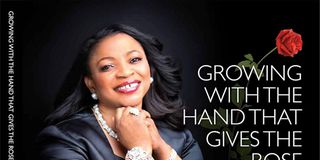
Oil was finally discovered in OPL 216 in November 1998, with one billion barrels of recoverable oil reserves. But Fleur's celebrations were cut short. In 1999, Nigeria moved from military to civilian leadership after the sudden death of Sani Abacha in 1998. The new president, Olusegun Obasanjo, seized a 40 per cent share of Fleur's partnership in OPL 216, leaving Famfa with 20 per cent. In her memoir, ‘Growing with the Hand that Gives the Rose ', Fleur describes that experience as 'the worst day of my life'. Many of her relatives and all her friends deserted her.
Also read: How Dolly Parton built a business empire
Fleur sank into deep despair, but through her husband and attorney, Modupe Alakija, she filed a wrongful acquisition lawsuit against the Nigerian federal government. As the legal battle went on, Obasanjo took over another 10 per cent share from Famfa, while Texaco and Petrobras kept their 40 per cent share.
In December 2004, block OPL 216 received an OML authorising oil extraction.
The legal dispute dragged on for 12 years. On May 4 2012, the Supreme Court ruled in favour of Famfa, declaring that the federal government's actions were 'illegal, unlawful and unconstitutional'. Famfa kept its previous 60 per cent share of OPL 216. Shortly after, on November 20 2012, Forbes Magazine listed Fleur as Africa's wealthiest woman, valuing her OPL 216 asset at $600 million. By 2020, the value of her stake had risen to $1.98 billion.
Jeff Anthony is a novelist, Big Brother Africa 2 Kenyan representative and founder of Jeff's Fitness Centre @jeffbigbrother