Golden nectar of change: Women in Gilgil turn beekeeping into prosperity
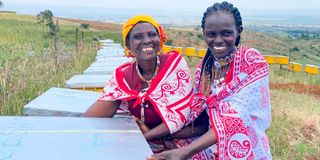
Some members of the Ole Mayani Self-Help Group keeping bees in Ol Jorai, Gilgil, Nakuru County, on September 25, 2025.

What you need to know:
- In Gilgil’s Eburru Forest, women from the Olemayani Self-Help Group have found empowerment through beekeeping.
- What began as a small merry-go-round has become a thriving business producing high-quality honey, supporting families, and conserving the environment.
- Through teamwork, innovation, and environmental care, they are transforming their lives—one hive at a time.
The sun rises over Eburru Forest in Gilgil, Nakuru County, casting long shadows across rows of wooden boxes that hum with life. Inside each one, thousands of bees work tirelessly, unaware that they have become unlikely agents of transformation for a group of women who refused to let heartbreak define them.
This is the story of theft, resilience, and sweet victory—of 23 women who turned to bees when everything else had failed them.
Two years ago, Florence Nkokoyai and 13 other women from Tangi Moja, Ol-jorai, founded the Olemayani Self-Help Group. Their ambition was modest: a simple merry-go-round to pool resources and support one another through everyday needs. For years, they had relied on small-scale farming and casual labour, often struggling to provide for their families.


But somewhere along the way, someone suggested they try something different. Beekeeping.
Armed with little knowledge and even fewer resources, the women began modestly. They made 14 traditional beehives and stationed them at Florence's homestead. It was an experiment, nothing more. Then a Kenya Forest Service officer, during one of his community patrols, noticed the hives and promised to seek permission for the group to place them inside the forest.
The women were thrilled. They transferred the hives to the forest, accepting the officer's stern warning not to interfere with the ecosystem. With determination, they took turns cleaning, tending the hives, and fetching water for the bees. Their excitement grew as the first harvest season approached.
Then came the devastation.
Unknown intruders stole all the honey at night, leaving the women heartbroken. They pressed on. The second harvest was stolen. Then the third.
"We were heartbroken," Florence says, her voice still carrying the weight of those losses. "We used to leave our work to go to the forest to care for the hives. It's risky going there with wild animals around. You even have to inform officers to switch off power lines so you don't get electrocuted. And then someone steals your honey at night."
Shaken but undeterred, the women made a decision that would change everything. They moved the hives back to Florence's homestead and continued their merry-go-round while exploring new options. During one of their weekly meetings, a member suggested that each woman hang a beehive at her homestead instead of depending on the forest.
The idea worked.
Within no time, the bees colonised the hives. Their first harvest yielded 20 kilogrammes of honey. The next harvest brought 30kg. With no established market, they sold the honey locally among themselves and, for the first time, saw the fruits of their labour.
The proceeds enabled them to buy their first modern beehive.
Some women in the group used their beadwork skills to make shangaz, belts, and clothing, selling their creations and channelling part of the profits into purchasing more hives. One beaded belt, sold for Sh4,000, was enough to buy a single hive.
"We sat down and outlined our strategy," Florence explains. "When we sell anything, we set aside a percentage for group expenses and save the rest to buy another hive. We have someone who makes the hives for us—we pay a deposit, and once he finishes, he delivers them."
Bit by bit, their collection grew. Honey became not only a source of income but also a source of pride and medicine within their households.
Today, the group has 23 active members and 50 Langstroth hives located near the forest.
"When we started, none of us believed we would ever earn money from bees," says Ngatili Sargengon, another member. "We were used to farming maize, beans, and keeping livestock."

Ole Mayani Self-help Group Secretary General Elvis Nturere and a member display beehives at their beekeeping project in Ol Jorai, Gilgil, Nakuru County, on September 25, 2025.
Now, the group meets every Thursday for table banking before cleaning the hives using a specific tree called lemoran and clearing the surroundings. A kilogramme jar of their honey sells for between Sh800 and Sh1,000 in local markets—far more than they could ever earn from crops. Together, they manage harvesting, packaging, and marketing, giving them better bargaining power and improved access to buyers.
Many of the women are widows or single mothers who once struggled to provide for their children. Through beekeeping, they have found empowerment and collective strength.
"We used to depend on our husbands or on casual work that paid little," Ngatili says with a smile. "But now, I contribute equally at home. Our daughters see that women can lead and succeed in business. That's a legacy we're proud of."
Elvis Nturere is the group's only male member and serves as secretary-general. He donated his land to host the hives and protect them from theft. He says their main challenges include a lack of proper equipment such as honey extractors, protective suits, smokers, and processing machines.
"I'm the only young person in the group," he says. "We sell our honey locally, and our last sales helped us fence the land. Not all hives are colonised yet, but we hope that soon they will be, so we can ensure steady production. We want to be the biggest honey suppliers in Gilgil, Nakuru, and beyond. We want everyone to sustain themselves from this venture."
Training
The women now plan to scale up by acquiring modern processing units and branding their honey for wider markets. They hope to one day export their product, tapping into the growing global demand for organic African honey.
Their success has also turned them into unlikely conservationists. Since bees thrive where there are flowering plants, the women have become natural protectors of Eburru Forest.
"Before, people used to cut down trees for firewood and charcoal," says Rebecca Kedogi. "But now, we understand that if the forest disappears, the bees will also disappear. We protect the forest because it's part of our livelihood."
According to Joseph Mutongu, a fence and community manager at Rhino Ark Charitable Trust, the women have received beekeeping training through the organisation, as well as from the Ministry of Livestock. Exchange programmes with other groups are also being organised.
"They have been trained on how to harvest honey and store hives during cold seasons since they live near the forest," Mutongu says. "Bees thrive in a clean, favourable environment. We are supporting them because they are the only group in Eburru involved in beekeeping. We want them to earn from it and improve their livelihoods."


