Healing after sexual violence: The safe space changing lives in Wajir
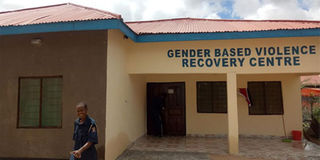
The gender-based violence recovery centre at the Wajir County Referral Hospital. It offers survivors medical treatment, counselling, and a chance to rebuild their lives.

What you need to know:
- Survivors of sexual violence in Wajir are finding refuge at the recovery centre, where they receive counselling, treatment, and legal support amid rising cases of rape and defilement.
- Despite handling dozens of cases, stigma and cultural practices continue to silence many victims, leaving perpetrators shielded by family elders and traditional dispute resolutions.
The counselling room is quiet, save for the soft voice of a young girl recounting the night her world shattered. She is 14 years old. Just days ago, she was rescued after being defiled by someone she knew—someone she trusted. A close family member.
"He came to my room at night and forcibly slept with me," she tells the counselling psychologist seated across from her at the Wajir Gender Recovery Centre. "I had to run away. Well-wishers came to my rescue."
It is mid-morning at the county referral hospital in the heart of Wajir town, and this is just one of many stories the centre hears. The six-bed facility serves as a sanctuary for survivors of sexual violence—a place where trauma is acknowledged, pain is treated, and healing begins.


Here, survivors receive counselling, medical assessment, and management of injuries. The centre provides psychosocial support, HIV prevention through post-exposure prophylaxis (PrEP), and STI prevention and treatment. Forensic evidence is carefully collected and stored. Emergency contraceptives are administered to prevent unwanted pregnancies. Legal aid is facilitated, and police liaisons help survivors navigate the path to justice.
"We collect and store forensic evidence securely," explains Hanidiah Ahmed, the senior nursing officer in charge. "We also give emergency contraceptives to survivors who have been violated to prevent pregnancy, in addition to testing and counselling, including PrEP and PEP medicines, to prevent HIV."
The weight of these cases goes beyond physical injuries. Betsy Wambua, a counsellor at the facility, sees it in the eyes of those who walk through the doors. On average, the centre sees eight survivors each month. At least three of them show signs of mental distress.
"From the cases we handle, it is evident that sexual violence is a major contributor to mental distress and trauma among SGBV survivors," she says. "We normally offer preliminary counselling and then refer them to the hospital's mental health unit for treatment."
Hanidiah adds that survivors are assessed for both physical and psychological injuries. Those with severe injuries are referred for further treatment. "Most survivors here are minors, teenagers, and adults with cases of defilement or rape."
The centre handles at least five cases every month, though the true number is likely much higher. Stigma, fear, and cultural barriers keep many survivors silent. The county GBV coordinator notes that alongside counselling, survivors are supported to access comprehensive health services. Some cases arrive as referrals from dispensaries across the county.
"We get a lot of defilement, rape, and sodomy survivors," Hanidiah reveals. "Since January, we have handled 38 sexual violence cases."
To strengthen the quality of care, staff have been trained in SGBV case management. But Hanidiah stresses that training alone is not enough. "There is a need for robust awareness creation in the community to encourage reporting. Many survivors do not seek help. They must be taught about reporting pathways."
The numbers paint a grim picture. Aliyow Buri, the Wajir East Sub-County Police Commander, reports that 27 cases of SGBV have been recorded this year: 16 defilement cases, eight rapes, and three attempted rapes.
"Once we receive cases of sexual violence, we process the files and forward them to the DPP for approval and prosecution," he says. "The work of the police is to protect, ensure justice prevails, and that survivors fully receive justice."
Yet justice remains elusive for many. Elders have been accused of shielding perpetrators, allowing traditional dispute resolution mechanisms to override formal legal processes. Mohammed Abdillahi, an elder, insists this must change.
"If a girl or woman is sexually violated, then such cases need to go to court and perpetrators must face the law," he states. "Elders should expose perpetrators instead of resorting to traditional dispute resolution mechanisms."
Human rights and gender activist Halima Bachola is less diplomatic. She describes SGBV in Wajir as "a disaster against girls and women."
"There is a lot of defilement, rape, sodomy, and domestic violence against women and girls," she says. "The prevalence of sexual violence in Wajir is high, and many cases are never reported."
She points the finger directly at elders. "When cases occur, elders and family members of victims often question what activists gain by reporting to the police. Elders are the ones perpetuating the vice by shielding perpetrators. Nothing will stop a sex pest from violating more girls and women in future if such protection continues."
The rising cases of incest trouble her most. "Many survivors are left without justice," she warns.


