How Prof Damaris Paristau is inspiring Maasai girls to pursue education
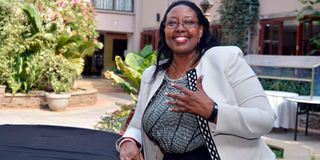
Prof Damaris Seleina Parsitau, the founder of ‘Let Maasai Girls Learn’ during the interview on February 5, 2021 in Nakuru Town.

When Prof Eddah Gachukia was criss-crossing Kajiado County in the 1970s and 1980s to advise members of the Maasai community to send their girls to school, little did she know that her efforts would pay dividends years later.
Prof Gachukia, one of the renowned educationists in Kenya, is passionate about the power of education to transform communities.
Today, she is proud that her hard work is bearing fruit. Parents who heeded her calls are reaping the fruits of their daughters’ education. The women have taken the advantage of the gains made to empower other women.


One of the pioneer Maasai girls whose parents heeded Prof Gachukia's advice is Prof Damaris Seleina Paristau.
"I'm grateful for Prof Gachukia, she convinced the Maasai community to send girls to school and I believe in educating the girl child. I will forever be indebted to her," says Prof Paristau, one of the few Kenyan scholars who have had a stint as a Research Associate and Fellow at the prestigious Harvard University.
The former director of the gender institute at Egerton University is an Echidna Scholar at the Brookings Institution in Washington DC in the US. She is also a research associate at the University of South Africa, the University of Cambridge and the University of Edinburgh.
Passion for education
She has a passion for education and particularly girls' education and has over 20 years of experience in teaching, research, leadership training, advocacy, affirmative action and mentorship. She has published 70 entries in book chapter journal articles, policy briefs, and opinion pieces, and she is set to publish three books.
A gender researcher, she is the founder and convener of the Kenya Women Rising and the Youth and Transformational Leadership incubation programmes that invest in women and youth and a founder of ‘Let Maasai Girls Learn’ which is working to improve girls' education in the community. She has been campaigning against Female Genital Mutilation.
“FGM is a precursor to marriage and that is why most Maasai girls fall pregnant in primary school and are not able to proceed to secondary schools."
“Pastoral communities previously disregarded girls' education, this is now changing and more parents are sending their daughters to school," she says.
"Unless all our girls are in school, we can't talk about ending FGM. Elimination of FGM will not come from outsiders, it will come from the people," says Dr Paristau.
"An educated woman knows what is good for her girl child. Education is a long term solution to FGM," she added.
She says outlawing FGM in Kenya has driven it underground and hence the need to use men and community elders.
Social change
She has always worked hard to improve girls' education and end FGM. She aims to create social change in Kenyan universities.
"Unfortunately, some of us have never been allowed to bring what we have learned outside there to our public universities,” she added.
She says among most pastoral communities, women are taught to obey, respect and submit to men's leadership.
She says pursuing her PhD at Kenyatta University as a young mother was not a walk in the park.
"School fees was Sh1 million and raising two children as a single mother with a meagre lecturer’s salary was an uphill task," she says.
She says the two-thirds gender rule stalemate is a tragedy.
"It is sad that 10 years after we enacted a new Constitution, we are still talking about gender issues. It shows a clear lack of political goodwill to end the stalemate."
Dr Paristau is a great admirer of the leadership qualities of former Kenyatta University Vice-Chancellor Prof Olive Mugenda.
"I would like to be like Prof Mugenda, she left an indelible mark at Kenyatta University," she says.
The alumni of Ole Tipis and Kipsigis Girls high schools says she counts herself lucky as she was allowed to pursue education.
"I want to inspire other girls in pastoral communities to take education seriously," she states.
Prof Paristau, who was born in Olosho Oibor village in Kajiado in 1968, attended Olosho Oibor Primary School.
"I didn't face many cultural challenges as a child since my dad provided me with what I needed to go to school, thanks to great initiatives by Prof Gachukia," she says.


