I lost my baby, my dignity and my marriage: How 'becoming a woman' sentenced three women to decades of suffering
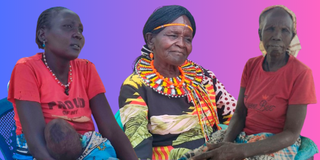
From left: Chepochepunyo Lopenyo, Leah Sapan and Cheposangei Lorepep. After undergoing FGM at age 12 and being married off as children, these women suffered in silence, for decades, with obstetric fistula.

What you need to know:
- Cheposangei Lorepep, Chepochepunyo Lopenyo, and Leah Sapan share a harrowing bond.
- Cut at age 12 in Tiaty West's remote Donyasas village, each was immediately married off, marking the beginning of their decades-long trauma.
- Most poignant is Sapan's story - married before showing signs of puberty, she silently endured fistula for over 30 years, even helping her pastor find other fistula patients while hiding her own condition.
The scar that changed Cheposangei Lorepep's life wasn't visible to the eye. For two decades, it kept her isolated from her community, cost her a child, and nearly destroyed her marriage.
At 56, she can finally speak about those years of shame, though her voice still trembles when she recalls the day everything changed. Like countless women in Kenya's pastoral communities, her story begins with a cultural rite that would alter the course of her life forever.
Like thousands of girls in the Pokot community, Lorepep underwent female genital mutilation (FGM) at age 12.
In her remote village of Donyasas in Tiaty West, the ceremony is seen as mandatory - a girl's transition to womanhood that inevitably leads to marriage and a bride price counted in livestock.
"That was close to four decades ago, but what I went through is still etched in my mind. Due to birth complications, I lost my baby and my dignity," says Lorepep, her eyes distant as she recounts her story.
Obstructed labour
The trouble began with her third pregnancy. Following community tradition, she sought help from a local birth attendant, renowned in the area for delivering babies. But when labour became obstructed, the attendant's intervention led to disaster. Not only did Lorepep lose her baby, who was also cut during the process, but she also developed obstetric fistula - a hole in her birth canal that left her leaking both urine and stool.
"You can imagine a situation where you have not only been turned into a wife at a very tender age but also a mother, with the worst being losing a child and suffering from a condition the community perceives as a curse," she says.
"I ended up becoming an outcast in the community with no one to turn to because the smell, owing to the leaking urine and faeces kept people from my matrimonial house. My husband at that time also left because he could not withstand the ridicule."
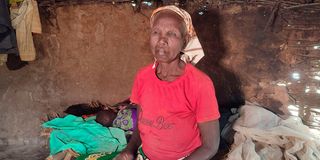
Cheposangei Lorepep from Donyasas village in Tiaty West during an interview on October 31, 2024. She underwent FGM at the age of 12 and was immediately married off.
Though her husband returned years later and they had two more children, Lorepep continued to suffer in isolation for more than 20 years.
"I could not go to the village dances or even fend for my children because I could not mingle with people," she explains.
"I later came to know that my condition was orchestrated by the female cut and also worsened by not going to hospital during delivery but seeking the services of unskilled attendants in the village."
Salvation came in 2011 through an unexpected source. A local cleric, Musa Chepalet, learned of her condition and connected her with a faith-based organisation that funded corrective surgeries at a facility in Cherangany, Trans Nzoia County. After a month of treatment, Lorepep finally found healing.
"I thank God that I have fully recovered from the 'sickness of shame' and I can do my activities like before," she says. "I am a true testimony that someone can recover fully from a fistula if they seek medication."
Just a few kilometres away, 38-year-old Chepochepunyo Lopenyo shares her own battle with fistula. A mother of seven, her ordeal began after delivering her fourth child. Like Lorepep, she attributes her suffering to the combined effects of FGM and early marriage.
"The leaking of urine and faeces started when I delivered my fourth born child and I suffered in silence for many years before I was taken to the hospital in 2017, where I underwent the corrective surgery at a facility in Trans Nzoia County," says Lopenyo.
The procedure, also funded by a faith-based organisation, transformed her life.
"After the corrective surgery in 2017, I have given birth to two other children. I am a happy woman now because I can mingle with people without shame," she says.
Her experience has made her a vocal opponent of FGM: "This condition was orchestrated by the female cut and I pray to the people in this community not to subject their girls to such archaic practices that can lead to such complications in future. Due to such a bad experience, I have vowed that my girls will not be cut."
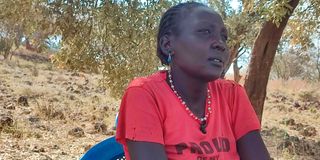
Chepochepunyo Lopenyo, 38, from Donyasas village in Tiaty West suffered from fistula for more than a decade before seeking treatment. During an interview on October 31, 2024, Lopenyo said she underwent FGM and married off at a young age.
Perhaps the most heart-wrenching testimony comes from Leah Sapan of Chemolingot. Her story exemplifies the cruel intersection of cultural practices and medical complications that has trapped so many women in cycles of suffering.
"I underwent FGM and was married off at a very tender age and due to illiteracy, women here seek services of birth attendants, which I also did," she recounts.
"At only 12 years and a naïve girl who was a year shy of teenage and before even displaying the signs of puberty like breast development, I had already been turned into a wife."
The birth of her first child, while still barely a teenager herself, marked the beginning of her nightmare.
"Because I sought the services of a traditional birth attendant, my vagina was severed and I suffered from fistula. At first it was mild and after four other deliveries, my condition worsened," she reveals.
Shame kept her silent for more than three decades. Even when actively involved in church activities, she couldn't bring herself to seek help.
"I was a church member and I even remember that my pastor approached to help him look for women suffering from fistula so that they could be taken for surgery, which I obliged, but I didn't tell him that I was also suffering from the condition, until some years later," she says.
Cultural practices
The stigma was so strong that she hid her condition even from her children.
"I eventually went for a corrective surgery, but did not even tell my children because I didn't want them to know what I was suffering from. To minimise the leaking urine and stool, I took very little food and this also led me to lose so much weight. I didn't divulge my tribulations because I didn't know that it was treatable," she explains.
Kukat Krop, a village elder, acknowledges the devastating impact of these cultural practices on women and girls in the community.
"Almost every girl in this community has undergone the archaic female cut and thereafter they are married off at a very tender age," he says.
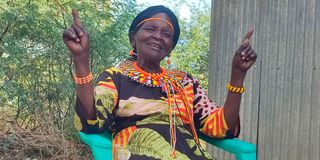
Leah Sapan from Chemolingot, Tiaty West, was married off at the age of 12 after undergoing the female cut. She gave birth as a minor through a traditional birth attendant and ended up suffering from fistula.
"The move has led most of them to suffer from birth complications and due to patriarchal issues that are also still rife, they end up suffering in silence. We are now advocating to end such vices that have dangerous implications to our women."
In the pastoral communities where this age-old practice persists, uncircumcised girls are considered 'unripe' and become social outcasts, unable to mingle with those who have "gone through the knife." The practice is deeply entwined with marriage prospects - no one will negotiate bride price for 'uncut' girls, who are seen as 'raw' and incomplete women.
Pastor Chepalet, who began his initiative to help women with fistula in 2011, has facilitated corrective surgeries for more than 100 women. Yet he believes this represents only a fraction of those affected.
"The facilities here cannot do such surgeries, for that reason, the women are taken to facilities in Eldoret," he explains. "Several others are still in the villages, meaning that the condition is rampant in this region. We appeal to the devolved unit to equip our local facilities and have specialists who can assist the women who are affected."
Dr Makilap Katurkana, Medical Superintendent at Chemolingot Sub-County Hospital, confirms the prevalence of fistula cases in the region.
"The condition is very common in Tiaty due to FGM, teenage pregnancies and birth complications owing to deliveries at home," he explains.
"After, there is a scarring at the reproductive system, preventing the passage of the baby, thus causing fistula."
The challenge of addressing fistula in Tiaty is compounded by the region's remote location and limited healthcare infrastructure. Many women must travel long distances to reach medical facilities, and the cost of transport alone can be prohibitive. When complications arise during childbirth, the precious hours spent trying to reach a hospital can mean the difference between life and death for both mother and child.
In March last year, a medical camp partnership with Probitas and Kaperur organisations enabled more than 16 women with fistula to undergo corrective surgeries. The hospital has also trained community health volunteers to identify patients and combat stigma.
Dr Fredrick Kairithia, an obstetrician and gynaecologist, explains the medical link between FGM and fistula: "When a woman undergoes the female cut, they normally undergo a lot of scarring around the genital area, which reduces the ability of the tissues to expand. Such women tend to suffer from obstructed labour and when the foetal head sits on tissues, they die forming an abnormal hole which is called the fistula."
The complications don't end there. "Such women also suffer from excessive bleeding caused by genital tears and excessive scarring. There is also the foetal complication, which happens when it is subjected to prolonged labour and thus ends up dying. Some are also born with severe distress, meaning the brain is deprived of oxygen and such children tend to have severe learning disability and delayed milestones that become a long term complication," he adds.
According to the World Health Organisation, obstetric fistula affects between two and three million girls and women across sub-Saharan Africa and Asia. Each year, between 50,000 and 100,000 women worldwide develop the condition. While it can be repaired surgically, the combination of stigma, limited medical facilities, and deeply rooted cultural practices means many women continue to suffer in silence.
For survivors like Lorepep, Lopenyo, and Sapan, breaking that silence has become a mission. Their stories serve as powerful testimonies that recovery is possible, and that the cycle of tradition doesn't have to claim more victims. These women, once ostracised from their community, have become beacons of hope for others suffering in silence.
Baringo County's health executive, Solomon Sirma, acknowledges the challenge ahead.
"We are still trying to mobilise them through Community Health Volunteers so that we can arrange for them to undergo corrective surgeries," he says. "Most of the cases are caused by poor management of deliveries, especially mothers who deliver at home. We urge women in the region to go to hospital during delivery."
How FGM increases the risk of obstetric fistula
Female genital mutilation (FGM) significantly increases the risk of obstetric fistula, a debilitating childbirth injury caused by prolonged, obstructed labour. Here’s how:
Scar tissue formation: FGM often involves cutting or stitching, leading to scar tissue in the vaginal and perineal area. This scar tissue reduces the elasticity of the birth canal, making labour more difficult and increasing the likelihood of prolonged obstruction.
Narrowing of the vaginal opening: In severe forms of FGM, such as infibulation, the vaginal opening is narrowed. This can cause complications during delivery, as the baby struggles to pass through the restricted canal.
Prolonged obstructed labour: The physical complications caused by FGM often lead to prolonged obstructed labour, a key cause of obstetric fistula. Without timely medical intervention, the pressure of the baby’s head against the mother’s pelvis can damage surrounding tissues, creating a fistula.
Increased risk of tears: The scarred tissue from FGM is more prone to tearing during delivery, which can result in injuries to the bladder or rectum, further contributing to fistula formation.
Limited access to healthcare: In areas where FGM is prevalent, women often have limited access to quality maternal healthcare, including access to emergency obstetric care that could prevent fistula through interventions like caesarean sections when labour becomes dangerously prolonged. Delayed or inadequate care during obstructed labour exacerbates the risk of fistula.


