Inside Fathe Dika’s dangerous fight to keep Marsabit girls in school
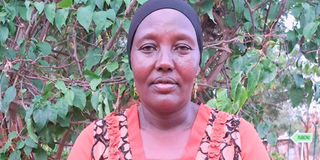
Fathe Dika, an advocate for child protection based in Marsabit County. Her work primarily focuses on rescuing and supporting girls facing various challenges.

What you need to know:
- Marsabit County has no rescue centre—not a single one.
- The police have no gender desk where a traumatised girl can receive proper support. So, the social worker improvises.
The call came at 11pm. On the other end was a terrified Grade Seven girl, her voice barely above a whisper. Her father had announced there would be no public wedding—the marriage would happen in secret, between 4am and 5am, before the neighbours could hear any commotion.
Fathe Dika did not hesitate. She called the local chief, then the police. By 6am, she was in a police vehicle, racing towards the location where the girl had been taken.
They intercepted the "husband" and his young bride at his home. The girl was returned to her family. But her father, bound by tradition, refused to let her back into his homestead. A girl who has been married, he said, can't simply walk back in. There must be a ceremony first.


Instead, he placed her with relatives—and instructed the husband to come and collect his wife.
When the Fathe heard what had happened, she went back. This time, with the chief and education officials. The old man who wanted to marry off the girl turned violent, threatening to beat her.
"I know it is this one who is disturbing me," he shouted. "It is like I have given birth to this child with her," the social worker tells Nation.Africa in an interview.
He gave her an ultimatum: pay back the dowry he had already received, or take the child herself.
"Just return the girl to school," she told him. "God will cater for the provision of school needs."
That girl is now a young woman, married to a man of her own choice. She completed Form Four without her father paying a single shilling. Today, she educates mothers through a local church—and helps Fathe empower other girls in the community.
Her father? Four years later, he sought out the woman he had once threatened. He had a confession to make.
"He gave me a testimony of a time when he planned to eliminate me," Fathe recalls. "He told me whatever I had done for his daughter was good. He said he would give me a goat for that."
She laughed and declined the goat. "If you want to reward me well," she told him, "advocate for the girl child. Give this testimony so that others will learn from your story."
A different kind of rescue
Not every girl she saves is fleeing marriage. Some are running from their own families.
There was the 13-year-old in Grade Seven who fell pregnant. In her community, teenage pregnancy is considered a taboo—and the punishment fell on her. Her family beat her so badly that she was left in serious pain, her body injured.
When Fathe heard what was happening, she went to the home and took the girl to hospital. She alerted the children's office, warning that the girl's life was at risk. She contacted her organisation for resources to support the child's recovery.
The girl received medical care, then counselling. Eventually, the rescue worker linked her to vocational training, where she learned skills that would allow her to support herself.
Today, that girl is a young woman—married on her own terms, to a man she chose, and financially independent. The shame that once threatened to define her life never materialised.
A voice for the voiceless
For 23 years, Fathe has been doing what many would consider impossible—and dangerous. Working in Marsabit County, one of Kenya's most arid and marginalised regions, she has made it her life's mission to rescue girls from child marriage, child labour, and the cycles of poverty that trap them.
She works for Food for the Hungry, a Christian humanitarian organisation focused on ending extreme poverty and building community resilience. But her crusade began long before she had an employer or a title.
"This started even before I joined the organisation," she says. "But when I joined, I gained more voice. I gained relationships with many actors. That is when I started fully rescuing."
Her weapon is not money or political power. It is information—and an unshakeable belief that speaking up matters.
"Much of what I have achieved is not about resources. It is not about power. It is about courage—and getting information to the right people."
The economics of desperation
In Marsabit, drought is a way of life. And when the rains fail, the cascading consequences fall heaviest on girls.
The veteran social worker has watched the pattern repeat itself for two decades. First, families pull their daughters out of school. The girls are sent to work—caring for other people's babies, herding livestock or doing domestic labour for wealthier households. Isolated from their families and exhausted by labour, they become easy targets for older men. Many come to believe that marriage—any marriage—is better than their current situation.
For other families, the calculation is brutally direct: marry off the daughter, collect the dowry, use the livestock to educate the sons.
Teenage pregnancy accelerates the process. A 13-year-old who falls pregnant may find herself handed over to a 70 or 80-year-old widower in need of a wife. In pastoral communities where female genital mutilation (FGM) persists—now practised in secret due to government crackdowns—the cut is understood as preparation for marriage.
Girls who have not undergone FGM are considered unready for marriage, Dika explains. The practice conditions them psychologically, priming them for a future that has already been decided.
The rescue network
When she gets word that a girl is in danger, she does not rush in alone. Years of dangerous work have taught her the value of operating through systems.
Her organisation works relationally—building close ties with community-based organisations, self-help groups, and faith-based groups. These are the people on the ground, the ones who hear things first. Sometimes the intelligence is just a rumour. Other times, a direct report: the girl was married off last night.
The challenge is that local chiefs are often complicit—unwilling to disrupt marriages that tradition endorses. So, Fathe reports to higher authorities: assistant county commissioners, the deputy county commissioner, and the police.
Once the rescue happens, the real work begins. A girl who has spent a night with a man needs medical examination. She needs counselling. She needs someone to fight for her right to return to school.
Marsabit County has no rescue centre—not a single one. The police have no gender desk where a traumatised girl can receive proper support. So, the social worker improvises. The hospital becomes her counselling room. Nurses become her allies. School principals—especially female ones—become partners in getting girls back into classrooms.
Into the bush at 3am
Not every rescue goes smoothly.
She remembers a Grade Five girl who had been married off and hidden in the bush during the day, only returning to the husband's home at night. The police had an arrest warrant but no idea where to find her. They needed someone who knew the terrain.
Fathe agreed to guide them—but insisted on bringing male colleagues for safety. They set out at 3am. What she didn't know was that the local chief had already tipped off the perpetrator. Fortunately, the man didn't believe the police would actually come at night. When they arrived, both he and the girl fled into the darkness.
The police recovered his phone. The last call, logged at midnight, was from the chief. When they traced his contacts, they discovered something chilling: the man was connected to armed groups operating across the porous Ethiopia border.
It was one of the most dangerous missions she has undertaken. But it was not the first time she had faced threats—and it would not be the last.
What keeps her going is watching rescued girls thrive. And seeing the very people who once threatened her life come back, years later, to apologise.
"They tell me: we are sorry. You were seeing ahead of us."
The ones who slip away
There are limits to what even the most determined rescue worker can do.
When families marry off their daughters and flee across the border into Ethiopia, pursuit becomes impossible. When a pregnant girl needs a safe place to deliver and return to school, there is no facility to take her in.
In such cases, they simply have to let go.
Those losses weigh on her. But they also fuel her push for systemic change. Her priorities are clear: government officials—from village chiefs to children's officers—must be held accountable. Families need economic support so they are not forced to choose between eating today and educating their daughters. And children themselves must learn their rights and gain a voice in decisions that shape their lives.
Awareness is growing, she says. More people now accept that harmful cultural practices matter less than education. But knowing the right thing and doing it are not the same.
From the other side
Fathe knows what it means to be a girl in danger.
She grew up partly in Marsabit, partly in the countryside with relatives. Her elder sister was married off young. After Grade Eight, there was an attempt to marry her off, too.
A brother intervened and saved her. "If I was saved," she says, "I have an obligation to save others."
She studied social work, adult education and community development at the University of Nairobi. She married and had children—including a daughter who has become her personal testament against FGM.
When she first began campaigning against the cut, she did not yet have a daughter. She made a promise: if God blessed her with a girl, she would not put her through it. Her daughter would become a role model—proof that an uncut girl can get an education, build a life, and marry well.
That daughter completed Form Four and is now in university studying journalism. She has never undergone FGM.
In the past, an uncut girl was a source of shame. But an empowered woman can rewrite that narrative. The mother of three hopes her daughter will one day stand before her community and testify: the cut did not define her, and its absence did not limit her.
The mathematics of change
The numbers tell a story of slow, painful progress.
When Fathe started this work, girls were vanishing from school with each passing year. In Grade One, they matched the boys in number. By Grade Eight, you would be lucky to find three girls in an entire class. Today, the gender gap still widens as children advance—but it is narrower than before.
Enrolment, transition and retention rates for girls are improving significantly, she reports. The most stubborn bottleneck remains the move to secondary school. When a family has one son and one daughter qualifying for Form One and can only afford to send one child, the son still wins.
But attitudes are shifting. Communities can now see the difference between girls who were rescued and those who were not—the divergence in their trajectories, their independence, their children's wellbeing.
The 13-year-old who was beaten for falling pregnant is now self-reliant, thanks to vocational training. When she eventually married, it was on her own terms, to a man of her choosing.
Empowerment changes everything, the rescue worker observes. A girl with skills and independence does not enter marriage from a place of desperation. She enters it with dignity.
The call continues
Today, she is supporting two teenage mothers in Form Two, helping them proceed to Form Three. Their school fees come from a fund she helped organise—colleagues at Food for the Hungry pooling whatever they can, month by month.
They call it seed money. If outsiders are willing to help our children, Fathe reasons, then we must also do our part. Pool resources. Save one girl at a time.
"One at a time" has been her philosophy from the beginning—back when she had no organisation behind her, no network of contacts, no resources to speak of. Just the conviction that something was wrong, and that silence was not an option.
Twenty-three years later, she answers calls in the night the same way she did at the beginning—racing against tradition, poverty, and time, convinced that one voice, raised at the right moment, can change a life.
She wants to be remembered as a voice for the voiceless. But more than that, she wants others to find their own voices.
"If you see injustice, raise your voice," she says. "It is possible for anyone to speak up."
Fathe Dika is a social worker based in Marsabit County, where she works with Food for the Hungry on community resilience and child protection.


