Inside the Shakur family: The women who endured prison, poverty and heartbreak
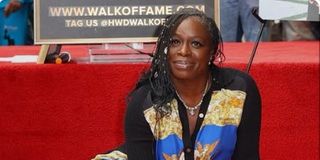
Sekyiwa 'Set' Shakur, sister of rapper Tupac Shakur, during his posthumous unveiling ceremony on the Hollywood Walk of Fame in Los Angeles, California, US, on June 7, 2023.

What you need to know:
- Sekyiwa Shakur’s troubled childhood and years of trauma culminated in a devastating struggle with suicidal thoughts after Tupac’s death.
- The story traces Afeni Shakur’s revolutionary journey, her family’s struggles and the lasting impact of racism, violence and abandonment.
Eighteen-year-old North Carolina descendant Alice Faye Williams was notified by her best friend, Sandra, that she was pregnant in 1966. Sandra had previously visited her New York obstetrician and gynaecologist for a hysterectomy procedure to prevent conception. As doctors often did to black patients, he removed one of her fallopian tubes, leaving everything else, including her womb, intact, without informing Sandra.
One night, after Alice left her shift at the post office, she received a phone call informing her that Sandra had tragically died in her bathroom after suffering a brain haemorrhage. The premature baby was miraculously born alive, but because she was black, the nurses chose to let her die without placing her in a neonatal intensive care unit.
To cope with her trauma, Alice sought refuge at a Bembe ceremony, a New York African traditional event that originated from the Yoruba ethnic group. She was told that her Orisha (divine spirit) was Oya, a powerful deity who ruled the wind, the tempests and the Niger River. She was bestowed with a new name, Afeni, which meant ‘dear one’ and ‘lover of people’.


During the civil rights era, countless black people rejected ‘Anglo-Saxon slave names’ and adopted African-inspired names. One Saturday on the famous 125th Street in Harlem, Afeni attended a Black Panther Party rally and listened to founder Bobby Seale speak articulately and passionately about the rights of black people. She watched him recite the Black Panther Party’s 10-point agenda, including point six, which demanded ‘free healthcare for all blacks’ and resonated with Afeni. The Panthers were a profoundly tenacious movement that fiercely loved the black community.
The bigoted Federal Bureau of Investigation (FBI) counter-intelligence programme infiltrated the Panthers and arrested their leaders under falsified and unlawful claims. On April 2, 1969, Afeni’s apartment door was kicked open, a shotgun was pointed at her and she was arrested alongside 20 other members of the Panthers, leading to the infamous Panther 21 conspiracy case.
During the many court hearings, Afeni discovered that she was expecting Panther activist Billy Garland’s child. On June 16, 1971, a month after her acquittal, which spared her from serving a cumulative 309-year prison sentence, she delivered a son and named him Tupac Amaru, after a Peruvian liberation leader.
The Panthers were successively subjugated through the incarceration of their leaders Assata and Cochise, the bombings of their Omaha offices, and the cold-blooded murders of their generals Fred Hampton and Mark Clark in Chicago. Afeni was working for Legal Services, helping disenfranchised Panthers when she married Panther leader Mutulu Shakur and gave birth to a daughter, Sekyiwa ‘Set’ Shakur, on October 3, 1975.
When the FBI discovered that Mutulu was helping black people access employment and relocate to Europe, he was incarcerated on fabricated charges and sentenced to life imprisonment. Afeni subsequently lost her apartment and, after enduring homelessness on the streets of New York, relocated to Baltimore, Maryland, in 1984 with 13-year-old Tupac and seven-year-old Sekyiwa.
She enrolled Tupac at the Baltimore School of the Performing Arts, accompanied Sekyiwa to school daily and sat in her classes while relying on paltry ‘welfare cheques’ on the first and 15th of every month. Four years later, she sold her few belongings and bought bus tickets for herself and Tupac to Marin City, California, to join Sekyiwa, who had relocated earlier to live with Cochise’s alcoholic wife, Asante.
Pregnancy
Afeni subsequently discovered that she was pregnant. Cochise, who was incarcerated at San Quentin prison in California, had urged her to date his inmate, Hassan, and during one visit, Hassan pleaded for sex and impregnated her. Afeni was 40, living with 12-year-old Sekyiwa in a subsidised, impoverished apartment after Tupac left to pursue his hip-hop career with Digital Underground.
In Afeni Shakur: Evolution of a Revolutionary, she states that, having worked at Legal Services, she knew about ‘crack babies’ and how crack cocaine was used to induce abortions. She relapsed and smoked crack every day, seven days a week, to trigger an abortion. Her intake intensified when she discovered that Hassan’s initial intention was to manipulate her into smuggling drugs for him into San Quentin.

Cover of the book, Afeni Shakur: Evolution of a Revolutionary by Jasmine Guy.
Sekyiwa was in eighth grade and alone after Afeni relocated to the house of a drug dealer who was funding her drug habit. She would be gone for months, and Sekyiwa would lie to neighbours that her mother was still present to prevent Child Protective Services from coercing her into foster care.
Her mental stability deteriorated. Although she never used drugs, she became hooked on sex. A 23-year-old drug dealer started giving her money and reefer to sell and eventually moved in with her. Sekyiwa’s adolescent years were dominated by rage, which erupted in fits of throwing plates as a rebuttal to the parental love she craved. She had her first baby, Nzingha, as a teenager.
In 1991, after Tupac was contracted to Interscope Records, he took financial responsibility for housing and feeding Sekyiwa, Afeni, his entire extended family and more than 40 Panther affiliates. This, however, did not ease Sekyiwa’s distress, and she often contemplated suicide. After Tupac was ambushed and shot five times at Quad Studios in New York on October 30, 1994, during his first attempted assassination, Sekyiwa’s trauma worsened.
When Tupac died from gunshot wounds on September 13, 1996, in Las Vegas, Sekyiwa was 21 and on the brink of committing suicide after years of sequential colourism, racism, sexism and abandonment trauma. She was overwhelmed with rage, not just towards the murderer, Orlando Anderson, but also towards Tupac.
Her anger towards Tupac emanated from the feeling that he had died, forcing her to abandon her suicide mission when she believed she should have been the one to die. She enrolled at Sierra Tucson, a tranquil rehabilitation centre in Arizona, where she was diagnosed with post-traumatic stress syndrome and received treatment to regain her sanity.
The writer is a novelist, Big Brother Africa 2 Kenyan representative and founder of Jeff's Fitness Centre (@jeffbigbrother).