Meet the widows of fallen police officers left penniless in pension deadlock

From left: Caroline Chepkoech, Judy Wambui, Nelly Koech and Millicent Awuor Kyalo. They are widows of fallen police officers and are fighting for their families’ survival as pensions and benefits remain locked in bureaucracy.

What you need to know:
- Hundreds of police widows are trapped in a bureaucratic nightmare, unable to access millions of shillings in promised benefits despite their husbands dying in service to their country.
- They are borrowing bus fare for endless trips to government offices, watching their children drop out of school and go without medical care.
- Over 383 officers have died on duty in six years, but their families face a cruel system that treats their sacrifice as paperwork and their grief as an inconvenience.
The morning sun casts long shadows across the verdant hills of Ichagaki Ward in Maragwa Constituency, painting the landscape in shades of hope that feel almost mocking. Here, where life should flourish, grief has taken root instead. A dusty red earth road winds its way to a quiet homestead in Kirungu Village, where two small graves serve as silent sentinels to a family's devastating loss.
Judy Wambui greets visitors with a smile that doesn't quite reach her eyes. Behind that fragile facade lies the profound sorrow of a woman who has buried both her husband and son—casualties of circumstance, depression, and a system that seems designed to abandon those who need it most.
This is more than just one woman's story. Across Kenya, hundreds of police widows share Wambui's anguish, trapped in a labyrinth of bureaucracy that treats their grief as mere paperwork and their children's futures as acceptable casualties of administrative indifference.

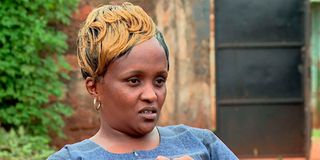
Judy Wambui during the interview at her home in Kirungu Village, Maragwa Constituency, on June 28, 2025. Her husband, the late Constable Harrison Mugo, died by suicide.
The love story began in 2004 when Wambui married Police Constable Harrison Mugo. He had joined the service five years earlier at just 22, full of purpose and pride. From Jogoo Police Station to various outposts across western Kenya, and finally to Nairobi's Buruburu Police Station, Mugo served with dedication. Together, they built a life blessed with four children.
Their firstborn, Samuel, was the light of his father's life. Wambui still remembers watching the unbreakable bond between father and son—one rooted in love, admiration, and shared dreams for the future.
"Samuel's birth marked a turning point in Mugo's life, introducing him to a deeper sense of responsibility and unconditional love," Wambui recalls.
But on May 11, 2019, their world shattered. Samuel's vibrant young life was cut short in a road accident during a school trip to Nanyuki in Laikipia County. The promising future that stretched ahead of the boy vanished in an instant, taking with it his father's will to live.
"It really affected him. He fought depression for three years. It seems he found solace in alcohol," Wambui says.
The family sought professional help, approaching a psychiatrist as Mugo's condition worsened. Wambui even raised concerns with his superiors, hoping he could take time off work to heal. But healing would prove elusive.
On July 7, 2022, a video clip changed everything. The footage showed officer Mugo staggering through the streets in his police uniform, clearly intoxicated. The clip went viral on social media, transforming private pain into public humiliation.
"He called me and told me things were not okay at work, but promised to sort out the issue," Wambui remembers.
Mugo was summoned twice by his bosses at Buruburu Police Station. After the second meeting, unable to bear the shame and still drowning in grief for his son, he took his own life. His body was discovered the following morning.
The final insult came at his funeral. There was no gun salute—the traditional honour accorded to fallen officers.
"Since he died by suicide, police said the injury was self-inflicted," Wambui explains, the bureaucratic coldness of the reasoning still stinging years later.
Three years on, Wambui has never been able to fully process her husband's death. The way she learned of it haunts her still.
"The way the message was relayed to me is not something I would wish for anyone. The news of his death was all over social media before the family knew. It was disheartening. My children faced a lot of stigma."
Now a single mother of three, including a daughter who was just five months old when her father died, Wambui struggles with questions that have no easy answers.
"When my husband died, I had a five-month-old baby. Now she's five years old. I show her pictures of her late father," she says.
The bureaucratic nightmare began almost immediately. Despite Mugo's 23 years of service, Wambui was told he doesn't qualify for benefits because he died by suicide. Even more shocking, she was informed that her children aren't eligible for any benefits either.
"The only benefit I'm entitled to is the death gratuity. It's very unfair—why punish children when they're innocent?" she asks.
When duty becomes sacrifice
Five hundred kilometres away in Machakos County, Millicent Awour Kyalo can pinpoint the exact moment her world collapsed. It was February 2023, and the memory remains as vivid as if it happened yesterday—the day she became a widow at the mercy of an unforgiving system.
A huge mound of soil still covers the grave of Constable Bernard Kyalo Mwania, who was killed in the line of duty. Unlike Wambui's husband, Kyalo died a hero's death, gunned down by armed bandits whilst serving his country. Yet, his widow faces the same bureaucratic maze.
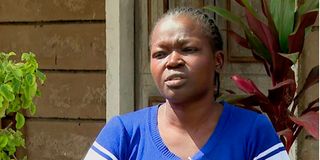
Millicent Awuor Kyalo narrates her journey to widowhood. Her husband, Constable Bernard Kyalo Mwania, was gunned down by bandits in Laikpia County. She spoke to Nation.Africa on June 21, 2025.
Constable Kyalo had joined the service in 2008 and was based at Munyange Police Station in Nyeri County before his final deployment. He was part of an operation to restore order in the troubled region of Laikipia County—a mission that would cost him his life after barely a week at his new station.
"He left home on February 5, 2023, and on February 11, their camp was ambushed by armed bandits," Millicent recalls.
The reality of her husband's death didn't sink in until she stood in the funeral home nearly a week later, confronting the finality of her loss. Constable Kyalo had been a dedicated and brave officer who had served for almost 15 years, leaving behind a legacy of service and a family in desperate need.
The journey to healing has been slow and painful for Millicent. She has lost not just her companion, confidant, and trusted friend, but also her career. A trained nurse, she had given up her profession to become a stay-at-home parent due to her husband's demanding police work.
"We were married for 13 years and had three children. The firstborn is 12 years old, whilst the twins are seven. I have to play the roles of both mother and father, which can be emotionally and practically challenging," she explains.
Millicent had banked on her husband's pension to maintain and educate their children. Instead, she has encountered a heavily bureaucratic process that seems designed to exhaust rather than assist.
"I started the process in November 2023 and handed over all required documents. Since then, I've been taken in circles. The back and forth is too stressful."
The ultimate price
In Kericho County, another widow shares a similar tale of love, loss, and bureaucratic indifference. Caroline Chepkoech, mother of three, lives in Cheberema village with memories of a husband she rarely saw but never stopped loving.
Even when Constable Kipkoech Kirui was alive, her children never knew what it felt like to have their daddy home on Christmas Day. It was a sacrifice she was willing to make for her country—but not one she was prepared to make forever.
Stationed in Mandera County, Kirui would call Caroline every morning to check on his family. It was a ritual that brought comfort across the miles—until one day, he wasn't answering her text messages.

Caroline Chepkoech at her home in Cheberema, Kericho County, on June 14, 2025. Her husband, the late Constable Kipkoech Kirui, died in Mandera County in the line of duty.
Caroline was at home doing household chores when unusual visitors arrived with news that broke her world apart. Kirui had been killed whilst on duty in Mandera County on June 20, 2023.
"The vehicle they were travelling in ran over an Improvised Explosive Device (IED) along the Banisa/Mandera Road. He died on the spot," the devastated mother recounts.
Recruited into the Police Service in 2016, Kirui had worked in Mandera County for eight years. He always told Caroline about the dangers he faced and asked her to pray for him. Those prayers couldn't protect him from the IED that ended his life.
The untimely and sudden death of her family's sole breadwinner left Caroline devastated and desperate.
"Life has become so hard after losing my husband, who was the breadwinner. I'm jobless and have three children to feed and educate."
Like the others, Caroline faces a mountain of hurdles whilst trying to access her deceased husband's pension and welfare benefits.
"I've been making countless trips to Nairobi. Imagine travelling from Kericho to Nairobi from time to time. I have to borrow bus fare, look for somewhere to spend the night, which is costly. Yet I return home empty-handed. It's too much," she confesses.
When even heroes aren't safe
Perched on the hilly tea-growing fringes of Bomet County, Legimbo village stands out as a serene neighbourhood where Nelly Koech endures the profound silence that has filled her home since April 4, 2021.
Four years have passed since Nelly lost her husband, Constable Charles Koech. Though the pain still lingers, she has found the strength and resilience to navigate this journey—even as the system continues to fail her.
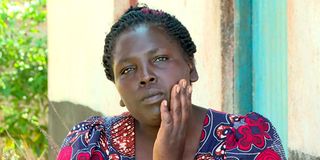
Nelly Koech speaks to Nation.Africa at her home in Bomet County, on June 13, 2025. She has made countless trips to Nairobi seeking her husband's benefits in vain.
"My husband was diabetic and was working in Nairobi. He was transferred to Kericho County and received the Covid-19 jab, but unfortunately, he developed side effects and died," Nelly explains.
Koech had been a dedicated officer since joining the police service in 2008. Despite his illness, he remained committed to his duties and served his country with unwavering loyalty—a dedication that ultimately couldn't protect him from an unforeseen medical reaction.
After his passing, the mother of four carries the full responsibility of providing for her family alone. It's a burden she bears without complaint, but one that weighs heavily on her shoulders.
"Not only did I lose my husband, but also our entire livelihood, leaving me to fend for my four children with no income. I don't have a large piece of land that I could sell in order to educate my children."
The challenges are compounded by her youngest son's diagnosis with diabetes before he turned 10. Diabetes is an expensive disease requiring proper management, including medication and diet.
"My son, who is 14 now, injects himself with insulin three times a day," says the mother of four.
Like the others, Nelly has made countless trips to Nairobi seeking her husband's benefits in vain.
"Since 2021, I've been making frequent follow-ups, but with no success. I'm told to wait, check next month, and so on. It's been four years now, and I'm yet to get my dues."
In April, she was promised that the money would be deposited in her account before the June 2025 budget was read.
"I was hopeful of receiving the pension benefits and even budgeted for it. Up to now, I'm still waiting. It's very frustrating and disappointing."
The growing crisis
The statistics paint a grim picture of the human cost of policing in Kenya. According to data from the National Police Service (NPS), over the past six years, 383 officers have lost their lives whilst on duty.
In 2024 alone, 29 officers drawn from the NPS as well as the Prisons Service were killed whilst on duty, with 830 others injured. A total of 37 officers died in the line of duty in 2023. Between November 2021 and December 2022, 54 police officers and four prison officers lost their lives on duty.
The majority of these officers died at the hands of bandits up north and terrorists in the frontier counties—brave men and women who paid the ultimate price for their service.
As the number of widows increases, so has the void left by the death of loved ones. Driven by their shared experiences, these women have found unity in their grief.
Strength in solidarity
From their pain has emerged the National Police Wives Welfare Association (Napowa), a support group comprising widows whose husbands were killed not only in the line of duty but also those claimed by disease or other causes.
The group comprises more than 200 widows from across the country, united by loss and a shared determination to fight for justice.
"We use the platform to share our personal challenges and support each other spiritually," Millicent explains.
The system's promise
According to Peter Leley, CEO of the National Police Service Commission (NPSC), families of police officers and servicemen who die whilst on duty are entitled to substantial compensation and long-term benefits to cushion them from financial hardship.
The pay-outs, which can amount to millions of shillings, vary depending on the officer's rank, years of service, and salary grade. The compensation framework is governed by the National Police Service Act, regulations set by the National Police Service Commission, and the Work Injury Benefits Act (Wiba) of 2007.
If a police officer is killed on duty and had served more than ten years, under the mandatory Group Life Cover, families of the deceased receive a pay-out equivalent to the officer's salary for five years—between Sh1.5 million and Sh3 million.
The dependants are also paid under the Group Personal Accident Cover, equivalent to the officer's salary for five years. In addition, families receive benefits under the Work Injury Benefit Scheme, equivalent to the officer's salary for eight years.
The government provides between Sh200,000 and Sh300,000 to assist with burial arrangements. The family is also entitled to a one-time death gratuity.
If the deceased officer was a contributor to the Widows and Children Pension Scheme (WCPS), their widow and eligible children may receive additional benefits, including a pension equivalent to their salary at the time of death, paid over five years.
However, the terms and conditions are different for officers who die of natural causes. They're not entitled to the Group Personal Accident Cover and Work Injury Benefit Scheme (WIBA), which is only paid to officers who paid the ultimate price.
For officers who worked more than ten years, the widow is entitled to Group Life Insurance cover, last expense cover for funeral costs, and death gratuity paid by the pensions department.
Widows of deceased police officers are also entitled to receive a pension under the Widows' and Orphans' Pensions Act.
"If the family provides all documentation, benefits should be paid within 90 days. Though that's not the case—if there is a family dispute or court case, then payment might be delayed," Leley explains.
When it comes to suicide cases, the rules are particularly harsh. According to the National Police Service Commission, when an officer dies by suicide, even if he had worked for more thamn 15 years, dependants are entitled to all pension benefits except Group Personal Accident Cover and WIBA, which are paid only to officers who die or get injured in the line of duty.
Reality on the ground
But according to the widows, even after handing over proper documentation to prove eligibility, the process has taken far too long, despite assurances from authorities.
"They have been taking us round in circles. I started the process in 2021, but it stalled in 2022. I was hoping for a breakthrough after elections, but nothing has changed" Nelly says.
The women claim that sometimes they're not even allowed to access Treasury offices by security guards once they identify themselves as widows of police officers.
"The process has taken a toll on us mentally, physically, and emotionally, yet some of our spouses died in the line of duty," Millicent says.
Leley acknowledges the system's shortcomings. "We empathise with the widows. We are processing benefits for over 100,000 officers. The wage bill is high. We are not where we'd like to be, but we're working towards that."
Interior Cabinet Secretary Kipchumba Murkomen has revealed that the ministry is looking into several police reforms to deal with delayed pensions.
"It's not just in the police service—pensioners in the public service are grappling with delayed pension payments. We are hoping Parliament will pass the Veteran Bill, which will fast-track compensation, welfare benefits, and improve working conditions for police officers."
For Wambui, the discrimination against families of officers who die by suicide is particularly painful.
"If there's a law in the police service that says when a cop who dies by suicide doesn't deserve to be given a befitting funeral or doesn't qualify for financial benefits, let them make amendments. Suicide is not a crime."
Her words echo a broader truth about mental health, stigma, and the need for compassion in policy-making.
The road ahead
For these widows, the future looks increasingly bleak as they grapple with the pain of withheld compensation. Their children's educations hang in the balance, their basic needs go unmet, and their faith in the system that their husbands served continues to erode.
"If police officers were to go on strike, it would likely lead to a significant disruption of public safety and order. Why can't the government honour the fallen heroes and pay dependants their pension benefits?" Nelly concludes, her question hanging in the air like an unanswered prayer.
In their quiet moments, these women continue their fight—not just for money, but for dignity, recognition, and the promise that their husbands' sacrifices meant something.
Wambui too, continues to wait—for justice, for closure, for a system that will finally remember the families of those who served and died.
The question remains: how long will Kenya's forgotten widows have to wait?


