Rights advocates: Why you should give your children unisex names and clothing

Children play on their way home. Gender activists are demanding that parents give their children unisex names and clothing. The World Health Organisation defines intersex people as "persons born with sex characteristics that do not fit typical binary notions of male or female bodies".

What you need to know:
- Advocates say gender-neutral parenting and stronger protections can improve inclusion and dignity for intersex persons.
- Despite legal recognition, many intersex persons still face stigma, discrimination and barriers to essential services.
Traditionally, one of the first questions asked when a baby is born is whether the child is a boy or a girl. This reflects the widespread assumption that humanity is divided into two distinct sexes—male and female—and that everyone’s biological characteristics fit neatly into this binary.
This deeply rooted cultural practice has led many parents to assign gender-specific names to their children at birth, often without considering the existence of intersex persons. Intersex is an umbrella term used to describe people born with sex characteristics—including chromosomes, hormones, reproductive organs or genitalia—that do not fit typical definitions of male or female bodies.
Giving children strictly gender-specific names can inadvertently exclude intersex persons, says Gloria Luhunga, a public education and training officer at the Kenya National Commission on Human Rights (KNCHR) and an intersex person.

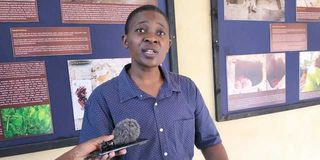
Gloria Luhunga, public education and training officer and intersex person at the Kenya National Commission on Human Rights, during the interview in Lamu on June 6, 2026.
Gloria argues that assigning names solely on the basis of whether a child is perceived to be male or female at birth may not always be appropriate. She encourages parents to consider unisex or gender-neutral names, which can suit any child and allow greater room for self-expression and personal identity.
According to Gloria, choosing gender-neutral names can help reduce the pressure of imposing rigid gender labels at birth while creating a more inclusive environment for intersex persons.
“Many intersex persons face challenges when visiting hospitals, enrolling in educational institutions or seeking employment because the names they were given at birth do not always align with how they identify themselves later in life.”
Gloria notes that some people may be assigned a particular sex at birth and later come to understand themselves differently. For this reason, she believes gender-neutral naming can be a progressive step towards greater inclusivity.
Gloria argues that challenging strict gender binaries helps promote the rights, dignity and social acceptance of intersex persons while fostering a society that celebrates human diversity from birth. “We are living at a time when society is becoming more open to people expressing their authentic identities, rather than being confined to expectations based solely on the sex assigned to them at birth. Giving a child a gender-neutral name can help avoid future difficulties if they later choose to change or alter their name to better reflect who they are.”
The human rights advocate also encourages parents to consider gender-neutral clothing for young children, arguing that it can support bodily autonomy and personal choice. “Besides choosing gender-neutral names, parents should also consider gender-neutral clothing for their children until they are old enough to express their own preferences and make informed decisions about their identity.”
According to the United Nations Free and Equal campaign, launched by the Office of the United Nations High Commissioner for Human Rights, an estimated 1.7 per cent of people worldwide are born with variations in sex characteristics. These variations may result in a person being classified as intersex. The campaign works with intersex communities to raise awareness and promote the protection of their rights.
Gloria cites Kenya as a regional and global leader in the recognition of intersex rights. The country was among the first in Africa to officially recognise intersex persons in its national census and permits the use of the "Intersex" or "I" sex marker on certain official records and identification documents.
The 2019 Kenya Population and Housing Census conducted by the Kenya National Bureau of Statistics recorded 1,524 intersex persons across the country. While the figure may appear small, Gloria says its significance extends far beyond the numbers. “Each case raises important questions about constitutional protections, particularly the rights to equality, dignity and healthcare.”
Despite this recognition in national statistics, Gloria says intersex persons remain largely invisible in policy implementation and public health planning and expresses concern that some communities, particularly in parts of the Coast region, continue to view intersex persons through the lens of harmful cultural beliefs and misconceptions.
To date, 86 intersex persons have been identified across the six Coast counties, with Mombasa recording 30, followed by Kilifi (25), Kwale (18), Taita Taveta (seven), Lamu (four) and Tana River (two). Gloria attributes many of the challenges facing intersex persons to deep-rooted stigma and a lack of public understanding.
Gloria adds that some fathers abandon their families after learning that an intersex child has been born, leaving mothers to raise the children alone, noting that some parents, under pressure from their communities, consent to early medical interventions intended to assign a child to a particular sex—decisions that may later contribute to identity-related challenges.
Altering genitalia
In some cases, parents authorise surgical procedures to alter an intersex child’s genitalia by removing characteristics they perceive as either male or female. “It is unfortunate that such decisions are often made by parents and medical practitioners without adequate legal safeguards or the informed consent of the person most affected,” Gloria says. “Many societies still view intersex variations as a curse, leading to secrecy, social isolation and non-consensual surgeries intended to force children into strictly male or female categories. That is wrong.”
Hunnielle Chivatsi, founder and executive coordinator of Intersex Rights Initiative Coast-Kenya (Iric-K), says much more needs to be done to improve the wellbeing of intersex persons.
Iric-K is a community-based organisation that works to empower and amplify the voices of intersex persons while addressing social marginalisation, isolation and discrimination. The organisation is guided by a vision of building a self-sustaining intersex community through advocacy, capacity building and community empowerment.
“We focus on four key thematic areas: health and wellbeing, including sexual and reproductive health and rights, HIV prevention and mental health. We also work on advocacy, economic empowerment and social inclusion, with the aim of fostering a society where intersex persons can live with dignity, equality and self-determination,” Hunnielle says, expressing concern that intersex issues remain largely unspoken about, particularly among communities along the Coast.
According to Hunnielle, some Mijikenda communities still refer to children born with intersex traits as kijego (a curse). As a result, many families continue to distance themselves from such children, viewing them as a bad omen or a source of misfortune within the household.
Hunnielle cites personal experiences of some of the challenges faced by intersex persons, including the breakdown of her parents’ marriage shortly after her birth. “Whenever I asked questions, no one would tell me the truth about my sex characteristics. I was raised as a girl, but I struggled to fit in. I related more easily to boys, yet I was expected to live as a girl. When I reached puberty, I did not menstruate. I do not know what it is like to use a sanitary towel.”
Between 2024 and 2025, Iric-K supported five mothers and their intersex children who had been abandoned by their families by providing shelter through partnerships with other organisations. The organisation has also reached hundreds of people through community dialogues and awareness programmes. “We have been working to bridge gaps in healthcare access, legal awareness and social protection for intersex persons,” Hunnielle says.
However, Hunnielle argues that the absence of a comprehensive legal framework continues to limit the effectiveness of grassroots interventions. She notes that intersex persons remain significantly under-counted, as stigma and low levels of awareness discourage many families from disclosing intersex variations.
“I take this opportunity to urge the government to fast-track the passage of the Intersex Persons Bill, 2023. Its absence continues to perpetuate exclusion and limits the protection of intersex persons' rights.”
Under Agenda 2063 and the African Union Strategy for Gender Equality and Women's Empowerment, member states, including Kenya, have committed themselves to the principles of non-discrimination and bodily autonomy. In this context, gaps in civil registration systems and the lack of adequate protections for intersex children raise broader accountability questions within Africa's human rights framework.
For Gloria, structural challenges within the healthcare system persist beyond the legal and policy environment. “At present, there are no sanitary products specifically designed to meet the needs of some intersex persons. In addition, public hospitals often lack appropriate equipment and specialised services required to provide certain forms of medical screening and care. There is also a need to consider suitable accommodation arrangements for intersex persons within prisons and remand facilities.”
Nahida Kassim, a human rights defender, is calling on communities on the Coast, across Kenya and globally to move beyond their comfort zones and adopt a multi-agency approach to addressing stigma, challenging stereotypes and creating safer, more inclusive environments for intersex persons.


