The hidden revolution: Marsabit women quietly reclaim reproductive freedom
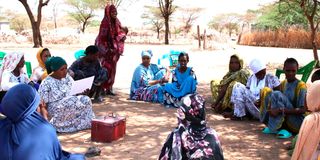
Kaltum Ligele reads out a message to her Nalele Group members during a recent mentorship session in Merille, Laisamis Sub-County, Marsabit County. The group is part of more than 200 that have benefitted from safe spaces for learning about family planning options and nutrition habits.

What you need to know:
- In Marsabit’s patriarchal communities, women risk stigma, divorce, and even violence to access contraception.
- Supported by mentorship programmes and youth-friendly clinics, they are transforming fear into empowerment and reshaping gender roles across pastoralist communities.
- Mentorship groups and health units are creating safe spaces for them to learn, save, and make informed choices amid resistance from men and cultural taboos.
Lucy* has been quietly sneaking out of her home in Manyatta Ngamia village, Merille, Marsabit County, to attend weekly mentorship sessions for young mothers aged between 19 and 29. The sessions offer guidance on sexual and reproductive health, nutrition, safe motherhood, and family planning.
At just 22, Lucy already has three children, all born within five years. She regrets how early motherhood has defined her life, but she recently made a bold decision to have an implant inserted to prevent pregnancy for at least five years. Still, she lives in constant fear that her husband might discover it—a revelation she believes would end their marriage.
“I dropped out of school [five years ago] while in Form Three after I got pregnant. After long persuasion, my parents allowed me to move in with the man who was responsible and that is how I became a housewife,” she recalls.


In her Rendille community, it is taboo for women to discuss family planning. Patriarchy gives men control over women’s reproductive choices, including how many children to have. Large families are often encouraged as a way for men to assert dominance and limit women’s independence, especially their access to contraception, family planning, and economic opportunities.
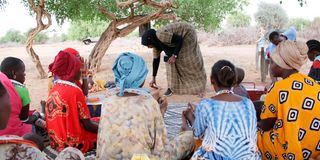
Naningo Group during a recent mentorship session in Merille, Laisamis Sub-County, Marsabit County. It is one of more than 200 groups across the county that have benefitted from safe spaces for learning about family planning options and nutrition habits to beat malnutrition in the region.
After attending seven mentorship sessions over the last three months, led by community health promoters (CHPs), Lucy agreed to use contraception after learning how it could help her avoid closely spaced pregnancies.
“A friend told me about the group and because I knew my husband would not allow me to attend the meetings, I have been slipping quietly to meet the other women. Besides learning, we freely express ourselves, share our personal stories and encourage each other,” she says.
“While I am happy that I will not get pregnant for the next five years, I am worried because my husband will at some point question why I am not conceiving. I am, however, ready to pay the price and protect my marriage even if it means lying.”
Lucy’s story is not unique. It reflects the harsh reality faced by many women in pastoralist communities who defy taboos that reinforce their marginalisation, especially regarding sexual and reproductive health rights.
Just recently, drama erupted at Laisamis Sub-County Hospital after a man stormed the facility and confronted healthcare workers for “secretly” putting his wife on contraception without his consent. It took the hospital’s management to calm him down. Yet, for the woman, family planning had offered much-needed relief.
Long distances to health facilities, lack of privacy, fear of side effects, stigma, misinformation, and the need to seek a husband’s approval are among the biggest barriers preventing women from accessing family planning services.
Still, change is slowly emerging. The mentorship meetings—held across 282 groups of 15–25 members in Marsabit County—have been hailed as a game changer, providing young mothers with safe spaces to learn about family planning and proper nutrition to combat malnutrition.
CHP Rosemary Gumato Upane, who oversees the Narapunye Women’s Mentorship Group, says the young mothers also receive training in basic financial literacy, small business management, hygiene, sanitation, and the benefits of antenatal and postnatal care.
Through their savings associations, the women contribute shares to a group fund, allowing them to access credit for small businesses and emergencies. “I train them how to start kitchen gardens, follow up on breastfeeding, immunisation and clinics, while helping gender-based violence survivors to access immediate health and counselling (psychosocial) services,” she shares.
Rosemary notes that the women’s health-seeking behaviour had significantly improved following the intervention.
A growing number of women, she adds, now speak openly about contraception despite continued opposition from men. More than half of the group’s members have embraced family planning. According to the 2022 Demographic and Health Survey, Marsabit ranks among Kenya’s counties with the highest fertility rates—6.3 children per woman—and the lowest contraceptive use at 11.7 per cent, compared to the national average of 58 per cent.
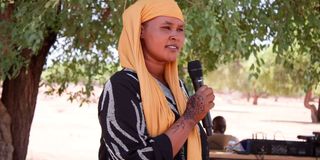
Malkia Ali, who has been championing women's freedom on sexual reproductive health, during a recent community engagement in Merille, Marsabit County. She is addressing barriers to women’s sexual reproductive health rights.
Malkia Ali, a member of the Nalele Mentorship Group, is among the young mothers championing birth control. She believes women, like men, should be allowed to pursue education and work to support their families. “This is the only way of reducing cases of breastfeeding mothers getting pregnant months after delivery,” she says, calling for continuous sensitisation, particularly targeting men, to dispel myths and misconceptions.
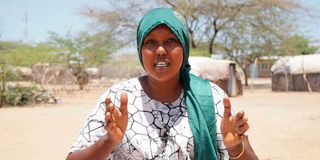
Kaltum Ligele, a mother of one, explains the benefits of family planning during a recent interview in the Merille area of Marsabit County.
Similarly, Kaltum Ligele, a mother of one, has embraced contraception, thanks to the mentorship sessions. “I have no worries over unplanned pregnancies because I am in charge of my sexual reproductive health. I am fully focused on raising my child,” she says.
A youth-friendly unit at Laisamis Sub-County Hospital now complements these efforts by offering free services—ranging from contraceptives and postpartum family planning to HIV counselling and testing. The facility, established through a partnership between the county and Mercy Corps under the Promoting Resilience, Inclusivity and Meaningful Engagements programme, has trained 118 healthcare workers in Laisamis and Moyale.
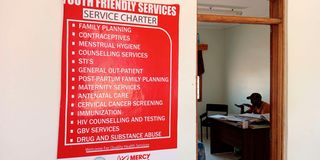
A youth-friendly unit at Laisamis Sub-County Hospital in Marsabit County. It offers free services ranging from contraceptives to postpartum family planning and HIV counselling and testing.
Nursing officer Moses Learamo says the unit has resolved a major challenge faced by young mothers—stigma and long waiting times at the general outpatient queue. “They now seek the services freely because they are not exposed and are served with the rest of the general patients, granting them a sense of privacy,” he says, noting that many women now have confidence in the dignified services offered.
The unit currently serves more than 10 girls every week, including some from as far as Merille, 15 kilometres away. “Eight out of the 10 come to seek contraceptives and the rest for HIV/Aids testing and counselling. Some are as young as 15 years,” says Nurse-in-Charge Stolin Lekausa.
Some of the clients are schoolgirls accompanied by their mothers, who want to protect them from unplanned pregnancies that could derail their education. “The mothers, who come with their daughters, share concerns over the girls getting impregnated while in school,” she says.
Injectables lasting three months and implants lasting three to five years are the most preferred methods as they are discreet. While a few men are beginning to support family planning, citing improved maternal health and reduced financial strain, resistance remains widespread.
At a recent community dialogue in Merille, some men expressed fear that women’s empowerment threatened their control over their families. One man even claimed contraception causes infertility and promotes infidelity. “We fear because when you invite these women to meetings, they could be lured into unnecessary endeavours or get so busy that they won’t have time to take care of the children,” he said.
Another man demanded to know which women had raised such concerns, exposing the deep-rooted dominance that continues to marginalise women. “If we allow them to stay longer without having children, they will become arrogant and start doing their own issues and even stay away when we want them home to take care of us. They may sometimes even come back home tired and refuse to cook,” he added.
The World Health Organisation maintains that access to family planning enables people to make informed decisions about their sexual and reproductive health while reducing pregnancy-related risks. “It enables women to pursue education and economic opportunities, helping their families thrive. Achieving universal access and realisation of SRH services is essential in fulfilling the 2030 Agenda.”
Merille Location Chief Antonela Koiyan has called for intensified sensitisation to family planning, warning that uncontrolled births could expose families to hunger and malnutrition. “Planning will enable them to have children they are able to take care of. What is the need of having many children whose education and basic needs you cannot sort?” she asks.
Laisamis Assistant County Commissioner Ronald Rotich has also called for men’s dialogues to challenge myths limiting uptake of the crucial services. “We need to create safe spaces for men to speak freely and receive training in contraception among other pertinent health issues,” he says.
According to Mercy Corps representative Fatuma Ismail, the mentorship programme—running between six and nine months—helps women build strong support systems, boosts confidence, and promotes social behaviour change. “The safe spaces help tackle mental health issues as the young mothers speak freely without being judged and collectively, with assistance from the CHP, seek the requisite support,” she said, adding that more than 6,000 women have benefitted in Marsabit.
For these women, family planning is not merely about controlling birth. It is a pathway to economic empowerment, better child health, access to education, poverty reduction, and sustainable development.
*Name changed to protect identity of the young mother.


