The mother Kenya forgot: The untold grief and strength of 'Mama Uhuru' Oginga
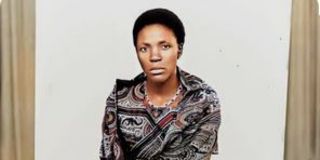
Former Vice President Jaramogi Oginga Odinga's first wife, Mary Juma.

What you need to know:
- Jaramogi’s rise from Maseno School organiser to Kenya’s first Vice President is intertwined with the painful experiences of his wife Mary.
- The story recounts how political persecution, business collapse, loss of children and long periods of detention took a devastating toll on their family, especially Mary, whose resilience held them together.
Jaramogi Oginga Odinga and his fellow Maseno School students founded a boys club in 1932. Its members were drawn from Sakwa, Yimbo, Uyoma, South Gem and Seme. During school holidays, they would return to their rural homes to set examinations for local schools, construct houses for elderly women and assist them with farm work. They also created the Migwena Sports Competition.
It was during one of these Migwena contests in 1943, at Migwena Sports Ground in Bondo, that Jaramogi first locked eyes with a striking young woman. She was a middle-distance athlete, and Jaramogi soon asked a friend to find out more about her. He later learnt that her name was Mary Juma, the daughter of Myriam Osiro, one of the four wives of Justo Odima.
Odima, a former chief whom Jaramogi admired for his football prowess, had also been a student at Maseno School. Two years earlier, he had been sentenced to life imprisonment for fatally stabbing his cousin, Ahomo, during an altercation. While in custody, he was poisoned by his relatives.


Two days after the Migwena tournament, Jaramogi and Mary met again by coincidence as guests at a mutual friend’s home. Their flirtations quickly deepened, leading seamlessly to dowry negotiations. They married on January 23, 1943, at Maseno School, followed by a traditional reception in Sakwa. Nine months later, Mary gave birth to their firstborn, Oburu Oginga, on October 15, 1943, in Sakwa.
In his memoir Not Yet Uhuru, Jaramogi admits that during their first year of marriage, he mistreated Mary, diminished her dignity and imposed strict timelines for feeding, cleaning and caring for their child. He relegated her to a subordinate role, commanding her to cook, work the land and tend their chickens. During a heated confrontation, he struck her, knocking her to the ground. Mary rose, packed her belongings and returned to her parental home in Alego with baby Oburu.
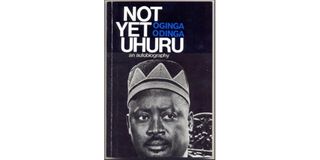
Jaramogi Oginga Odinga's memoir, Not Yet Uhuru.
She only returned to her marital home six months later after Jaramogi pleaded for forgiveness. Her decision to go back emboldened her, offering a sense of protection against further mistreatment. Raila Amolo and his brother Ngire Agola were born in the following two years, followed by Akinyi Wenwa, Beryl Achieng and Fred Odima. One of Mary’s greatest tragedies as a young mother was the loss of her infant son, Omondi.
In 1947, Jaramogi founded the Luo Thrift and Trading Corporation. As he travelled recruiting residents to join, he moved to a double-room gated courtyard on Kaloleni estate, Kisumu, with Oburu, Raila and Agola. He later founded Ramogi Press and appointed his confidant, Achieng Oneko, as manager. He then constructed Ramogi House, which opened in 1951, and went on to start Ramogi Construction Company, purchasing a 10-tonne lorry and a Bedford van.
His rise in public life transformed him into a symbol of resistance and ultimately led to his appointment as Kenya’s first Vice President under Jomo Kenyatta’s administration. Mary joined him in Nairobi and settled on Jerusalem estate, where she became popularly known as “Mama Uhuru”.
On April 14, 1966, Jaramogi resigned from government over persistent cases of land misappropriation. In 1967, the maximum sentence for sedition—previously three years—was increased to 10. The definition of sedition was broadened to cover anything the government considered objectionable. On October 25, 1969, after many people were killed during the launch of the Russia-built hospital in Kisumu, Jaramogi was detained on sedition charges.
During his detention, the businesses he had established were mismanaged and eventually collapsed, leaving Mary in financial distress. She later learnt that he had been held in Hola, a remote and notoriously harsh detention facility in Tana River. Among the detention centres—Kamiti, Naivasha, Shimo La Tewa and Manyani—Hola was the most brutal. When Mary finally visited him, she wept in disbelief. He was malnourished and had been denied his insulin despite his diabetic condition. He was released on March 27, 1971.
Twelve years later, history repeated itself when her son, Raila, was arrested at his Kileleshwa home, alongside his driver Charles Agunga, on August 4, 1982. He was taken to the Special Branch offices on University Way for interrogation, tortured, isolated and later incarcerated in solitary confinement at Kamiti. Raila’s detention and torture were deeply traumatic for Mary. Her anguish was compounded when her diabetic son, Agola, was arrested in Kakamega. Denied insulin while in custody, he died from hypoglycaemic complications.
The cumulative grief of losing infant Omondi and Agola, witnessing Jaramogi waste away in prison, and enduring the news of Raila’s torture severely deteriorated Mary’s health. On the night of November 5, 1984, Raila experienced a disturbing dream in which his mother appeared, bade him farewell and disappeared. The news of Mary Juma’s death was published the following morning, but prison warders were ordered not to inform him. Two days later, fellow detainee George Anyona wrote the tragic news on a piece of toilet paper and secretly passed it to Raila.
The author is a novelist, Big Brother Africa 2 Kenyan representative and founder of Jeff's Fitness Centre (@jeffbigbrother).


