When bars outnumber shops: The widows of living men uprising against Kenya’s alcohol crisis
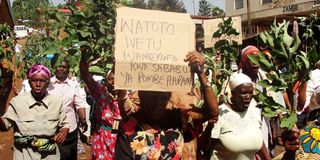
Women in Mwimuto village in Kikuyu County protested over increased alcohol consumption in the area in this file photo.

What you need to know:
- Women are leading protests, across counties, against widespread alcoholism that's destroying families and communities.
- From vandalising bars to blocking roads and marching at dawn, the women are fighting back against an epidemic where one in five men aged 15-65 consume alcohol.
When men leave home and never return, only for their wives to be summoned to collect their bodies from illicit alcohol dens, it becomes more than just a matter of production, distribution, sale, and consumption of unlicensed brews.
It morphs into a burden borne by women: Fighting household poverty with a single income earner; enduring loads of unpaid care work; shouldering the emotional and physical strain of raising children alone; and carrying the social stigma of being the woman who “failed to tame her husband” before he drowned in drink.


Illicit alcohol is not only a threat to national development, it is a tragedy for many women. These women carry the sorrow of lost husbands and the fear of a doomed generation. This is a national crisis.
According to the National Authority for the Campaign Against Drug Abuse 2022 report on the status of drugs and substance use in Kenya, 53.7 per cent of Kenyans perceived the consumption of illicit brews as widespread in their communities.
The Western region recorded the highest perception level at 85.8 per cent, followed by Nyanza (81.9 per cent) and the Rift Valley (55.6 per cent). The report found that one in every five men aged 15-65 (2,511,763) and one in every 20 women (687,356) were using alcohol. Regionally, the Western region had the highest prevalence of alcohol use at 23.8 per cent, followed by the Coast at 13.9 per cent and Central at 12.8 per cent.
But women across the country are saying enough is enough. They are taking action to eradicate illicit brews and save their families, and, indeed, their nation. From Maasailand to the plains of Baringo, their cries grow louder. Is anyone listening?
January 2025: Ng’amba Village, Ndeiya, Kiambu
Fed up with their men disappearing into bars from as early as 6am until late at night, women in Ng’amba stormed and vandalised local drinking establishments. In a protest, they chased away loitering men and pointed to the presence of nine bars and only two shops as a sign of the crisis. They said the men had abandoned their families, leaving women to carry the economic and emotional weight.
April 2025: Kimana, Kajiado County
Frustrated by the damage alcohol was doing to their households, women blocked the road near Kimana, en route to Loitoktok, demanding an end to alcohol abuse. Their message was clear: they would no longer suffer in silence.
April 2025: Chinga, Othaya, Nyeri County
In Chinga, women raised the alarm over the growing toll alcohol was taking on men, and by extension, on families and the broader community. The effects, they said, were stunting household and community development.
June 2024: Moiben, Uasin Gishu County
In a county dominated by maize and wheat farming, women in Moiben could not accept their husbands and sons wasting their lives on alcohol. Protesting at Garage Market, they decried the presence of over 25 licensed and illegal bars in a population of less than 1,000, translating into one bar per 40 men. For many households, especially in polygamous communities, this meant an entire generation was at risk.
January 2023: Kiratina village, Kiambu County
In Kiratina, women had reached the breaking point. Alcohol had robbed them of partners who once shared a vision for family growth. One woman shared her pain; her husband had died in a bar, and she was called to collect his body while the bar continued serving other men as if nothing had happened.
September 2022: Kapkombe, Baringo North
Women, determined to protect the future generation, took action after witnessing boys and girls drop out of school to indulge in alcohol. Refusing to tolerate the loss of their children to drink, they began a 15km trek from Kapkombe to the national government administrative offices in Kabartonjo town. Their journey began as early as 3am.


