Why Nairobi lawyer left the city to fight sexual violence in Wajir
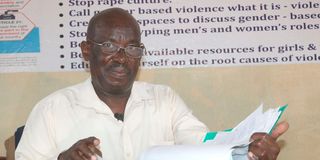
Lawyer Stephen Wanyoike in his office, Wajir town, on September 9, 2025. He offers pro-bono services to survivors of sexual and gender-based violence in Wajir.

What you need to know:
- Stephen Wanyoike left a thriving Nairobi legal career in 2010 to settle in Wajir, where he offers free legal aid to survivors of sexual and gender-based violence.
- For 15 years, he has handled over 50 sexual violence cases in Wajir, securing convictions despite cultural resistance, intimidation, and systemic challenges.
Stephen Wanyoike surprised his family and friends after he announced in 2010 that he was abandoning his legal practice in Nairobi to go work in Wajir.
His family and friends could not understand how he was leaving his thriving legal practice in Nairobi for a region considered prone to insecurity, to help survivors of sexual and gender-based violence (SGBV) get justice. However, Stephen stood his ground and made his way to Wajir where he set base and started a new life.
The lawyer tells the Nation that he had attended training of paralegals in Wajir town in 2010, when he noted the justice gap that existed. “After we trained the paralegals, they asked us how they would represent survivors of sexual and gender-based violence. Wajir did not have a single lawyer at the time. I saw a gap and realised their concern was genuine. I then decided to settle in Wajir to help out with such cases.”


Despite Wajir’s harsh weather, this is the place he has called home for the past 15 years. Stephen has become a familiar at the Wajir Law Courts. If he is not handling a defilement case, he is busy representing a survivor in a rape case or dealing with a child maintenance case. “I decided that I would be doing all cases of sexual and gender-based violence on a pro-bono basis. Most of such cases involve minors aged 12 and below, and are from poor backgrounds and unable to afford a lawyer.”
He notes that sexual violence cases touching on adolescents aged 12–18 are rampant. “The court here is serious when dealing with matters of sexual violence and most of the cases we handle lead to conviction, which has helped many survivors get justice.”
Stephen reveals that sexual violence cases face many challenges, key among them survivors and witnesses being intimidated and compromised by perpetrators’ families, and refusing to testify, which at times leads to the collapse the cases. In the past two years, the lawyer has handled more than 10 cases. This year, he is handling another five. For the past 15 years, Stephen has handled more than 50 cases, with 80 per cent attracting convictions.
In one of the cases, a chief was sentenced to 40 years in prison for raping an 18-year-old girl several times in 2022 and circulating her nude photos on social media. He was also slapped with a Sh500,000 fine. He then attempted to force an out-of-court settlement, promising to pay the girl Sh500,000.
Besides free legal aid, Stephen offers counselling services to survivors to tackle mental health and trauma. He says ignorance is a key challenge, adding that many residents have no idea what the law says on sexual violence, among other crimes. “The biggest challenge here is the deeply entrenched culture. Many locals believe that all issues should be handled the cultural way, including SGBV cases,” Stephen notes.
To make ends meet, the lawyer handles other cases that help him raise money. He adds that his law firm in Nairobi is functional and brings in additional income. The 64 years old says the passion to have sexual violence survivors access justice has been his driving force, and that’s why he opted offer free legal aid.
Alcohol and drug abuse surge
Besides entrenched cultural practices, a surge in alcohol and drug abuse encourages the vice. According to human right activists, most defilement and rape cases go unreported because of the shame of losing virginity before marriage, trauma, and self-denial.
Xavier Baraka, Resident Magistrate at Wajir Law Courts, acknowledges that the area has been witnessing a surge in sexual violence cases. Baraka notes that the Judiciary faces numerous challenges in handling such cases, among them victims and witnesses being compromised by relatives and the maslaha system, thus failing to testify. This, he observes, has made the court devise a way of ensuring justice for victims.
“We expedite sexual violence cases by making sure the victims and key witnesses testify before the accused is released on bond. This ensures survivors are not intimidated or compromised.”
He notes that this method is bearing fruit as such cases are now moving faster and leading to more convictions. “We have witnessed reduced withdrawals touching on cases of sexual violence. In the last two years, we have had 10 convictions, two acquittals and one withdrawal, which I must say is good progress.”
Aliyow Buri, the Wajir East Sub-County Police Commander, says 27 cases have been reported this year. They include 16 defilement cases, eight rape and three attempted rape cases. “Once we receive cases of sexual violence, we ensure the files are processed and forwarded to the Director of Public Prosecutions for approval and prosecution. The work of the police is to protect and ensure justice prevails and that the survivors fully get justice,” Aliyow says.
The maslaha system – an alternative dispute resolution mechanism – has been faulted for encouraging perpetrators to walk free. As our interview ends, Stephen rushes to court for the hearing of a defilement case.


