Why stronger birth records protect children against early marriage
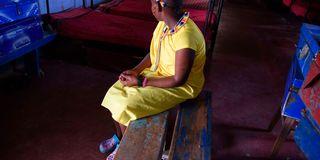
Girl saved from early marriage takes refuge at Suguta Mar Mar Girl Child Rescue Centre in Samburu County on October 26, 2022.

What you need to know:
- Unregistered births make age verification—and justice—nearly impossible.
- Without birth certificates, many Kenyan girls are vulnerable to early marriage and denied justice when abused.
- UNFPA experts urge governments to strengthen civil registration and draw lessons from countries like Algeria.
Imagine a girl born in the remote plains of Samburu. Her birth is never registered, and she grows up without a birth certificate. At just 12, she is married off to a man old enough to be her great-great-grandfather. When local champions report the case and the man is arrested, his defence is simple: she looked mature and must be over 18.
In 2022, the High Court in Meru overturned a 15-year jail term handed down to a boda boda rider who had married a 16-year-old girl, ruling that she had deceived him into believing she was an adult. Justice Thripsisa Cherere said the girl had behaved like an adult and that there was no indication she was underage when she agreed to marry Mr Mohammed Hussein.
Without documentation to prove age, justice becomes elusive. Experts say this is the painful price of weak civil registration systems. They stress that every child’s birth, marriage, and death must be officially recorded to make age verification and legal protection possible. Kenya already has the structures to make this work, through community-based systems such as Nyumba Kumi and village elders, who act as the government’s eyes and ears at the grassroots level.


“Child marriage enforcement is harder without age verification, yet the practice remains widespread in sub-Saharan Africa,” said David Nzeyimana, a consultant with the United Nations Population Fund (UNFPA) Eastern and Southern Africa Regional Office. “That is why it is crucial to have universal registration of all marriages—civil, customary, or religious.”
Mr Nzeyimana spoke during the Fourth Global Civil Registration and Vital Statistics and Gender Symposium, held from October 15–17 and hosted by the Kenyan government in partnership with development agencies.
According to Willis Odek, Regional Adviser at the UNFPA Arab States Regional Office, registering every marriage is a decisive step toward ending child marriage. He cited Algeria as an example of good practice in reaching women in remote communities.
“The country’s Ministry of Justice operates fully equipped mobile units that rotate through rural areas on fixed schedules to increase registration coverage in pilot regions,” he said.
Mr Odek added that Algeria’s National Statistics Office collects monthly data on marriages and divorces from municipalities and feeds it into a central database, ensuring up-to-date and reliable vital statistics.
“Strengthening birth and marriage registration is one of the most powerful ways to protect every child’s right to a childhood,” he emphasised.


