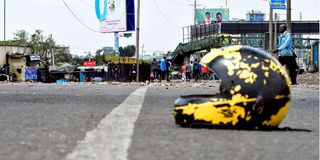
Every morning, 22-year-old James Mwangi straps on his bright-yellow helmet before weaving through Nairobi’s traffic on his boda boda.
To him, the helmet is his shield—the one thing that stands between him and death on the city’s chaotic roads. But what Mwangi doesn’t know is that the plastic shell he trusts offers little more than false security. He is not alone.
Millions of Kenyan riders and passengers wear helmets that look protective but crumble in the event of a crash. A recent global study found that none of the helmets commonly sold locally passed even the most basic safety tests.
An independent test analysis by the Global Alliance of NGOs for Road Safety revealed that many helmets sold in Kenya cannot prevent serious head injuries or deaths in crashes.
With over 2.4 million boda bodas in operation, Kenya also continues to struggle with alarmingly low helmet use. A recent study by the National Helmet Wearing Coalition found that while 63 per cent of motorcycle riders wear helmets, only 15 per cent of passengers do so.
A boda boda rider
Photo credit: SHUTTERSTOCK
This is despite the National Transport and Safety Authority data showing that 431 lives were lost in motorcycle crashes between January and March—an average of five deaths every day.
According to the Global Alliance of NGOs for Road Safety study, none of the helmets tested offered adequate protection. The helmets were sourced from local shops or provided by riders across 10 countries, including Kenya.
Eleven helmets were sent to an accredited laboratory for testing. They were evaluated against three core tests—stability (rolloff), retention system strength and impact attenuation—drawn from international standards and none passed all three tests. Only one passed a single test.
“These helmet tests show the reality of what people rely on every day, on their way to school, work, or markets. It is unacceptable that people doing the right thing by wearing a helmet are not being protected,” said Lotte Brondum, Executive Director of the alliance.
While helmets can reduce the risk of head injuries by up to 70 per cent and deaths by more than 40 per cent, those figures only apply to helmets meeting rigorous safety standards. Wearing a substandard helmet, experts warn, gives riders a dangerous false sense of security.
The problem is compounded by the difficulty of distinguishing genuine certified helmets from counterfeits. Many unsafe models carry fake labels or mimic trusted brands, leading riders to believe they have bought quality products, only to discover their helmets crumple on impact.
“Substandard helmets pose a serious risk by giving riders a false sense of safety. Continued testing and advocacy can help curb this trend. But as motorcycle numbers grow, replacing counterfeits with certified helmets is an urgent priority,” said Agnieszka Krasnolucka, Programmes Director at the FIA Foundation.
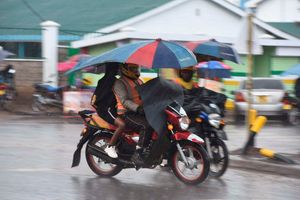
A boda-boda rider ferries a passenger in Eldoret town, Uasin Gishu County.
Photo credit: File | Nation Media Group
The unsafe helmets were displayed at the 4th Global Ministerial Conference on Road Safety in Marrakech, Morocco before being tested, giving policymakers a chance to see what is readily available in their markets.
Experts say a safe helmet must have a hard outer shell, an energy-absorbing liner (such as expanded polystyrene), and a reliable retention system. Knock-offs often cut corners, using decorative padding or weak straps that snap under tension.
In July, Nairobi hosted the second Safe African Helmets Initiative Summit, where nine African countries—including Kenya, Ghana, Senegal, Benin and Cameroon—grappled with the crisis of preventable motorcycle deaths linked to unsafe or absent helmets.
The Alliance’s white paper, Making Safe Helmets a Reality for All, released in Marrakech, calls on governments, manufacturers, and stakeholders to tighten regulation, remove unsafe helmets from markets, and ensure certified helmets are affordable and accessible.
Experts recommend measures such as subsidies, linking helmet provision to motorcycle purchases, and stricter customs checks to block unsafe imports. Public awareness campaigns are also critical to help riders recognise and demand quality helmets.
Meanwhile, private sector players—including delivery firms and motorcycle businesses—are being urged to equip their riders with certified helmets.