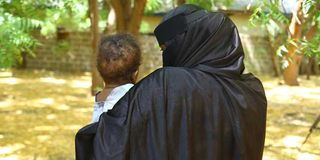
For some, maslahah – a dispute resolution mechanism – has averted fights that could have torn relationships apart and brought shame to individuals and their families.
For years, sex offenders have exploited maslahah and turned to it to escape from justice, leaving survivors traumatised.
A Ministry of Interior report on the Jukwaa La Usalama initiative shows many women in Kenya’s north-east have been suffering in silence after maslahah was used to solve sexual violence cases.
Their attackers often get a slap on the wrist, avoiding prosecution and possible prison terms.
The sex offenders – the women in Garissa, Isiolo, Wajir and Mandera who participated in the Jukwaa La Usalama forums said – are often relatives or prominent personalities.
“In the North Eastern region, Sexual and Gender-Based Violence (SGBV) is often perpetrated by close relatives and people in authority, such as teachers, administrators and prominent people in society. Female participants complained about the use of maslahah – a traditional dispute resolution mechanism outside the legal system. This denies the victims justice, support and fails to check the vice,” the report says.
It recommends mandatory prosecution of SGBV perpetrators, a decision that could involve changing laws in the National Assembly.
Interior Cabinet Secretary Kipchumba Murkomen.
Photo credit: Wilfred Nyangaresi | Nation Media Group
Interior Cabinet Secretary, Kipchumba Murkomen, said he intends to lead the opening of child protection units in sub-counties, establish gender desks at police stations, crack down on trade and consumption of illicit alcohol and strengthen community policing.
As recommended in the report, Mr Murkomen intends to work with religious organisations and NGOs to establish safe houses for survivors and put up laboratories in SGBV hotspots to gather forensic evidence that will be used to prosecute offenders.
During the Jukwa La Usalama in the North Eastern Region, rights activists and women leaders voiced concern over increasing cases of child sexual abuse that are often hidden by the families.
In the Kisii chapter of the Jukwaa, women leaders faulted “amicable” settlements, saying they encourage more people to commit SGBV crimes.
“Cultural norms, particularly in Kajiado, Kisii, Kilifi and Turkana, discourage victims from reporting. Family elders sometimes mediate defilement cases for ‘compensation’ rather than seeking justice,” the report says.
“The use of maslaha to resolve SGBV among family and community members hinders victims from reporting and getting justice.”
There is a rise in the number of reported cases of defilement by chiefs and other administrators in Trans Nzoia County.
Security officers want the establishment of a Government Chemist office in the region to help get evidence that can be used in prosecutions.
Chiefs and their assistants raised concerns about lack of deterrent measures, leading to repeat offenders getting away.
“Systemic weaknesses hinder responses to SGBV. Challenges include lack of forensic capacity and delays in Government Chemist results, insufficient gender desks and female officers in rural police stations, inadequate psychological support and safe houses for survivors, cultural interference and intimidation of witnesses during investigations and poor coordination between police, prosecution and medical services, often leading to the collapse of cases,” the report states.
Disco matangas – overnight song and dance where food and alcohol are served to mourners ahead of funerals – have become breeding grounds for sex offenders, the report says.
Photo credit: File | Nation Media Group
In Kilifi, Siaya, Kisumu, Homa Bay, Migori and several parts of Western Kenya, disco matangas – overnight song and dance where food and alcohol are served to mourners ahead of funerals – have become breeding grounds for sex offenders, the report says.
Even as the ministry recommends renewed security strategies and a whole of society approach, Garissa High Court judge John Onyiego cautioned sheikhs and imams against facilitating marriages for girls, saying action would be taken against them.
During the launch of the 16 days of Activism to End SGBV, Justice Onyiego said cultural and religious practices that are against morality would not be tolerated.
According to the Garissa Child Protection and Gender Technical Working Group, there has been an increase in cases of sexual violence in the region, including defilement, assaults, early and forced marriages and FGM.
“You are not supposed to have a baby or a girl as a wife. I know there is conflict with religion ... but we have talked to sheikhs and imams and told them the law supersedes religion in terms of early marriage. If you ‘celebrate’ a marriage of a person below 18 years, you will be arrested,” Justice Onyiego said.
“Girls need to be in school and become professionals. If we marry them off at 15, where will this region get professionals from?”
Justice Onyiego warned elders sitting in maslah sessions against presiding over criminal cases like murder, defilement and gender-based violence.
He added that while the Judiciary is keen to promote the Alternative Justice Systems (AJS) as outlined in the Constitution, the AJS jurisdiction is limited and that some decisions cannot be binding.
There are at least 100 cases at the Garissa law courts on child marriages, defilement, SGBV and FGM.
It is common to see girls in Mandera, Garissa and Wajir counties with children born from defilement.
Anisa*, 19, is a mother of a one-year-old boy. One morning as she walked to school, a man driving a tuk tuk approached and offered her a lift.
“It was about 6.30am when the tuk tuk stopped. Knowing him, I got in, only for him to take a different route,” she said.
She added that the tuk tuk stopped in a deserted area. The man grabbed her, tore Anisa’s clothes and raped her.
“I became unconcious when he injected something in me. I woke up around 9am and had to be assisted home by the people who found me,” she said.
The issue was reported to police but clan elders pressured Anisa’s family to withdraw it, promising justice for the girl.